
Expert Meeting Explores Vetiver Grass as Natural Defense Against River Erosion
A high-level meeting at the Water Building in Dhaka has explored the use of vetiver grass to combat severe riverbank erosion and soil degradation in Bangladesh. Water ministry officials and academic experts discussed the cost-effective, eco-friendly plant as a sustainable alternative to conventional concrete structures amid growing climate risks.
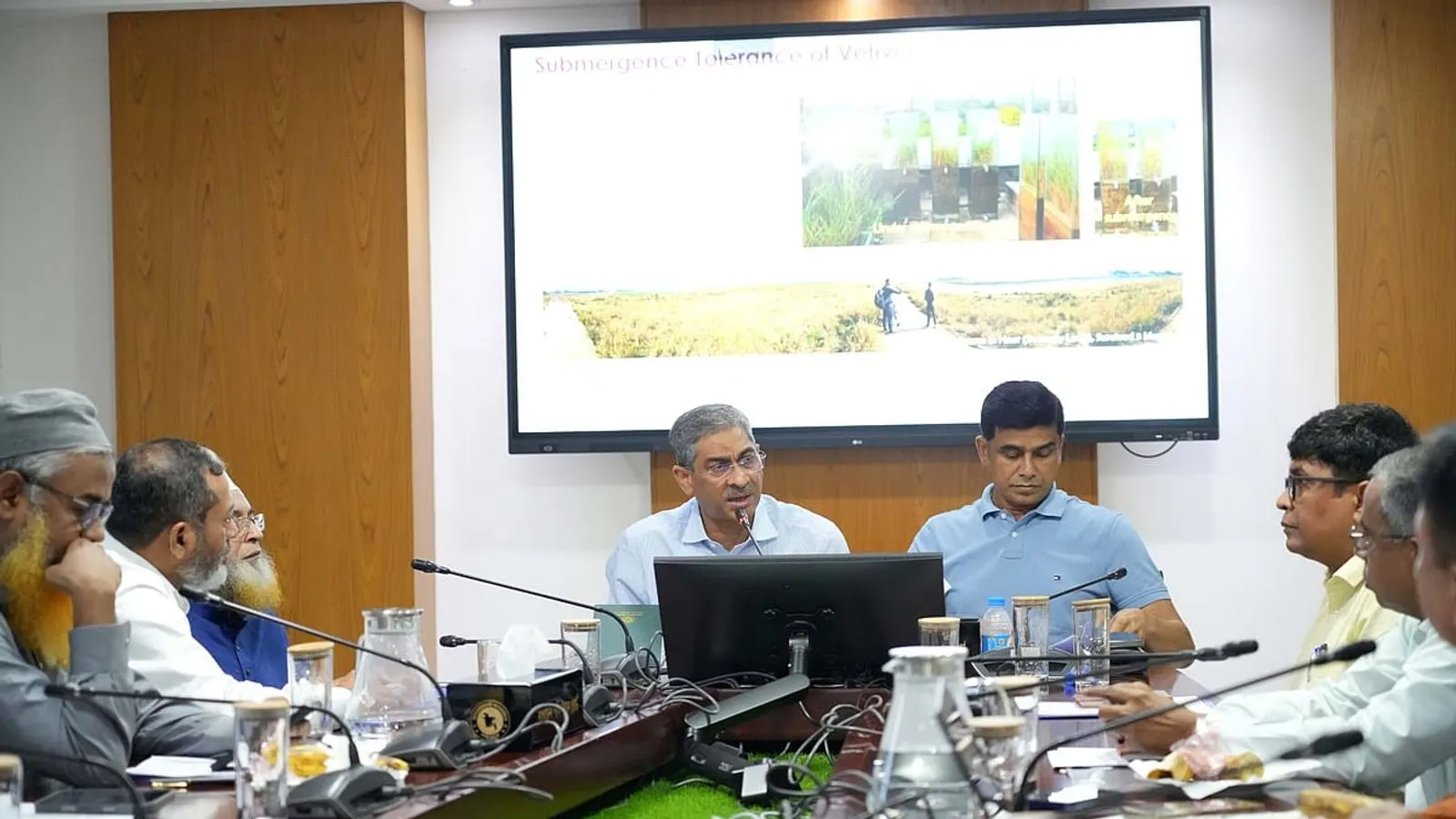
A significant policy discussion regarding the implementation of a national vetiver grass strategy took place today, Sunday, at the Water Building located in Panthapath, Dhaka. The gathering, officially titled the 'Vetiver Grass Policy for Bangladesh' meeting, brought together key government officials, academic leaders, and environmental experts to address the escalating threats posed by natural disasters across the South Asian nation.
During the proceedings at the Water Building, Ministry of Water Resources Minister Md. Shahid Uddin Chowdhury Annie addressed the attendees and strongly advocated for the widespread adoption of vetiver grass. He emphasized that the plant can serve as an exceptionally effective, eco-friendly, and low-cost natural solution to mitigate severe riverbank erosion, land degradation, and soil loss throughout the country.
The meeting also featured the presence of State Minister for Water Resources Farhad Hossain Azad, who highlighted the broader environmental challenges currently facing Bangladesh. He noted that the risks of floods, river erosion, heavy rainfall, and land degradation are continuously intensifying due to ongoing global climate change. Consequently, he stressed that the nation must look beyond traditional concrete infrastructure and place greater emphasis on nature-based, environmentally sustainable solutions to confront these escalating hazards.
As part of the technical sessions, Bangladesh University of Engineering and Technology (BUET) Pro-Vice-Chancellor Professor Mohammad Shariful Islam delivered a detailed presentation. Utilizing a PowerPoint format, he outlined the various practical benefits and immense potential of utilizing vetiver grass for ecological preservation and structural reinforcement in vulnerable regions.
The collaborative dialogue organized at the capital's water facility underscores the government's growing interest in integrating botanical and low-cost engineering strategies into national water management and disaster preparedness frameworks. As climate impacts continue to threaten vulnerable riverine communities, officials and researchers are increasingly turning to sustainable, community-accessible interventions.