
Dhaka University Releasing Student Background Data from 2021 to 2025
Dhaka University has published family and professional background data for newly admitted students across several academic years. The statistics highlight varying parental occupations, ranging from business and farming to private sector employment.
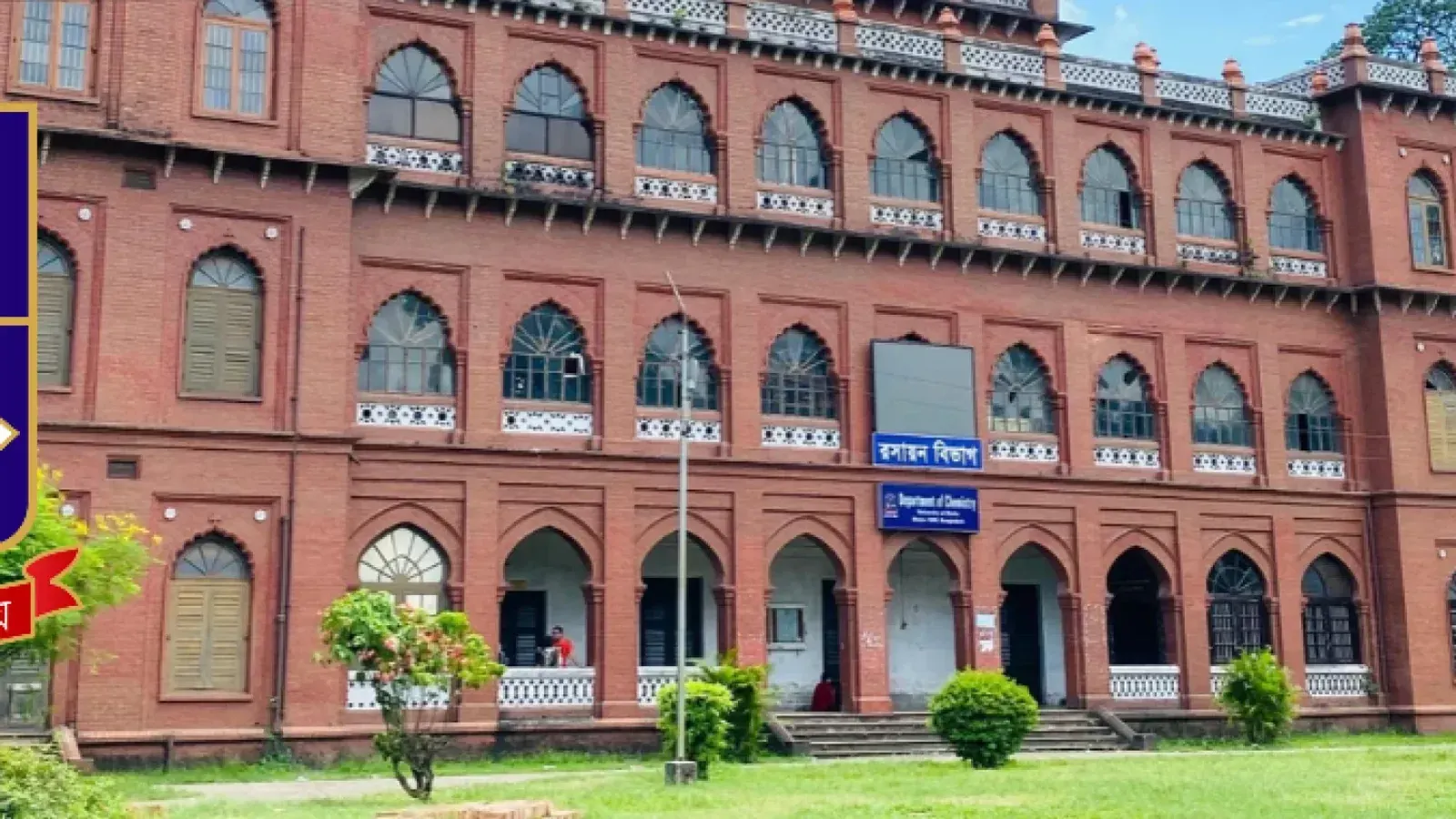
Dhaka University has officially released comprehensive data regarding the family and professional backgrounds of students admitted to the institution between the years 2021 and 2025 in Dhaka, Bangladesh. The official figures, compiled through the university's central admission office, shed light on the socio-economic demographics of incoming scholars over a multi-year period.
According to the records from the central admission office at Dhaka University, the predominant parental occupation for incoming students in multiple academic years was business. Specifically, the data indicates that 1,583 students had fathers whose profession was listed as business in 2021, alongside 909 students whose fathers were engaged in farming during the same year. The trend continued in subsequent admission cycles, with 1,302 students in 2022 and 1,424 students in 2023 also coming from business-owning paternal backgrounds.
The demographic patterns shifted notably by the year 2024, during which students hailing from families of private service holders emerged at the very top of the statistics. The records show that more than 750 students enrolled in 2024 belonged to households where the father was employed in a private sector job. By the year 2025, the profession of business once again represented a significant category, with 1,314 students reporting their fathers' occupation as business.
Addressing the nuances of these statistics, Dr. Tanzimuddin Khan, a professor in the Department of International Relations at Dhaka University, noted that the monthly income declarations provided by the students contain potential discrepancies. He suggested that some individuals listing their occupation as business might actually be farmers, and that certain students intentionally underreport parental income to secure various university benefits. Furthermore, Dr. Khan pointed out that family income varies by faculty, observing that households of students enrolled in business studies and science disciplines generally possess higher incomes compared to those in the faculty of arts and social sciences.
Highlighting the broader institutional environment, Dr. Abdus Salam, the Pro-Vice-Chancellor (Education) at Dhaka University, described the institution as an inclusive space where children from all social classes and professions have the opportunity to pursue higher education. He attributed this accessibility primarily to the university's flawless admission examination system. Dr. Salam emphasized that when a student from an extremely low-income family successfully gains admission to Dhaka University, they are ultimately able to secure a prominent and respectable position in society upon the completion of their studies.