Barguna Officials Flout Power Rules as Businesses Face Curbs
Government offices and residences in Barguna are keeping lights on all night in violation of conservation directives. Meanwhile, local businesses face severe losses due to mandatory 8 PM closures amid a crippling power deficit.
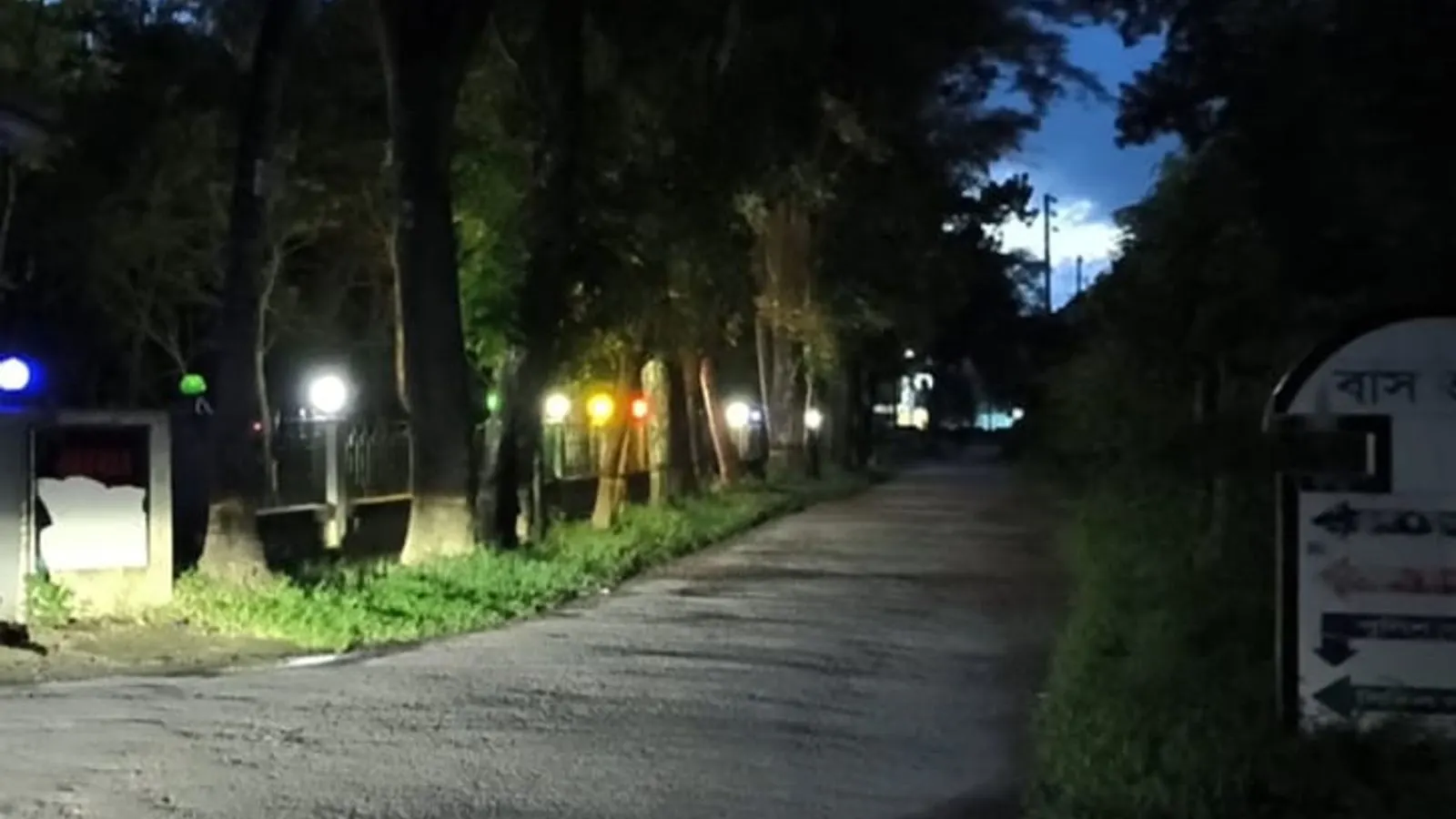
Government offices and official residences in Barguna, Bangladesh, have been found violating official electricity conservation directives by keeping decorative and exterior lights illuminated throughout the night. Despite strict government orders aimed at curbing nationwide energy consumption and load shedding, institutions and official quarters continue to consume large amounts of power after dark.
Among the properties ignoring the directives is Maya Kunja, an official residential complex that houses local judges, the Deputy Commissioner, the Civil Surgeon, and the executive engineer of the Public Works Department. Other key state facilities—including the Circuit House, the Upazila Nirbahi Officer’s office, Roads and Highways, the Department of Public Health Engineering, the Local Government Engineering Department, the Passport Office, the Water Development Board, and the Barguna Police Station—have also kept exterior and decorative lights blazing all night long.
This blatant disregard for energy conservation stands in sharp contrast to the strict rules imposed on the local business community. Under directives issued by the Ministry of Power, Energy and Mineral Resources, shops throughout Barguna are forced to close their doors by 8 PM, operating only between 11 AM and 8 PM. Local garment traders have voiced immense frustration over these mandated hours, explaining that customers typically arrive only after finishing their daily work in the evening.
Traders like Md. Ferdous noted that the restrictions are devastating their livelihoods during an already slow rainy season. Another merchant, Latim, criticized the double standards, pointing out that shop owners must pay exorbitant monthly rents while facing early closures and plummeting sales, all while watching electricity go to waste at government installations. When questioned about the widespread rule-breaking at state properties, Aminur Rahman stated that he had no knowledge of the matter.
The energy hypocrisy unfolds against the backdrop of a severe nationwide load shedding crisis and a local supply deficit. The Barguna municipal area, served by WZPDCL for its 19,000 consumers, requires 6.5 megawatts of electricity, while the six surrounding rural upazilas served by the Rural Electrification Board demand another 57 megawatts, bringing total local demand to 63.5 megawatts. However, the region receives a supply of only 42 megawatts, leaving a profound deficit that local authorities continue to exacerbate through unchecked nocturnal illumination.