

Water crisis and filled reservoirs threaten Bangladesh's Raghunandan hill forest
Satchari National Park in Habiganj faces severe water shortages as natural streams dry up and forest ponds fill with sand and silt. Experts warn that the ecological crisis threatens local wildlife and increases the risk of animals wandering into human settlements.
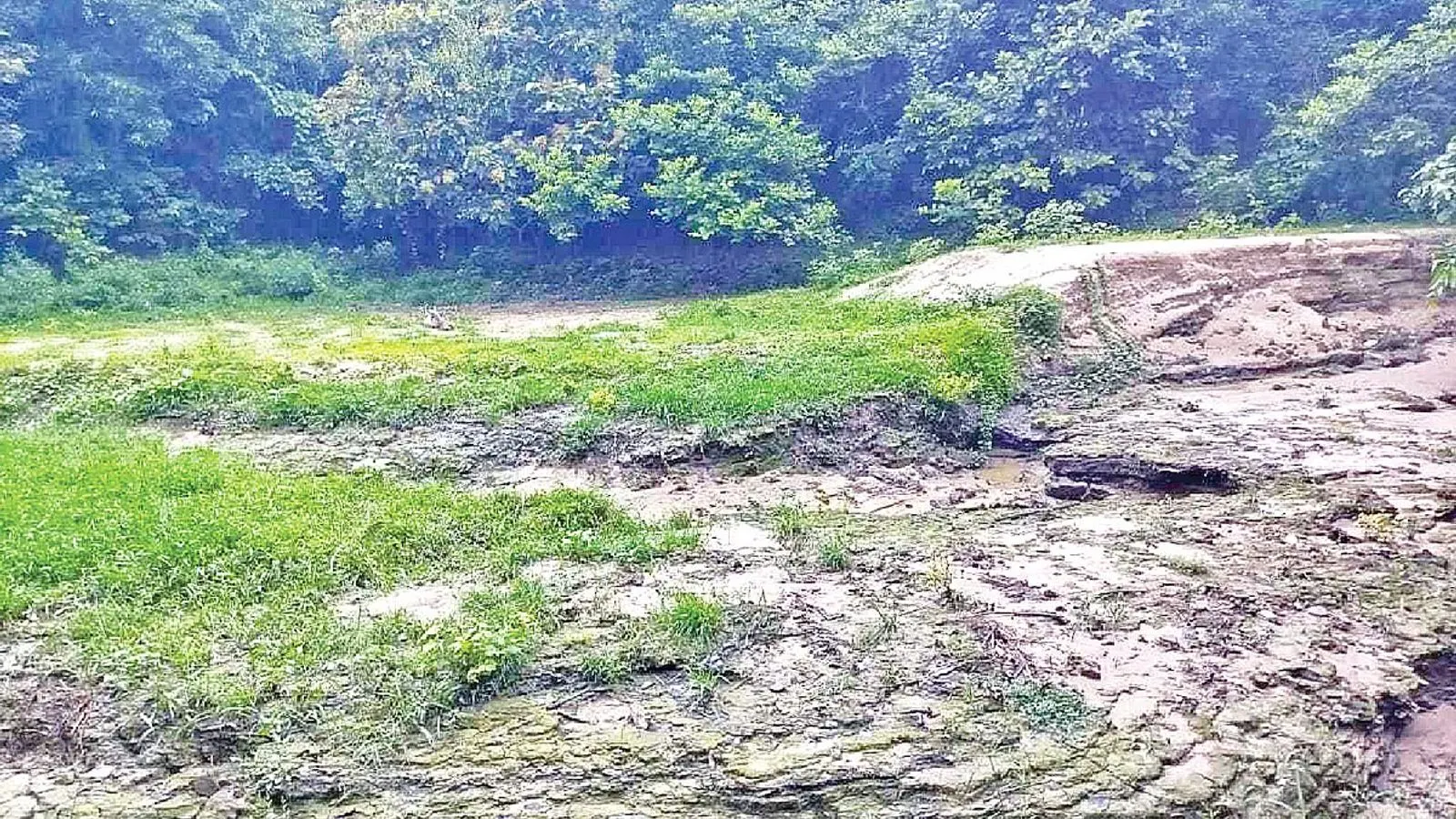
Satchari National Park, situated within the Raghunandan hill area of Chunarghat upazila in Habiganj, Bangladesh, is currently facing a severe environmental crisis characterized by acute water shortages and the gradual filling of its vital water reservoirs. Originally designated as a national park in 2005, the protected forest spans approximately 243 hectares, equivalent to nearly 600 acres of ecologically significant terrain. According to verified environmental reports, the park is home to a rich biodiversity that includes more than 200 species of trees and 197 distinct species of wildlife, comprising 24 species of mammals, 18 species of reptiles, 6 species of amphibians, and over 150 species of birds.
Despite its ecological importance, the interior of Satchari National Park is suffering from severe environmental degradation. Verified facts confirm that the ponds located inside the park have become heavily choked and filled with sand and accumulated silt, while the natural hill streams maintain virtually no steady water flow. Highlighting the historical context of the area's nomenclature,-Chitta Ranjan Barma noted that the park was originally named after seven distinct streams, known locally as chharas. Today, however, only two or three of those historical streams retain any physical existence, and even those are virtually devoid of water. Barma further observed that when rainfall does occur, water is briefly visible in the streams for merely one to two hours before completely drying up.
Environmentalists and local community representatives have expressed profound concern over the diminishing water sources, emphasizing the critical role that aquatic habitats play in maintaining the forest's overall health. Tofazzal Sohel, a prominent advocate from the Bangladesh Poribesh Andolon (Bapa), elaborated on the broader ecological implications by stating that the forest reservoirs do much more than simply quench the thirst of local animals. He explained that these water bodies form the fundamental foundation of the entire ecosystem, supporting the natural forest environment, facilitating the reproduction of frogs and insects, and securing essential food supplies. Sohel stressed that because water sources are already inherently scarce in Satchari, it is critically important to restore the ponds to their former conditions through re-excavation and comprehensive conservation efforts for the sake of both the wildlife and the broader forest ecosystem.
The drying up of these natural habitats has created a direct and immediate danger to the safety of both the resident fauna and the human populations living near the park boundaries. Monir Mia warned about the behavioural consequences of the water scarcity, pointing out that when water remains inside the forest, all the animals naturally tend to stay there. However, Mia cautioned that in the absence of adequate water, these wild animals are forced to venture out toward human localities in search of hydration. He added that this dangerous migration places the animals in grave peril while simultaneously instilling fear and panic among nearby human residents.
In response to the mounting environmental pressures, local authorities and organizations have acknowledged the severity of the crisis and are reportedly taking administrative notice. Mubarak Hossain, representing the Forest Department, confirmed that the precarious current conditions of the various water reservoirs inside the park have been formally reported to senior officials within the Forest Department. As conservationists and community leaders—including figures associated with Prothom Alo, the Bangladesh Tipra Kalyan Sangha, and Reza Khan—continue to monitor the situation, the future of Satchari National Park's delicate ecosystem remains tightly linked to the prompt restoration of its vital water resources.