

Bangladesh Parliament Debates Impact of Battery-Run Rickshaws
Lawmakers in Dhaka discussed the widespread impact of battery-run rickshaws on traffic, power consumption, and the environment. Discussions highlighted thousands of illegal charging points and significant revenue losses.
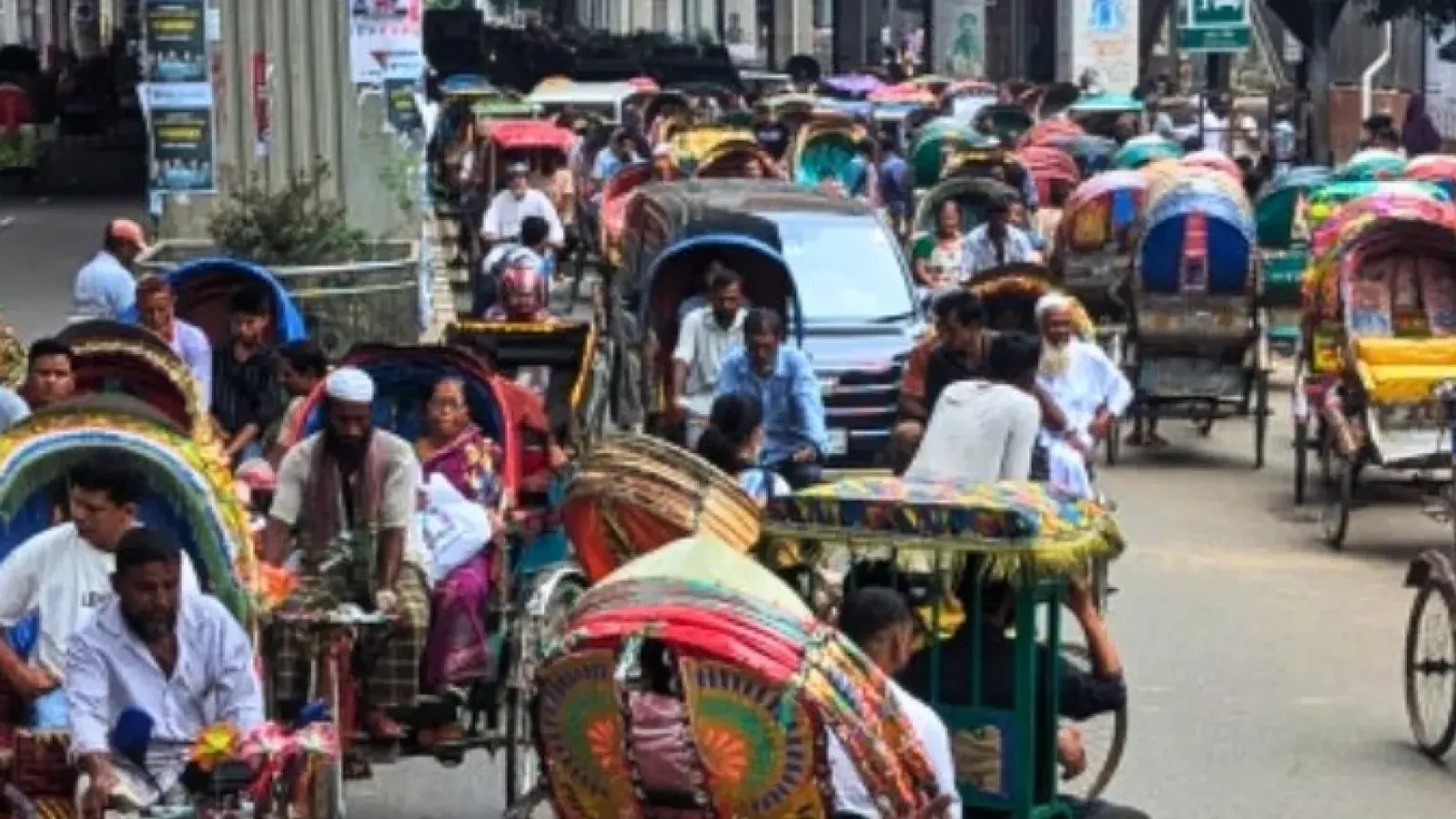
A parliamentary discussion took place yesterday, Monday, at the Parliament in Dhaka, focusing on battery-run rickshaws and their wide-ranging impacts on national power, traffic congestion, and the environment. The session brought attention to the sheer volume of three-wheeler electric vehicles operating across Bangladesh, with estimates placing the total number between 50 and 80 million, referred to locally as 50 to 80 lakh vehicles. These widespread vehicles have become a central point of debate among lawmakers regarding urban infrastructure and resource management.
Energy consumption by these electric vehicles emerged as a major concern during the parliamentary proceedings. The daily power demand required to charge these vehicles accounts for approximately 5 percent or more of the total national power generation, translating to about 1,000 megawatts of electricity consumed daily. While the country features 3,300 authorized charging points, the capital city of Dhaka alone hosts over 48,000 informal or illegal charging points. This rampant unauthorized electricity usage causes the government to lose about 4 billion Taka, or 4000 crore Taka, annually in revenue.
Road safety statistics presented during the session highlighted significant hazards associated with the vehicles. In the year 2025, a total of 6,729 road accidents occurred across the country, resulting in 911 deaths and 14,812 injuries. Out of these incidents, battery-run rickshaws were involved in 13.54 percent of the road accidents. Furthermore, the rate of expansion in the capital remains high, with around 300 new rickshaws being added to the streets of Dhaka on a daily basis.
Addressing the regulatory challenges, Rehana Akhter Ranu noted that while artificial intelligence infrastructure has been deployed, enforcement remains difficult. She stated, 'Capitalizing on various roads, the installation of artificial intelligence-based traffic cameras has reduced irregularities such as red-light violations, lane changes, and speeding. However, battery-run autorickshaws are still moving recklessly without caring about rules and regulations. Due to the lack of number plates on these vehicles, even when identified by AI cameras, it is not possible to issue fines.' She added, 'At present, along with a vast number of autorickshaws operating, about 300 more autorickshaws are being added in Dhaka daily.' Furthermore, clarifying her stance on the matter, she noted, 'She did not speak about banning the movement of autorickshaws. Rather, she spoke about controlling their movement.'
To combat ongoing traffic and regulatory issues, technological enforcement measures are expanding in the capital. Currently, 50 AI-based cameras are active across 17 signals in Dhaka, with an additional 200 AI-based cameras currently being installed in the Ramna and Tejgaon traffic divisions. Concurrently, the government is actively drafting a comprehensive policy to regulate battery-run rickshaws, which will introduce measures including QR codes, official number plates, and mandatory driver licensing to bring order to the sector.