

Suniti Kumar Chatterji's ODBL Marks Its Centenary
Suniti Kumar Chatterji's landmark book on the history of the Bengali language, ODBL, has reached its one-hundredth anniversary since publication. The monumental linguistic study first appeared in print in September 1926.
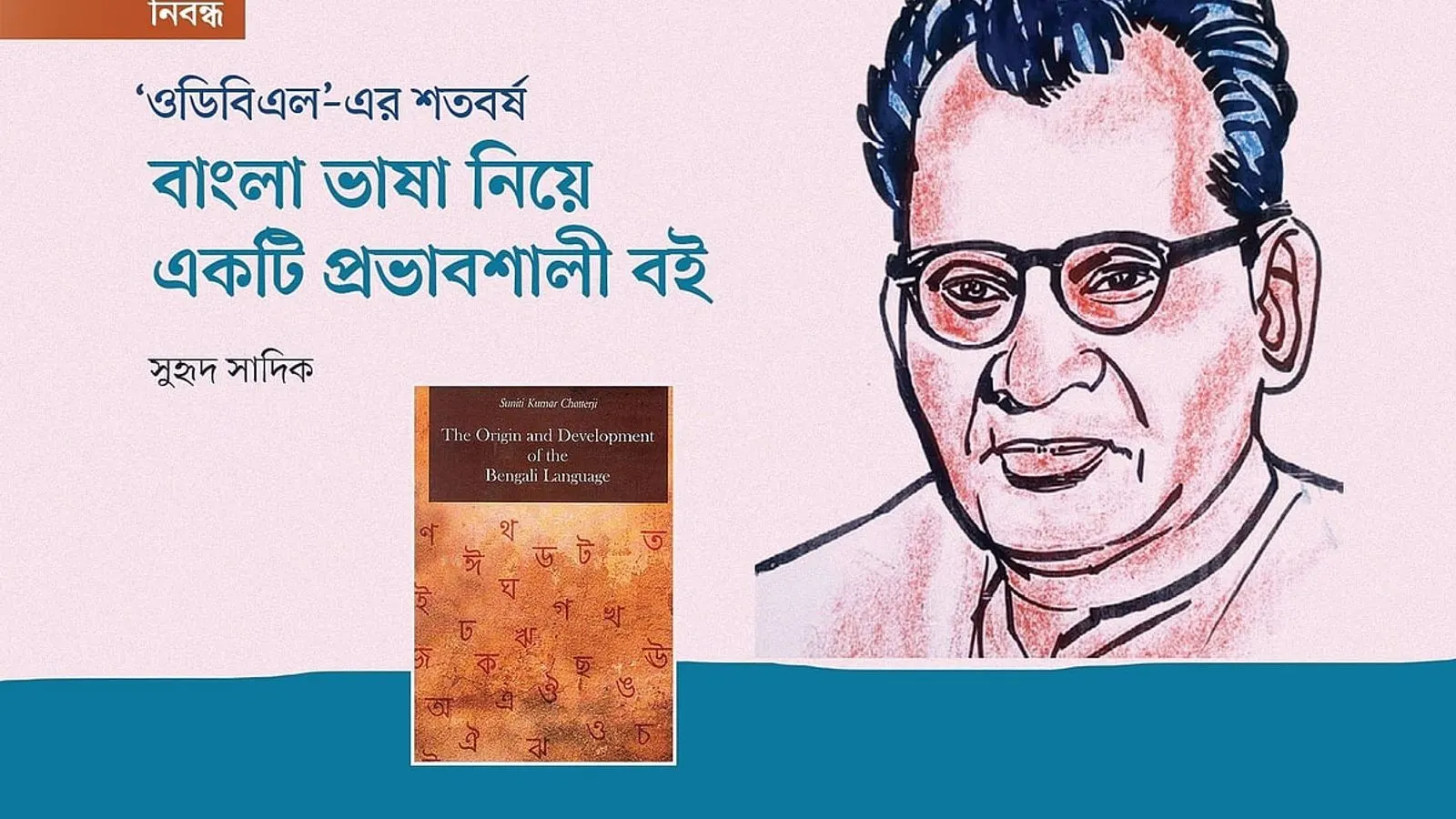
Suniti Kumar Chatterji's renowned historical and linguistic study of the Bengali language, commonly known as ODBL, has officially marked its centennial anniversary. The publication of this monumental academic work stands as a defining moment in the history of South Asian linguistics and language scholarship.
According to the verified historical timeline, the comprehensive volume was published in September 1926. This landmark release captured years of meticulous research into the origins, phonetic patterns, and structural evolution of the Bengali language, establishing a rigorous scientific framework for future linguistic studies in the region.
The creation and publication of the ODBL involved numerous prominent historical figures, literary societies, and academic institutions connected to the era. Among the key entities and individuals documented in the historical record of the book's creation are Suniti Kumar Chatterji himself, along with Masuk Helal, Umesh Chandra Batabyal, Dwijendranath Tagore, Haraprasad Shastri, Ramendrasundar Trivedi, Byomkesh Mustafi, Jogesh Chandra Ray, and Rabindranath Tagore.
The extensive network surrounding the book's legacy also references Pabitra Sarkar, Sir William Jones, Moti Seal, Kumar Guruprasad Singh, Sir Asutosh Mukherjee, and Jules Bloch. Institutional associations tied to this rich history include Prothom Alo, the Bangiya Sahitya Parishad, the University of London, Scottish Church College, Presidency College, the University of Calcutta, and Allen & Unwin.
Chronological milestones associated with the broader context of the era feature several notable dates and statistics, spanning from November 26, 1890, and May 29, 1977, to the research periods of 1878-80, 1911, 1913, 1920, November 1922, 1924, September 1926, the 1,179-page count, the 500-copy print run, the price of 20 taka, and the years 1971 and 1927.
Reflecting on the profound linguistic phenomena underlying these studies, scholar Pabitra Sarkar noted that the mystery of Bengali phonetic pronunciation was what initially sparked Rabindranath Tagore's deep interest in the inner mechanics of language. Rabindranath Tagore himself famously observed regarding the chaotic nature of Bengali pronunciation that upon noticing such irregularities, he became curious to discover whether a hidden system governed the chaos, prompting him to systematically gather examples from Bengali dictionaries to derive underlying rules.