
Scotland Set for Dramatic Partial Solar Eclipse With Up to 95% Coverage
Stargazers across Scotland prepare for a partial solar eclipse on Wednesday evening, with up to 95% of the Sun set to be obscured by the Moon. Experts emphasize safety precautions and monitor changing weather conditions for optimal viewing opportunities.
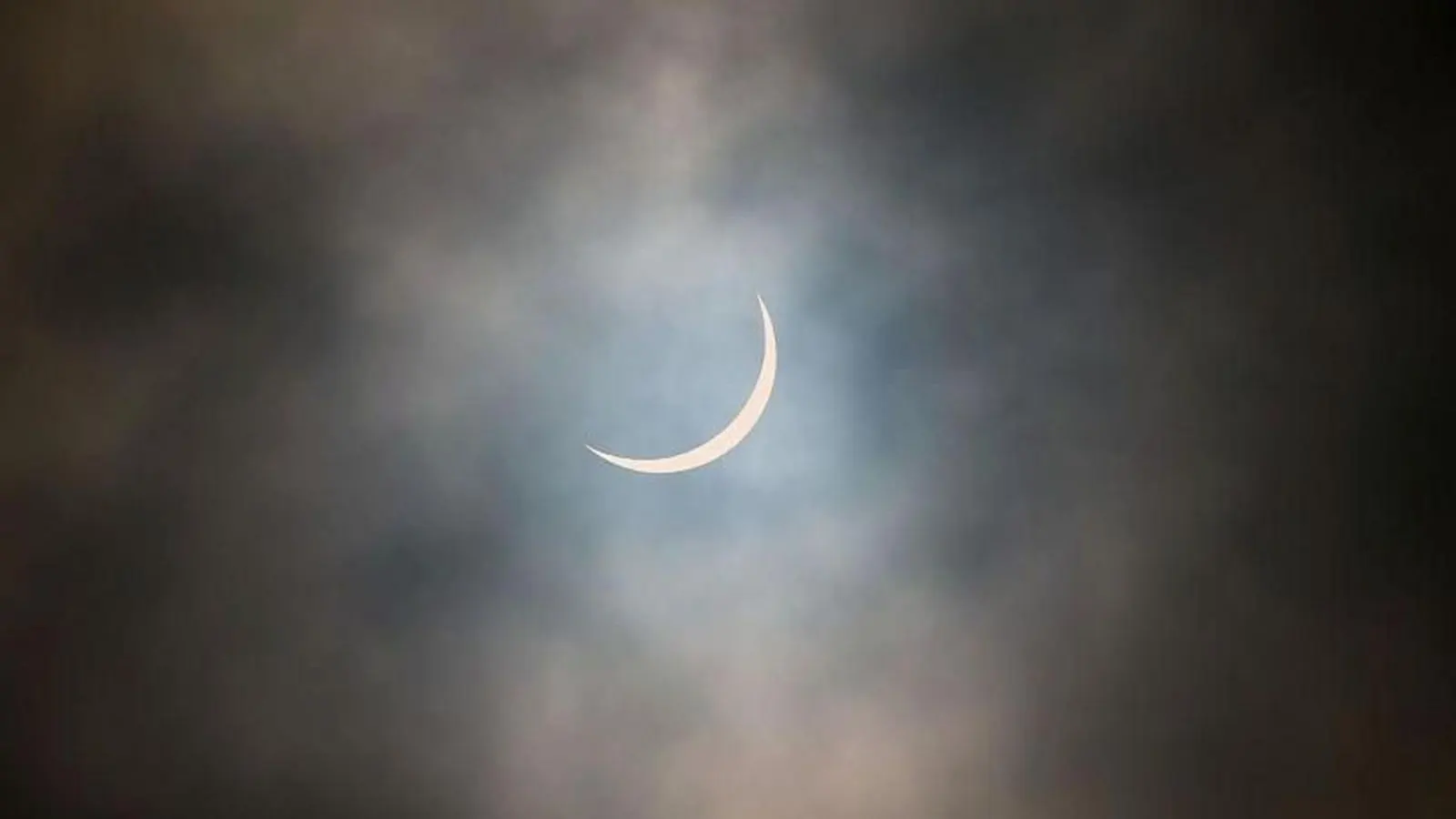
Skywatchers across Scotland are preparing for a striking astronomical event on Wednesday evening as a partial solar eclipse becomes visible overhead. During this phenomenon, up to 95% of the Sun will slowly disappear behind the Moon, creating a dramatic visual spectacle across the region. The celestial alignment is scheduled to begin when the Moon starts to move in front of the Sun between approximately 18:01 and 18:10 British Summer Time (BST).
Astronomer Royal for Scotland Catherine Heymans highlighted the geographical advantages for viewers in the region compared to other areas. "People in England are worried about having to find a clear view of the western horizon. But that is less of a problem for us in Scotland because the Sun sets later," Heymans noted. She also pointed out the leisurely pace of the event, explaining that "It is so slow moving. So if you go out and the Sun is not there you have time to walk down the street to a park or climb up a hill."
Weather conditions will play a critical role in determining who actually gets to witness the spectacle. Joy Dunlop provided the forecast breakdown, stating that southern Scotland is likely to have the most optimal conditions for catching a glimpse of the eclipse as it will be dry with largely clear skies. Dunlop added that "Clearer spells could possibly develop across the central belt and in parts of eastern Scotland." Conversely, the outlook is less promising elsewhere, with Dunlop warning that "the north west Highlands, Western and Northern Isles will remain cloudy with spells of rain giving very limited or no visibility."
Organizations including the Met Office, the Royal Observatory Greenwich, the Galloway Forest Astronomical Society, the Astronomical Society of Edinburgh, the Kintyre and Gigha Night Sky Group, SIGMA Moray's Astronomy Club, and the Whitelee Windfarm Visitor Centre have been tracking the event. The Whitelee Windfarm Visitor Centre cautioned that "Cloud cover is predicted and unfortunately you might not be able to see it." Reinforcing this sentiment, Heymans advised that "The most important thing is to watch the Met Office cloud cover forecast and plan accordingly from there."
Beyond weather concerns, safety remains a paramount issue for anyone attempting to observe the phenomenon directly. Heymans issued a strict warning regarding eye protection, stating, "Even if you don't feel like it is painful to look at the Sun, it is still really damaging to the retina." To ensure safe viewing, experts remind the public that legitimate eclipse glasses must have safety certification ISO 12312-2 or ISO 12312-2:2015 printed directly on them before use.