
Scientific Analysis Reveals Origins and Future of Earth-Moon System
Scientific analysis details the ancient origins of the Moon following a massive planetary impact and tracks its ongoing movement away from Earth. Researchers also highlight how tidal friction is continuously slowing down Earth's rotation.
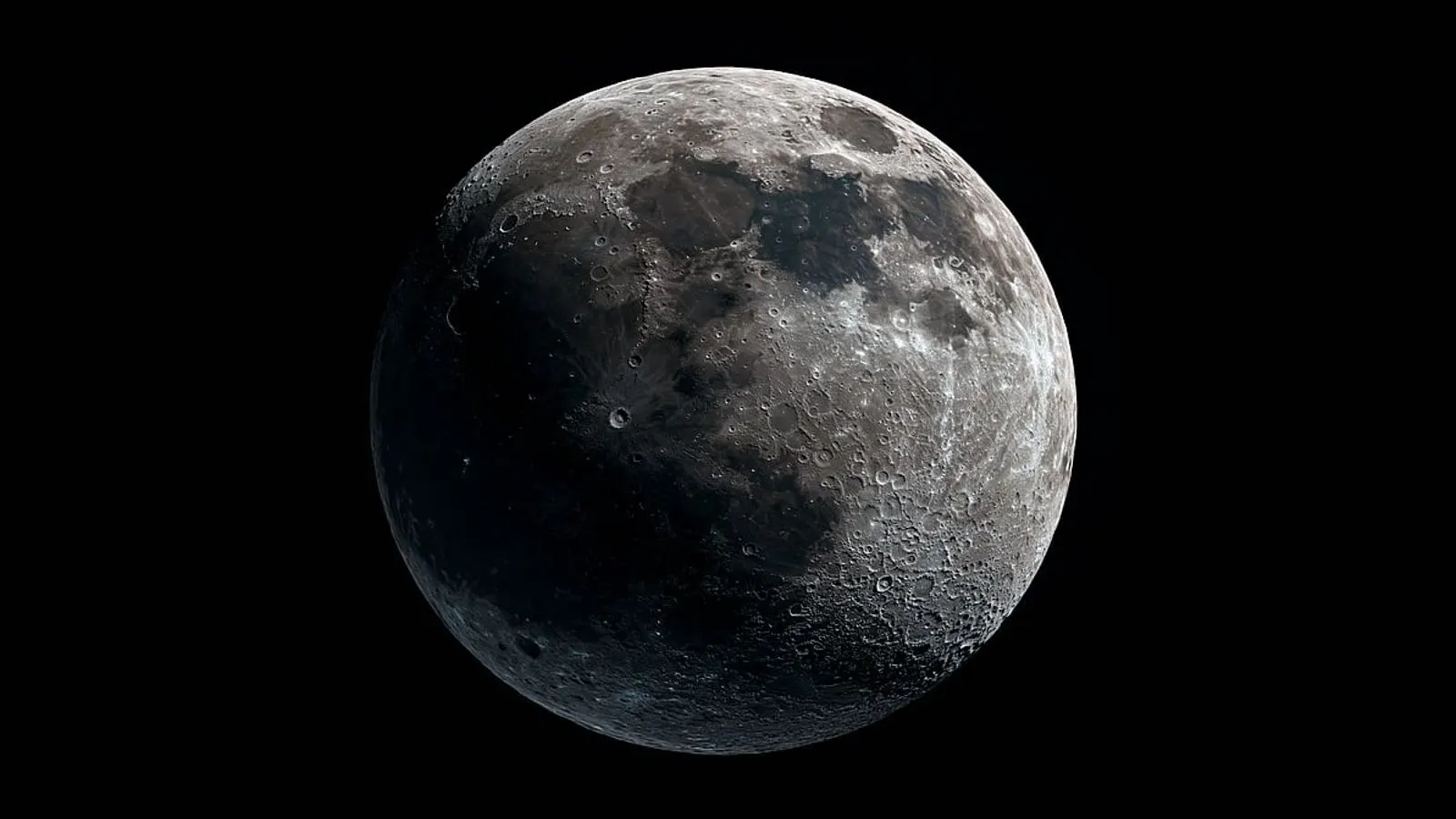
Scientific analysis examining the origin, past, and distant future of the Moon and the Earth system has highlighted the dynamic relationship between the two celestial bodies. According to the findings, the Moon was formed billions of years ago following a massive impact between early Earth and a planet-sized object named Theia. This cataclysmic event set the foundation for the Earth-Moon system that exists today, shaping the planetary architecture of our cosmic neighborhood.
Currently, the Moon is situated at an average distance of about 380,000 kilometers from Earth. However, this distance is not static. Scientific data confirms that the Moon is continuously moving away from our planet at a rate of about 4 centimeters per year, steadily increasing the orbital radius over vast stretches of geological time.
As the Moon orbits and interacts with our planet, it generates profound physical effects on Earth. Notably, tidal friction caused by Earth's oceans is actively slowing down the rotation of our planet. This gradual deceleration means that Earth's days are getting longer by about two milliseconds every 100 years.
The ongoing scientific exploration of the Earth-Moon system provides crucial insights into both the ancient past and the distant future. From the remnants of the collision with Theia billions of years ago to the subtle, continuous lengthening of our days and the slow outward drift of our lunar satellite, researchers continue to map the complex mechanics governing our world.