

NASA's Perseverance Rover Created Five Craters During 2020 Mars Landing
NASA's Perseverance rover created five new craters on Mars after discarding heavy descent hardware during its landing. Researchers identified the impact sites by comparing images taken before and after the 2020 event.
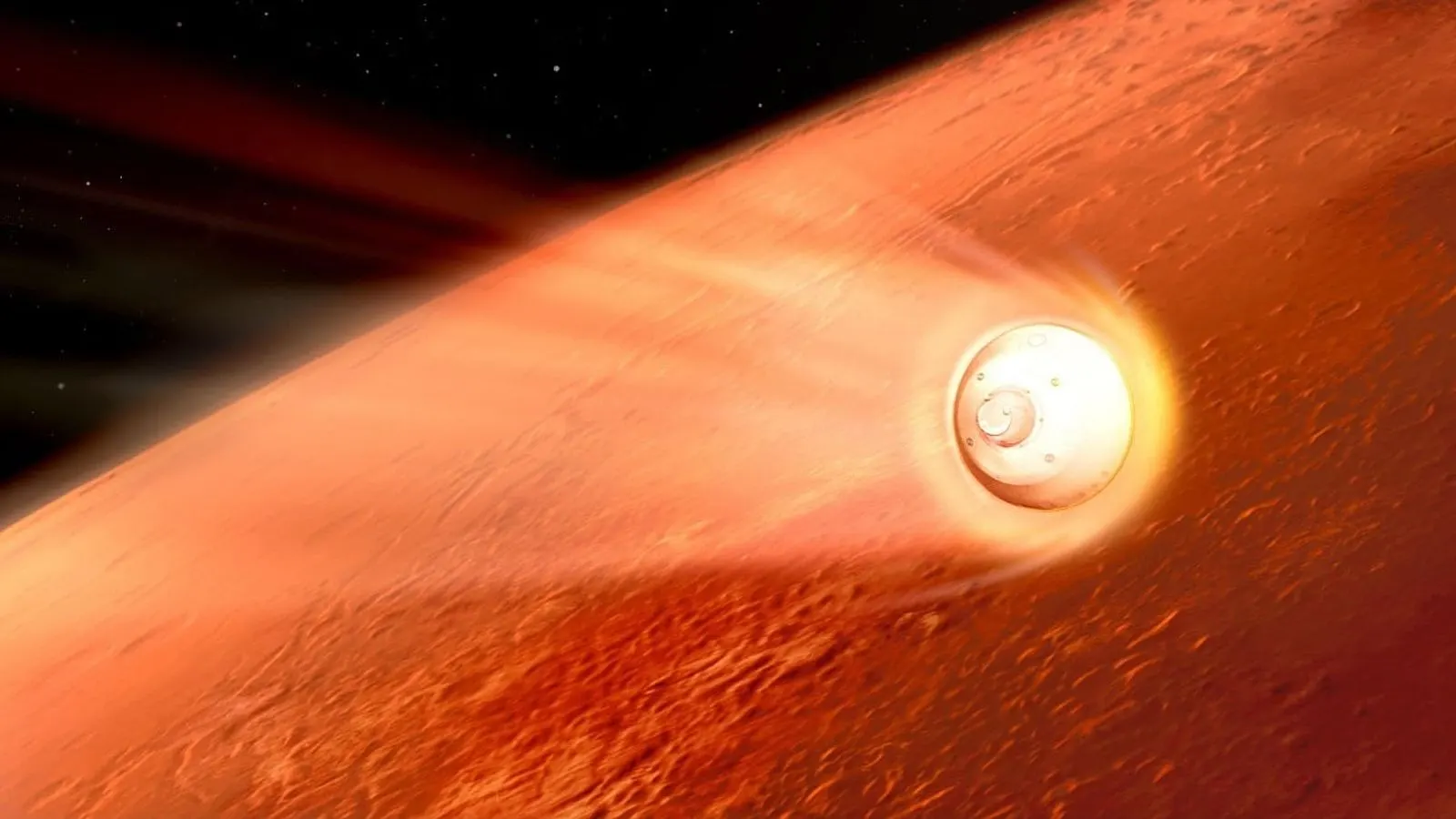
NASA's Perseverance rover created five new impact craters on the surface of Mars when it discarded heavy hardware during its landing sequence prior to 2020, according to findings recently published based on a comparative review of before-and-after imagery. The deployment of this heavy equipment was a necessary part of the spacecraft's landing mechanism, designed to properly manage and control its descent onto the Martian terrain.
The specific location of these newly identified impact sites is situated 70 kilometers northwest of Jezero Crater on Mars. Researchers discovered the formation of these five distinct craters by utilizing two cameras aboard the Mars Reconnaissance Orbiter, which allowed scientists to thoroughly analyze the planetary surface changes over the specified timeframe.
The debris that caused these impacts included two heavy tungsten cruise ballast mass devices, which weighed approximately 77 kilograms each. In addition to the ballast devices, the discarded hardware featured a larger cruise stage piece that weighed approximately 540 kilograms, contributing significantly to the force of the impact upon reaching the surface.
According to the detailed scientific analysis of the landing event, the heavy equipment struck the Martian soil at an impact angle of approximately 10 degrees. This specific trajectory and the sheer mass of the falling components combined to carve out the five fresh craters that were recently documented by the scientific community.
The findings regarding these Martian impact craters were detailed in a study published in the Geophysical Research Letters journal. The research was notably contributed to by A.J. Socolofsky, alongside colleagues from Imperial College London, providing deeper insights into the physical traces left behind by interplanetary spacecraft landings.