
New Study Examines Relativistic Drag on Interstellar Solar Sails
Researchers from the Harbin Institute of Technology have published a new study on arXiv examining how light produces a drag effect on interstellar solar sails traveling at relativistic speeds. The academic paper specifically focuses on radiative dynamics, detailing how photon forces and relativistic light aberration create an opposing force.
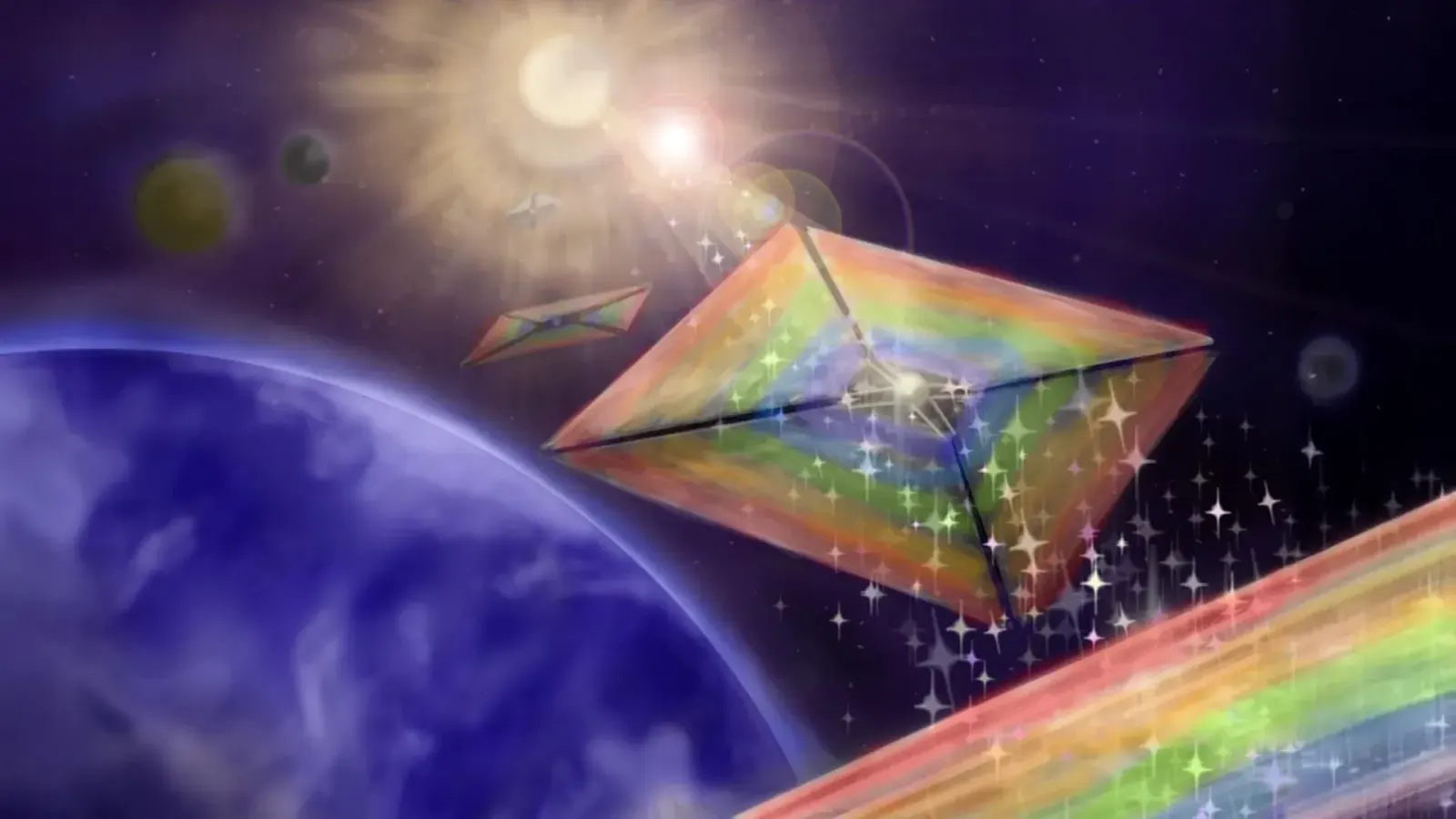
A newly published academic study is shedding light on the complex mechanics of interstellar travel by examining the specific drag effects experienced by solar sails moving at relativistic speeds. Authored by Chao Shen and Jiaze Li of the Harbin Institute of Technology, the research paper has been made publicly available on the preprint server arXiv. The work explores the fundamental physical challenges that spacecraft propelled by light pressure would inevitably face during deep space voyages across the cosmos.
When analyzing the propulsion mechanisms of lightsails, the forces produced by photons striking the surface of the sail are generally separated into three distinct categories. These specific categories include incident light, specular reflection, and diffuse scattering. Each of these components plays a crucial role in determining the overall momentum and trajectory of a spacecraft utilizing radiation pressure as its primary method of propulsion through the interstellar medium.
According to the researchers' findings detailed in the study, a significant physical phenomenon occurs when a solar sail reaches approximately 75% of the speed of light. At this extreme velocity, relativistic light aberration causes diffusely scattered light to direct forward rather than away from the craft. This directional shift results in a physical force generated in the opposite direction of travel, which effectively acts as a substantial aerodynamic-style drag on the vessel.
Despite the comprehensive nature of the radiative dynamics investigated by the Harbin Institute of Technology researchers, the academic paper maintains a very specific scope. The study focuses exclusively on the radiative dynamics of photon interactions with the sail surface. Consequently, the current research does not account for or include various nonradiative effects, such as physical collisions, interactions with interstellar gas and dust, or critical thermal limits that the materials would face.
The publication of this theoretical work contributes valuable insights to ongoing discussions within the scientific community regarding the feasibility of laser-powered interstellar flight. Outlets such as Universe Today have taken note of the research, which builds upon the foundational principles of physics originally detailed by authors including Andy Tomaswick. As scientists continue to model the theoretical limits of lightsail technology, understanding these relativistic radiative drag forces remains an essential step for future deep space exploration initiatives.