

Measles Surge Strains Subornochar Health Complex in Noakhali
Subornochar Upazila Health Complex in Noakhali is facing a surge of patients suffering from measles symptoms. The overwhelming influx has stretched the 50-bed facility beyond capacity.
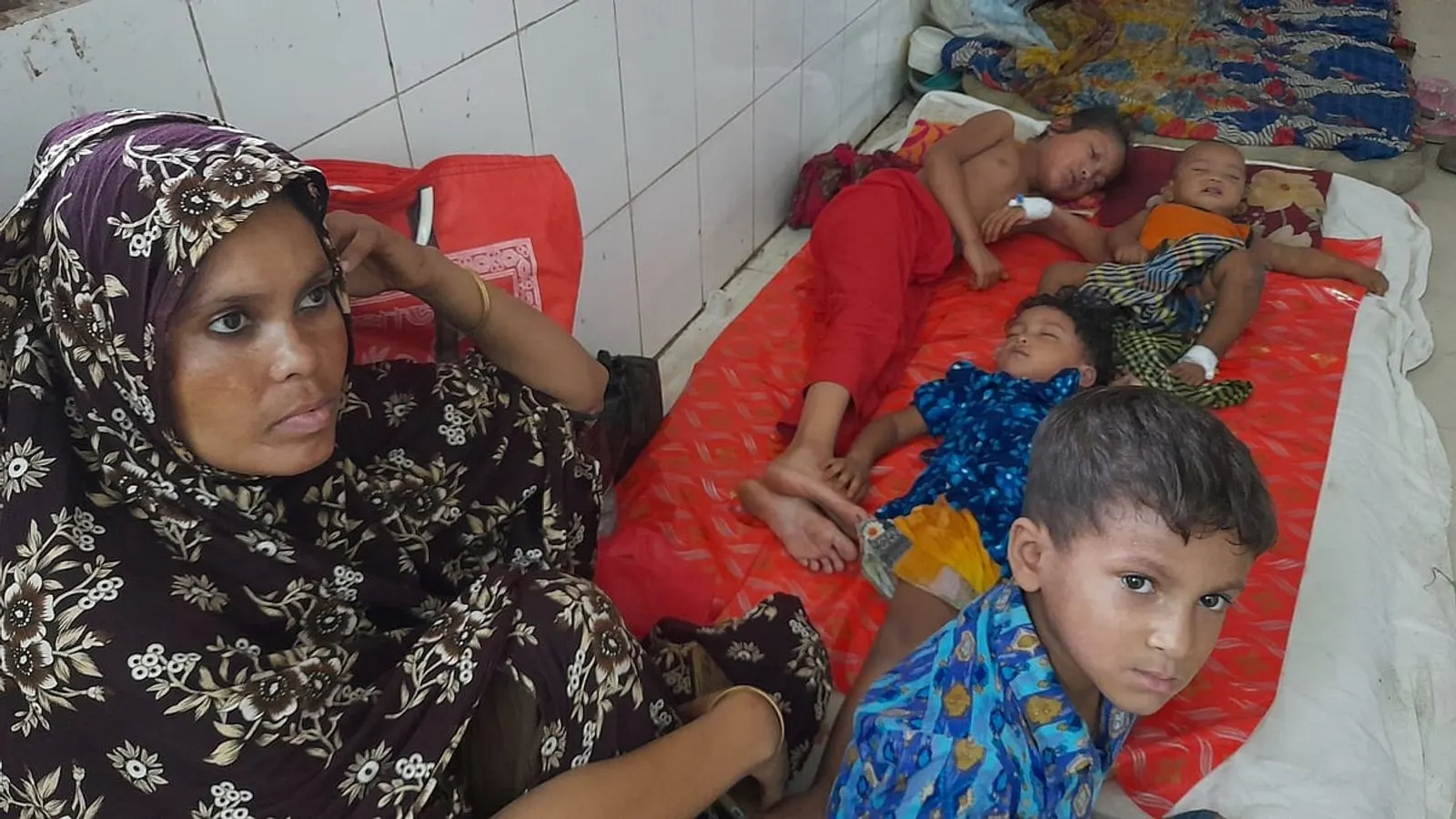
A severe surge of patients presenting with measles symptoms has been officially reported at the Subornochar Upazila Health Complex located in Noakhali. The healthcare facility has experienced a significant increase in hospital admissions over recent days, specifically documented on Sunday and Monday, placing immense strain on the local medical infrastructure and forcing families to endure mounting medical costs and severe hardships.
Kamrun Nahar, a 28-year-old mother, was forced to seek urgent medical care at the Subornochar Upazila Health Complex alongside her four children—Asad, aged 6, Fatema, aged 8, Bibi Jannat, aged 3, and 1-year-old Ilyas. The family's plight highlights the broader community crisis, as numerous other local residents including Shamsul Haque, Mo. Mohiuddin, Mo. Sohel Sarwar, Abdur Rahim, Abdullah Hil Rakib, and Mo. Mizanur Rahman are navigating the outbreak and its financial toll.
According to official hospital data, the medical facility is officially designated as a 50-bed hospital. However, the current reality on the ground shows that an average of 110 to 120 patients remain admitted every single day. Daily admissions average 15 to 16 new patients specifically arriving with measles symptoms. By Monday morning, the inpatient ward was housing 56 admitted patients simultaneously.
Hospital records indicate that a staggering 1,449 patients have been admitted with measles symptoms so far this year alone. Out of this total number, 1,390 patients have successfully recovered and returned to their homes. Medical professionals note that between 70 to 80 percent of all currently hospitalized patients are receiving treatment specifically for measles symptoms.
Abdullah Hil Rakib explained the underlying public health challenge, stating that because the location is a rural area, a lack of awareness causes measles to spread rapidly from one person to another. He noted that multiple children or elderly individuals within the same family are falling victim to the illness, culminating in 70 to 80 percent of hospitalized patients presenting with these symptoms.
The financial burden on affected families has proven to be exorbitant. Patients report spending between 7,000 to 8,000 takas exclusively on necessary medications, while overall expenses reach a total of 14,000 to 15,000 takas. To cover these emergency costs, individuals like Kamrun Nahar have been forced to borrow 8,000 takas at a harsh monthly interest rate of 100 takas per every 1,000 takas borrowed. Compounding the crisis, the 50-bed hospital only receives a medicine allocation designed strictly for 50 people, leaving the vast majority of the overwhelming patient populace to shoulder heavy out-of-pocket expenses for their treatment.