
Massive Cost Surge Proposed for Dhaka Metro Rail Projects Amid Heavy Losses
Dhaka's two major metro rail expansion projects face a staggering cost increase to over 2.13 trillion taka, awaiting planning commission approval. Meanwhile, the state-run Salna Resort in Gazipur continues to suffer ongoing financial losses since its inception.
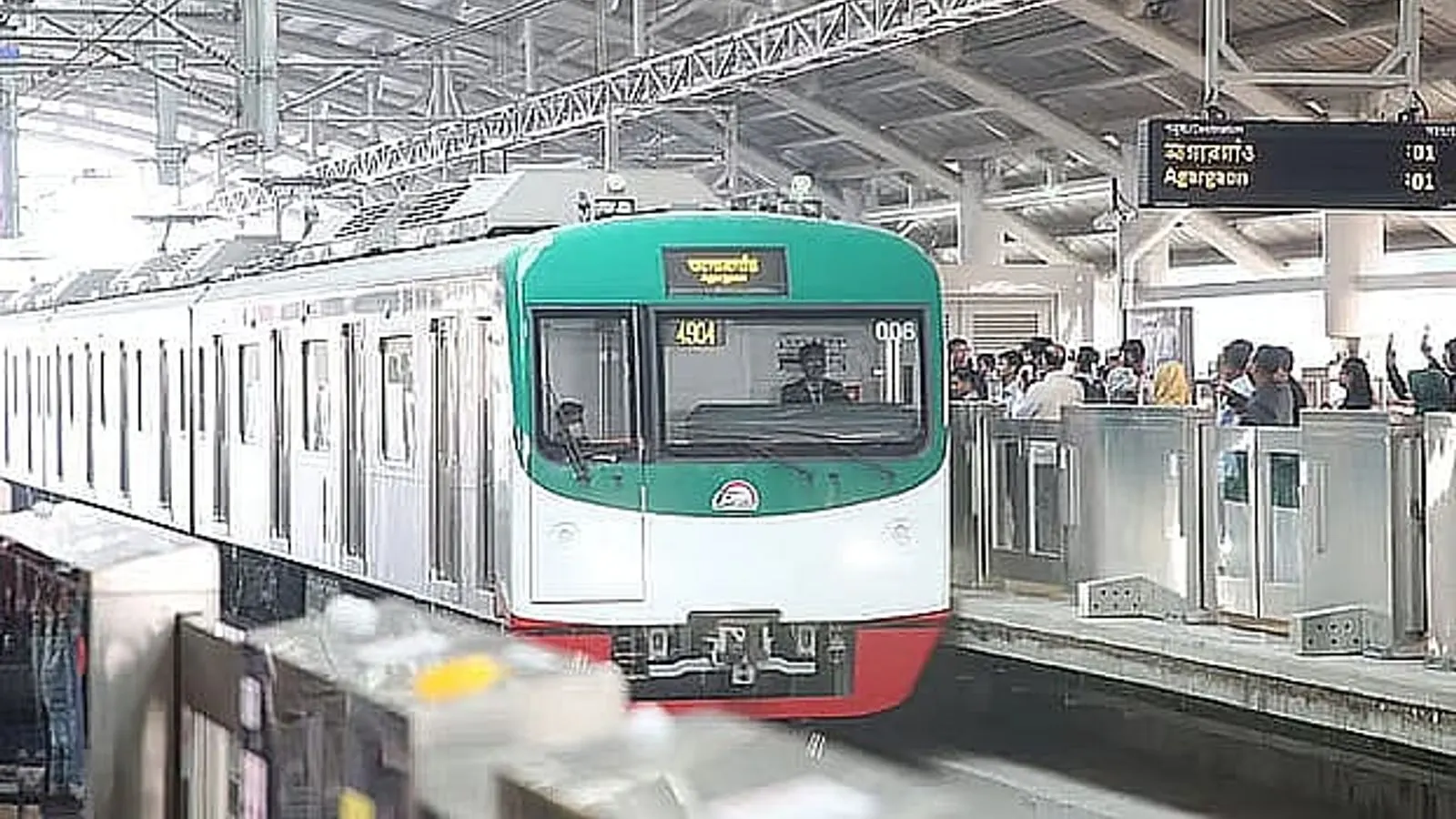
The implementation cost for two major mass rapid transit lines in Dhaka is facing a massive surge, with a newly prepared proposal raising the total estimated expenditure to 2.13 trillion taka (2,13,985 crore taka). Initially, the combined budget for these two vital urban rail networks was projected at 93,800 crore taka. This significant upward revision has now been submitted and is currently awaiting final approval from the planning commission, according to recent reports from Prothom Alo and RisingBD published in 2025.
The financing for both the MRT Line-1 and MRT Line-5 (North) infrastructure initiatives is being supported by the Japan International Cooperation Agency (JICA). Specifically, the original budget for the MRT Line-1 project stood at 52,561 crore taka, but the newly revised proposal has ballooned that figure to 1,20,794 crore taka. This specific underground and elevated corridor spans more than 31 kilometres from Kamalapur to the airport and is designed to incorporate 21 stations along its extensive alignment across Dhaka.
Similarly, the MRT Line-5 (North) project, which connects Savar to Bhatara via Gabtoli, Mirpur, and Gulshan, has seen its financial requirements scale up significantly. The initial estimated budget of 41,239 crore taka has been revised to approximately 93,191 crore taka. This particular route covers a distance of 20 kilometres and is planned to feature 14 stations to alleviate severe traffic congestion in the capital city, matching expert assertions that efficient public transit is indispensable for Dhaka's survival.
To evaluate these steep financial adjustments, a seven-member technical committee headed by Shamim Z. Basunia, a former professor of civil engineering at the Bangladesh University of Engineering and Technology (BUET), reviewed the proposals and submitted a report declaring the increased expenditures to be justified. Defending the revisions, Shamim Z. Basunia explained that annual inflation running at five percent, a 38 percent depreciation in the value of the local currency against the US dollar, extensive design modifications, and rising government value-added taxes and corporate duties have all driven the expenses higher. He added that while Dhaka desperately needs a metro rail network, the government could theoretically explore alternative lenders if the current costs seem too burdensome, though delays would only push expenditures higher.
Echoing the urgency of the transport infrastructure, Sheikh Rabiul Alam emphasized that metro rail systems are absolutely necessary to save Dhaka from traffic collapse. However, transport expert Shamsul Haq voiced caution regarding the procurement process, stating that expenses cannot be reduced unless open competition is introduced into the tender procedures. He noted that if the government successfully negotiates with lending agencies to relax restrictive conditions, project costs would naturally decline, adding that while currency devaluation, design shifts, and material price hikes justify certain increases, costs should never be allowed to skyrocket uncontrollably.
In a separate development concerning state-owned commercial ventures in Dhaka and Gazipur, the Bangladesh Parjatan Corporation's Salna Resort and Picnic Spot has remained mired in financial losses. Constructed on three acres and 12 decimals of leased land obtained from the forest department with a capital expenditure of approximately 9.40 crore taka (94 million taka), the resort has consistently operated in the red. Financial records from the past four fiscal years indicate that total revenues generated stood at roughly 1.88 crore taka, while operational expenditures reached approximately 6.68 crore taka, underscoring ongoing management and profitability challenges for the tourism corporation.