
Himalayan Glacier Changes Spark Flood Concerns in India and Nepal
Recent research and satellite data reveal expanding glacial lakes and dangerous debris flows across the Himalayan region. Experts warn of potential flash flood risks in parts of India and near the Nepal-Tibet border.
বিজ্ঞাপন

Scientific research and recent satellite observations have heightened concerns regarding sudden floods caused by changing glaciers and lakes in the Himalayas, posing potential risks to vulnerable regions in India and near the Nepal-Tibet border. These environmental shifts have drawn renewed attention from researchers monitoring the stability of high-altitude water bodies and terrain across the Himalayan range.
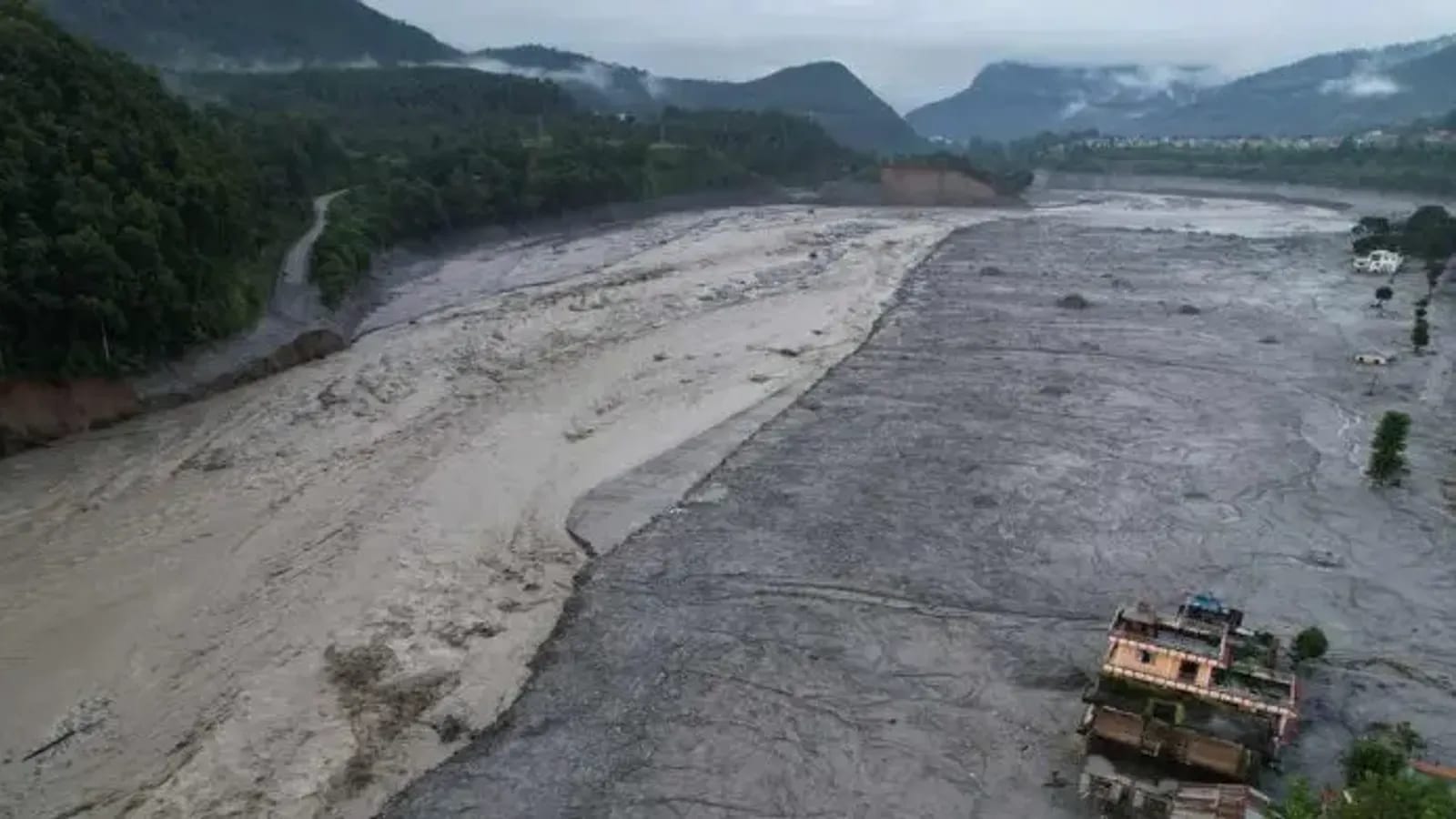
A significant incident occurred on August 26 near the Nepal-Tibet border, when a massive layer of ice, snow, and debris descended and impacted the Bhote Koshi river system. Subsequent satellite imagery of the Betrawati area captured clear evidence showing portions of commercial zones completely covered in the resulting debris.
Further compounding these concerns, extensive academic research has been conducted to map and assess high-risk water bodies in the region. Professor Dericks Praise Shukla of the Indian Institute of Technology (IIT) Mandi led a comprehensive study analyzing approximately two thousand lakes in Himachal Pradesh between 2015 and 2025.
Out of the thousands of water bodies evaluated during the IIT Mandi research project, approximately nine lakes in Himachal Pradesh were specifically identified as highly critical and potentially dangerous. These findings underscore the ongoing threat that expanding glacial lakes pose to downstream communities and infrastructure in the Indian Himalayas.
Additional satellite monitoring has also tracked alarming changes in other parts of the mountain range. Satellite images from August 27 identified a newly formed reservoir spanning approximately 20.25 hectares in the Lende Khola area. Meanwhile, in Arunachal Pradesh's Tawang district, assessments of five potentially dangerous glacial lakes within the Mago Chu basin revealed that four of them have significantly increased in size between 2016 and 2026.
Source: জাগো নিউজ
বিজ্ঞাপন