Why Venus Shines Brightest in Our Night Sky
Venus stands out as the brightest object in the night sky after the Moon. Scientists explain the planetary physics and atmospheric conditions behind its extraordinary radiance.
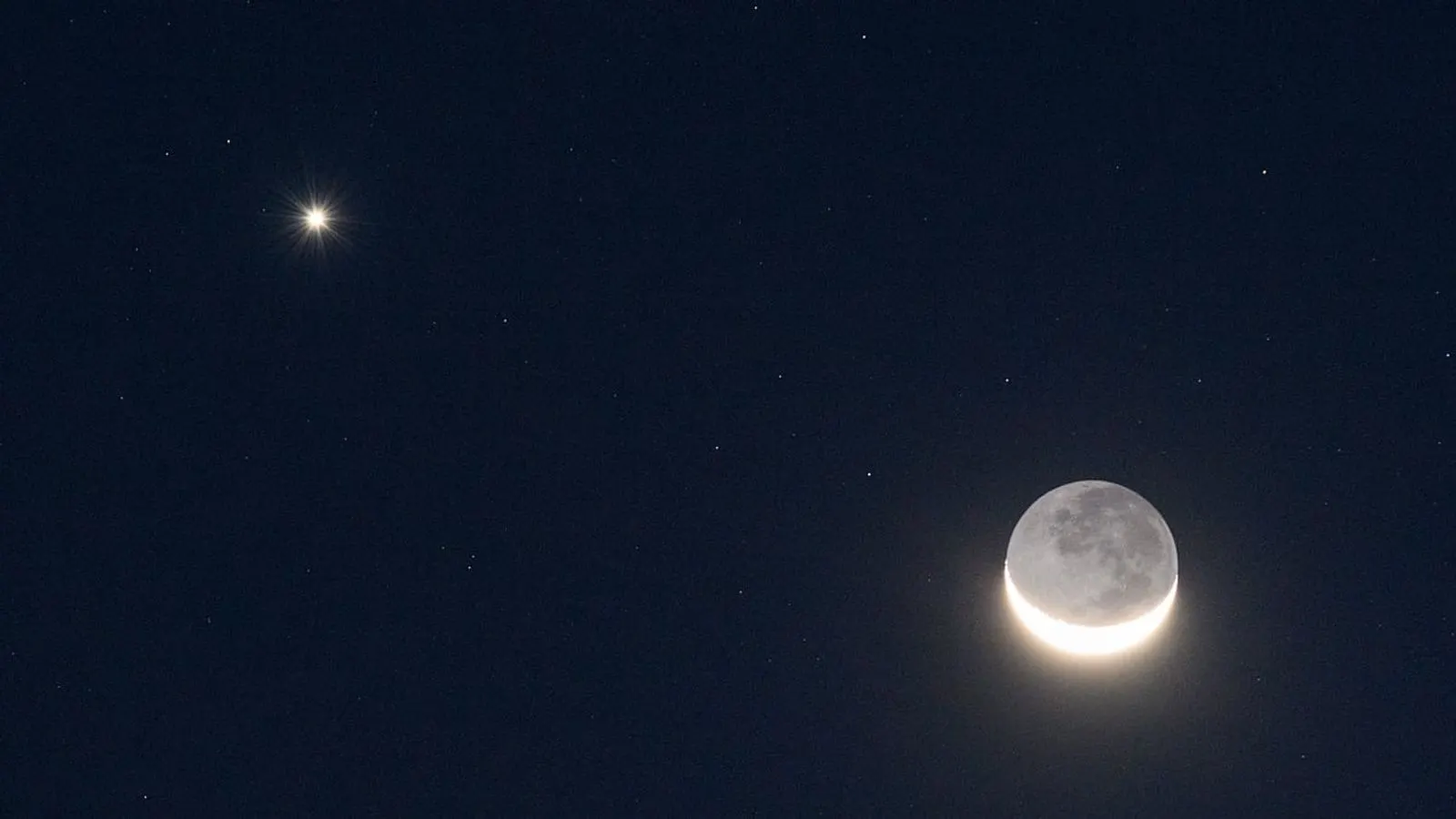
When gazing upward at the nocturnal sky, observers often marvel at the celestial objects illuminating the darkness. After the Moon, Venus shines as the absolute brightest object visible from Earth, captivating stargazers and scientists alike. In terms of astronomical brightness measurements, Venus registers a magnitude value of minus 4.14 on the scientific scale. To put this remarkable luminosity into perspective, the planet glows approximately 100 times brighter than the brightest star visible in the night sky.
The primary scientific reason behind this dazzling display involves the planet's exceptional ability to reflect sunlight back into space. Venus possesses an albedo value of 0.76, which means it reflects approximately 76 percent of the sunlight that reaches it. For comparison, Earth possesses a light reflection capacity of only 30 percent, while the Moon features a much lower albedo value of just 0.07. Although Saturn's ice-covered moon Enceladus actually boasts a higher albedo than Venus at approximately 0.80, Venus appears significantly brighter to observers on Earth because Saturn orbits much farther away from the Sun.
Geographically and positionally speaking, Venus is located approximately 108 million kilometers away from the Sun. Despite this vast separation, the planet's upper atmosphere plays a critical role in its intense visual magnitude. Situated between 48 and 70 kilometers above the surface of Venus lies a thick layer of clouds composed of extremely fine particles of sulfuric acid.
According to Anthony Malama, during this special moment, the tiny particles of sulfuric acid floating in the atmosphere of Venus directly reflect sunlight straight toward the Earth. In scientific terminology, this particular optical phenomenon is referred to as a glory. Malama further notes that the colorful rainbows we observe in the sky are formed by the exact same type of optical phenomenon.
The intricate details regarding the luminosity of Venus have been a subject of ongoing study among researchers and academic institutions. Experts from the Space Science and Engineering Center at the University of Wisconsin-Madison, alongside analysts from Prothom Alo, have documented these astronomical characteristics. Through rigorous observation and measurement, science continues to demystify how planetary positioning and atmospheric composition combine to create such breathtaking nocturnal spectacles.