
V445 Puppis: Hydrogen-Free Helium Nova Revealed After 25 Years
Astronomers have uncovered the true nature of the hydrogen-free helium nova V445 Puppis after 25 years hidden behind dust. Researcher Jon Mills used data from multiple telescopes to identify the binary star system.
Astronomers have finally unraveled the true nature of the remarkable stellar explosion known as V445 Puppis, exactly 25 years after the celestial event first occurred in the late months of the year 2000. For a quarter of a century, the aftermath of this dramatic explosion remained concealed from direct view, hidden deep behind an extensive shroud of thick cosmic dust and gas that blocked standard observation methods.
New findings spanning the past 25 years have now brought clarity to this unique cosmic event, which took place within our own Milky Way galaxy. According to the verified observations, V445 Puppis stands out as the single confirmed helium nova ever discovered within the Milky Way, holding the rare distinction of featuring an explosion completely devoid of any detectable hydrogen.
To pierce through the dense cosmic barrier, researcher Jon Mills successfully utilized extensive data gathered from a powerful suite of astronomical instruments. This collaborative observational network included the Very Large Telescope, the Hubble Space Telescope, the Southern African Large Telescope, the TESS satellite, and facilities associated with NASA and the University of Warwick.
The comprehensive analysis revealed a vast expanding cloud of gas and dust encompassing an area stretching across more than one trillion kilometers. Within this massive circumstellar envelope, the debris and gas masses are hurtling outward through space at an astonishing speed of approximately 12 million kilometers per hour.
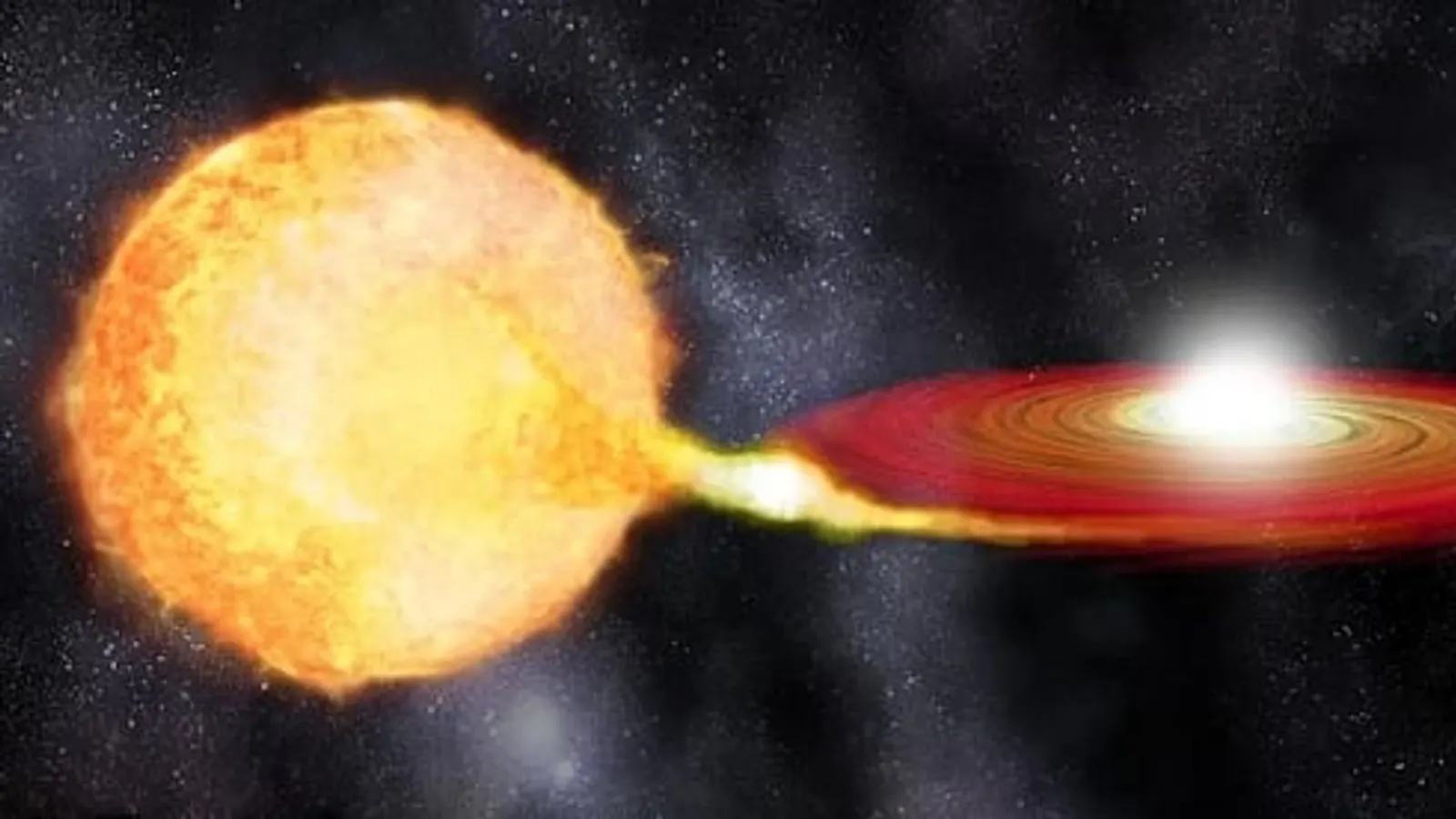
Beneath the obscuring layers of debris, researchers successfully identified the hidden heart of the phenomenon: a dynamic stellar binary system. In this cosmic pairing, a dense white dwarf star is actively stealing fuel from its companion helium star, with the two celestial bodies completing a full orbit around each other every 3.7 days.