Unusual Signal Detected by LZ Dark Matter Experiment in South Dakota
Scientists at the LZ dark matter experiment in South Dakota have detected an unusual signal that does not match any known particle reactions. The intriguing finding was first presented at a particle-astroparticle physics conference held in Japan.
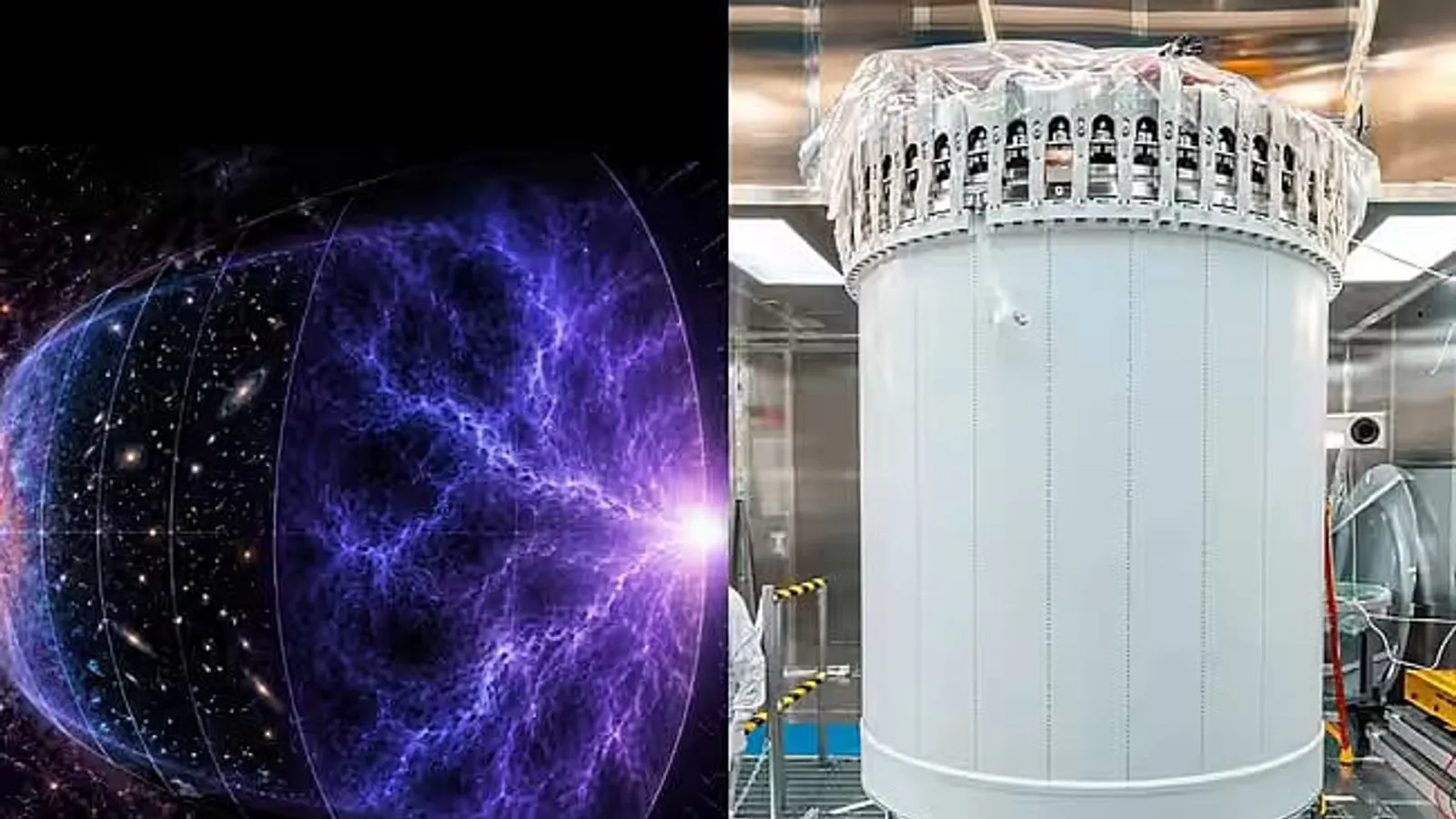
Scientists conducting research at the LZ Dark Matter Experiment in South Dakota have detected a highly unusual signal within the detector's detector component. According to the verified facts of the case, this mysterious signal simply does not match any known particle-interaction patterns that researchers are currently familiar with, prompting intense international scientific interest.
The specific event occurred on 16 June 2023, when a particle penetrated deep inside the LZ detector and directly struck a xenon atom's nucleus. Detailed background information reveals that the sophisticated LZ detector system contains more than 7 metric tonnes of liquid xenon to facilitate these extremely sensitive subterranean physics observations.
The initial findings regarding this anomalous detection were first officially announced and shared with the broader scientific community at a particle-astroparticle physics conference that was held in Japan. Researchers emphasize the statistical significance of the occurrence, noting that the likelihood of the event being a mere coincidence or a false signal is approximately one in four hundred.
Dark matter remains one of the greatest mysteries in modern physics, accounting for approximately 85 percent of the total matter in the universe. The ongoing research is based at the Sanford Underground Research Facility in South Dakota, USA, involving prominent academic institutions such as the University of California, Los Angeles.
Following the significant data release, key figures in the collaboration have welcomed broader international scrutiny. Richard Galtselar stated regarding the unusual findings: "Now we want scientists around the world to give us their opinions on the matter." Researchers Alvine Kamaha and Richard Galtselar continue to analyze the implications of the signal as the global physics community evaluates the data.