

Total Solar Eclipse Approaches as Experts Advise on Reusing Glasses
A rare total solar eclipse is set to cross mainland Europe, the UK, southern Spain, northern Africa, and the Arabian peninsula on August 2, 2027. Astronomers and environmental experts are now advising the public on how to safely reuse, recycle, or donate eclipse glasses.
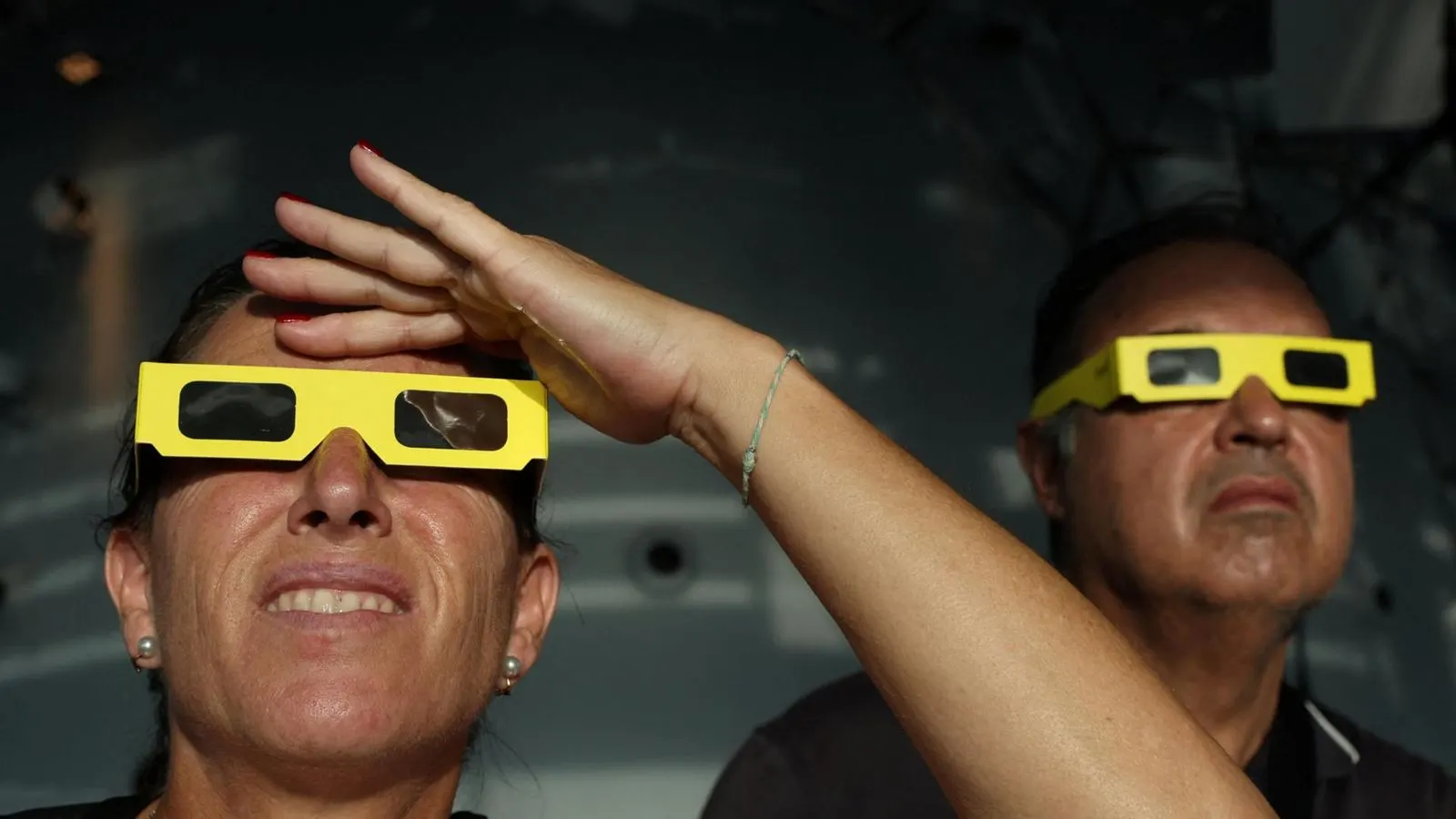
A total solar eclipse is scheduled to take place across mainland Europe and the UK on August 2, 2027, marking a major astronomical event for the region. This upcoming cosmic phenomenon will be prominently visible from southern Spain, northern Africa, and the Arabian peninsula, generating significant interest from international observers, news organizations, and scientific institutions alike. As planning for the celestial event gets underway, experts are highlighting both the scientific marvel of the eclipse and the environmental considerations surrounding the equipment required to view it safely.
Dr Renee Tonkin from Recycle Now and Science Owl has raised important concerns regarding the sustainability of viewing equipment, noting that eclipse glasses serve as a stark reminder of modern single-use habits. According to Dr Tonkin, these protective items are particularly difficult to recycle due to their mixed materials. Expanding on the environmental impact, Dr Tonkin pointed out that eclipse glasses are a prime example of our single-use culture, noting that they are difficult to recycle because of the mixed materials used in their construction.
Offering a different perspective on visibility and equipment, Dr Ed Bloomer from the Royal Observatory Greenwich and the Federation of Astronomical Societies explained how the eclipse will be experienced in the United Kingdom. Dr Bloomer noted that the event will not trouble people in the UK very much, stating that it is not going to be the eclipse of our century for observers there. However, Dr Bloomer emphasized that safety remains paramount and highlighted improvements in modern manufacturing standards. He explained that the glasses people purchase today, which are made to the correct ISO safety certification standard, are constructed slightly differently than older versions, meaning viewers can keep them for longer periods.
To mitigate waste, experts have outlined several practical methods for extending the lifespan of viewing equipment rather than discarding them immediately after the event. Dr Tonkin suggested that passing items on to someone who will use them more than you is a really simple way to extend the life of something that might otherwise be thrown away. Additionally, Dr Bloomer noted that local astronomical societies might often take eclipse glasses in so that they have a bunch to give out to people at future events. Verified guidance also confirms that eclipse glasses can be reused if stored safely, recycled by separating cardboard frames from lenses, or donated to schools, libraries, and astronomical societies.
For those looking to capture the event creatively, alternative uses for the specialized filters have also been recommended by scientific commentators. Dr Tonkin advised enthusiasts to cut out a square of the solar filter material from their glasses and mount the square over their phone's camera lens. With the historic date of August 2, 2027, drawing closer, science communicators continue to balance public enthusiasm for the skies with practical advice on resource management and environmental responsibility.