
Sylhet Govt Agrogami Girls' College Faces Severe Teaching Crisis
Established in 1903, the institution lacks dedicated college-level teachers and staff. Secondary teachers currently conduct classes to manage the shortfall.
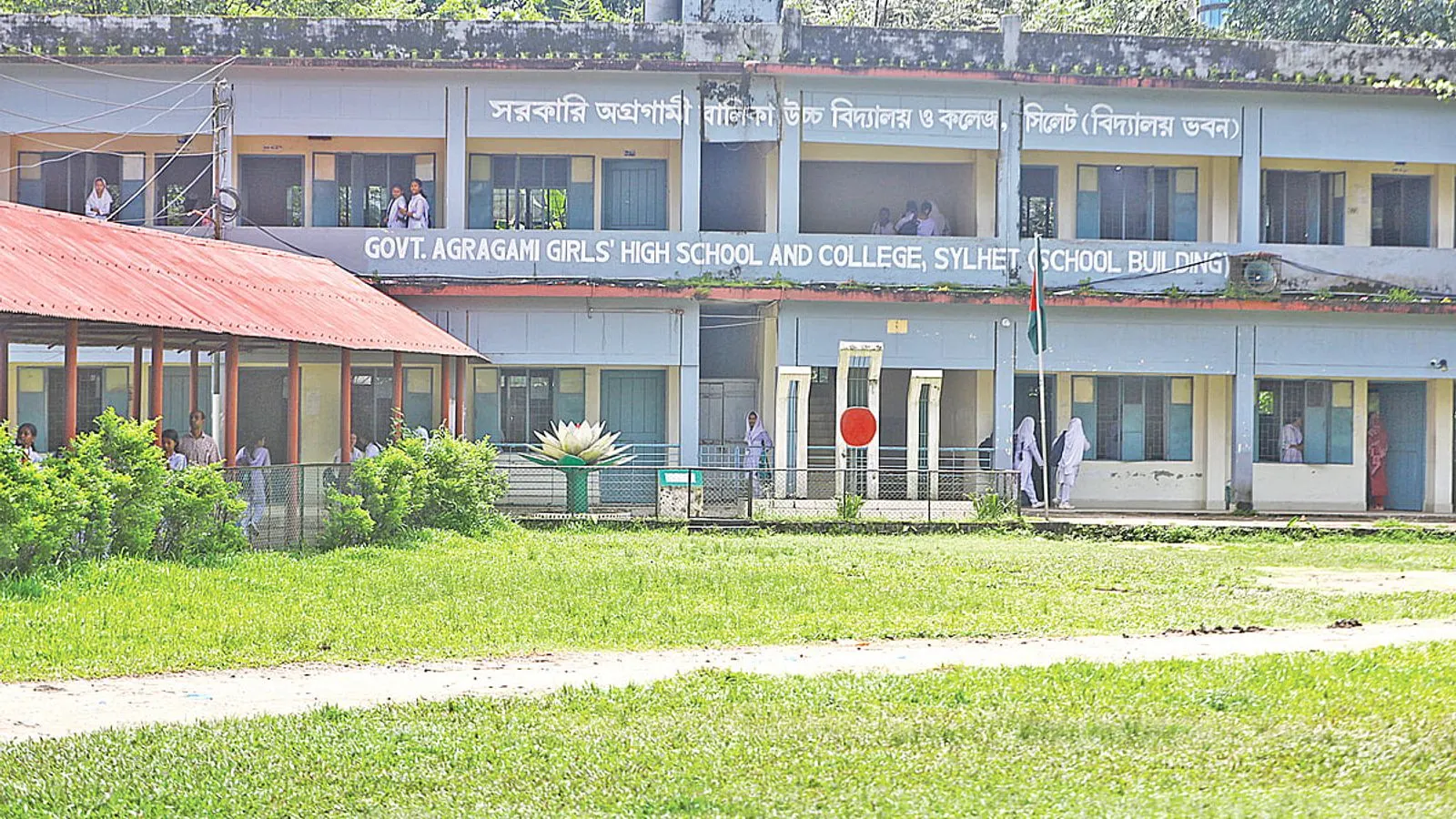
Govt Agrogami Girls' High School and College in Sylhet is currently facing a severe crisis in its teaching and educational activities. The underlying issue stems from the complete failure to appoint separate teachers, officers, and staff specifically for the college section of the historic educational institution. Originally founded back in 1903 in the Zindabazar area of the city as a school, the institution was officially transformed into a college in the year 2005 to expand educational opportunities for female students in the region.
Although the college status was granted in 2005, the actual college-level educational activities and classes did not officially commence until 2009. Despite years passing since instruction began at the higher secondary level, the college branch still operates without any dedicated teaching staff or separate administrative officers and employees. To bridge this glaring gap, the existing teachers of the school branch are forced to shoulder the heavy burden of teaching the college students as an additional responsibility alongside their regular duties.
Statistical data regarding the institution highlights the immense scale of this operational strain. The school branch currently accommodates a total of 1,867 female students across its primary and secondary grades, supported by 48 working teachers while two specific teaching posts remain entirely vacant. Meanwhile, at the college level, the academic load involves 296 female students enrolled in the twelfth grade across both the science and business studies departments. Within this twelfth-grade science department alone, the total enrollment stands at 150 students who require specialized academic attention.
Addressing the ongoing crisis, the institution's principal, Zaeda Gulshan Siddika, acknowledged the institutional limitations in a statement to Prothom Alo. She stated that the absence of dedicated college-level teachers is naturally creating some problems in conducting regular lessons. However, she noted that the administration is managing the situation by utilizing relevant secondary-level teachers who hold honours and master's degrees to conduct the college classes instead.
Additional insights into daily academic life were provided by Salma Monir, another individual associated with the institution. She observed that classes had begun only a few days prior, which accounts for some initial reduction in student attendance. However, she specifically pointed out that student attendance tends to drop noticeably during the period following the midday tiffin break.
Voicing deep concern over the long-term academic impact, Mo. Didar Chowdhury emphasized the detrimental effects of the ongoing staffing shortage. He stated that the absence of subject-wise experienced and specialized teachers naturally disrupts and hinders the delivery of proper, high-quality education to the young women enrolled at the college.