Study Discovers 23 Mammal Species in Inani National Park
New research in Bangladesh's Inani National Park has documented 23 mammal species, including the critically endangered clouded leopard and hoolock gibbon. Researchers emphasize that local population pressures and resource constraints pose significant challenges to wildlife conservation.
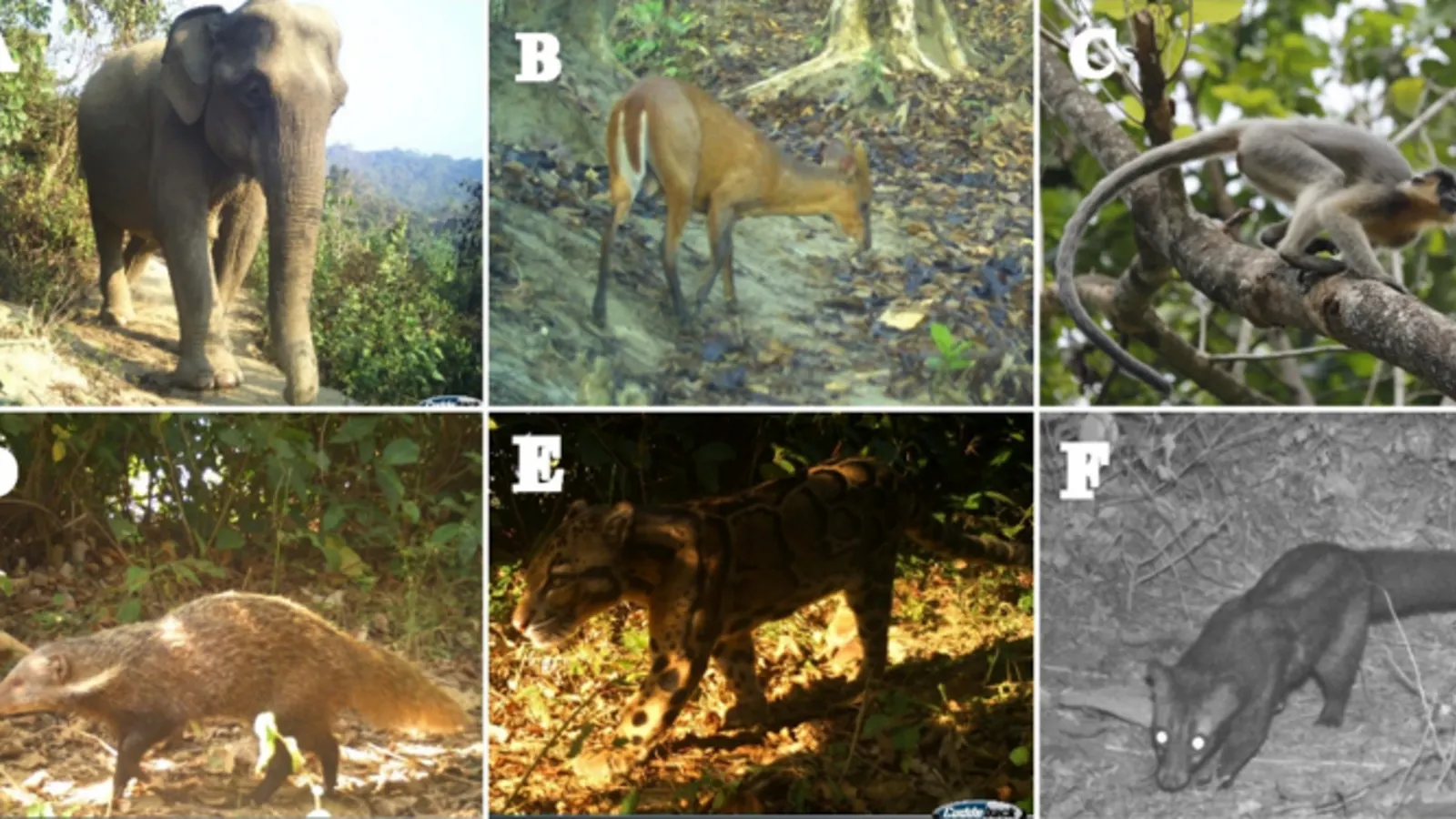
A comprehensive new research initiative has successfully documented 23 mammal species within Inani National Park, located in Cox's Bazar, Bangladesh. The protected area, which officially received designation as a national park in 2019, encompasses a total area of 7,085 hectares. Among the notable wildlife documented during the study are the critically endangered clouded leopard, the hoolock gibbon, and the Asian elephant, highlighting the ecological significance of this southern forest region.
The study was spearheaded by researchers Bipul Krishna Das, who serves as the director of the Wildlife Centre under the Bangladesh Forest Department, and Mohammad Firoj Zaman. Detailing the scope of their academic investigation, Bipul Krishna Das explained to BBC Bangla that their research comprised two distinct components. The first component examined the diversity of mammal species present in the habitat, while the second focused on evaluating the overall living suitability of the area. Researchers analyzed which specific animals predominated in particular locations, assessed the types of trees available, and evaluated the surrounding environment to map out ecological relationships.
To gather accurate field data across the 7,085-hectare landscape, the research team utilized a combination of camera traps, line transects, and indirect sign spotting methods. Specifically, cameras were deployed across 32 distinct locations, while the park itself was divided into 11 zones for the research. Furthermore, the methodology incorporated interviews with 300 local people living near the park. Discussing the detection of the elusive clouded leopard, Bipul Krishna Das noted that the animal was captured directly on camera traps at five locations, while thirteen additional events confirmed its presence through indirect evidence such as pugmarks and scats.
Alongside the animal surveys, the botanical assessment identified 66 distinct plant species within Inani National Park. Bipul Krishna Das stated that the ultimate goal of the research is to provide actionable recommendations to wildlife management authorities. By understanding which specific tree species are preferred by various animals, the research aims to guide the planting of appropriate vegetation to enhance habitat development and ultimately increase wildlife populations over time. The study also documented broader environmental pressures affecting the park, with Das noting that the presence of a large Rohingya population alongside increasing local population growth has created substantial pressure on the biodiversity of the Cox's Bazar area.
These local pressures exist within the broader context of national wildlife vulnerability documented by the International Union for Conservation of Nature (IUCN). According to IUCN data for Bangladesh, a total of 390 wild animal species are currently facing the threat of extinction. This broader crisis includes 56 critically endangered species, 181 endangered species, and an additional 153 species categorized as vulnerable.
Despite these extensive conservation challenges, institutional limitations continue to hinder effective park management. Mohammad Firoj Zaman highlighted several critical hurdles facing conservation efforts in the region, pointing out that there are limitations in many areas, including a shortage of manpower and insufficient funding allocations for wildlife conservation. Zaman emphasized that management is frequently not being carried out in the manner that is actually required to properly safeguard these fragile ecosystems.