Parallels in Pakistan: Bhutto and Khan Downfalls Analysed
A comparative analysis examines the historical parallels between the political downfalls and imprisonments of former Pakistani leaders Zulfikar Ali Bhutto and Imran Khan. The study highlights striking similarities in their trajectories amidst shifting domestic and geopolitical landscapes.
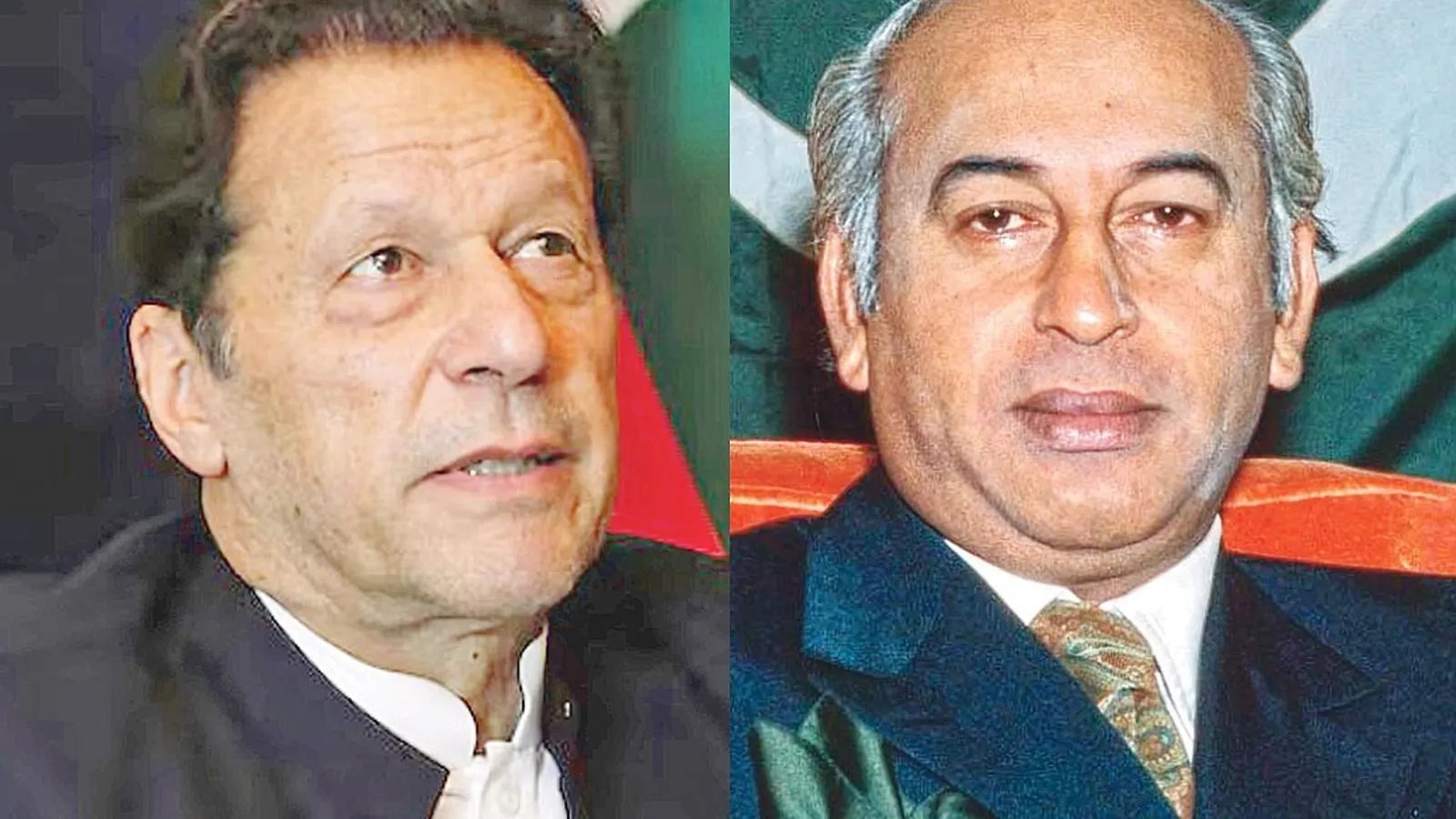
An in-depth analysis of political developments in Pakistan draws distinct parallels between the political downfalls and imprisonments of two prominent national figures, Zulfikar Ali Bhutto and Imran Khan. The historical context reflects how leadership transitions and state conflicts have unfolded across decades in the country, marked by legal challenges and international diplomatic pressures.
Zulfikar Ali Bhutto faced severe political upheaval when he was first overthrown from power in July 1977 and detained shortly afterwards. His imprisonment intensified in September 1977, followed by a death sentence issued in March 1978. That judicial order received final approval from the high court on 24 March 1979. Years later, the Rawalpindi prison where these events occurred was demolished in 1988, following the construction of a new facility in 1986.
In the contemporary political arena, Imran Khan faces a similarly tumultuous detention. Last August marked the completion of three years of imprisonment for Khan, who is currently held in Adiala Jail. His legal battles have escalated significantly, with authorities filing more than a hundred cases against him.
The historical record also captures intense diplomatic engagements during Bhutto's tenure, including a meeting with US Secretary of State Henry Kissinger in New York on 11 December 1971. Kissinger later visited Pakistan in August 1976. Reflecting on Bhutto, Kissinger described him as polished, articulate, and possessing subtle intelligence, noting, "Bhutto was polished, articulate and subtly intelligent... I saw him as brilliant and delightful. His ideas were world-class... He was not someone easily fooled." However, tensions also flared during their diplomatic interactions; Kissinger notably warned Bhutto regarding specific nuclear programmes, stating, "If you do not abandon this programme, a horrible example awaits you."
These domestic political struggles coincided with major geopolitical shifts in the region during the late 1970s and subsequent decades. Key international events included the fall of the Shah in Iran at the beginning of 1979, the entry of the Soviet army into Afghanistan towards the end of 1979, and the formal Soviet troop deployment into Afghanistan on 28 December 1979. Decades later, the geopolitical landscape shifted again with the expulsion of NATO forces by the Taliban in 2021.