Pakistan Postal Service Issued Kazi Nazrul Islam Stamp in 1968
In 1968, the government of Pakistan published a special postal stamp dedicated to Kazi Nazrul Islam. The renowned poet was born in West Bengal and fell bedridden in 1942.
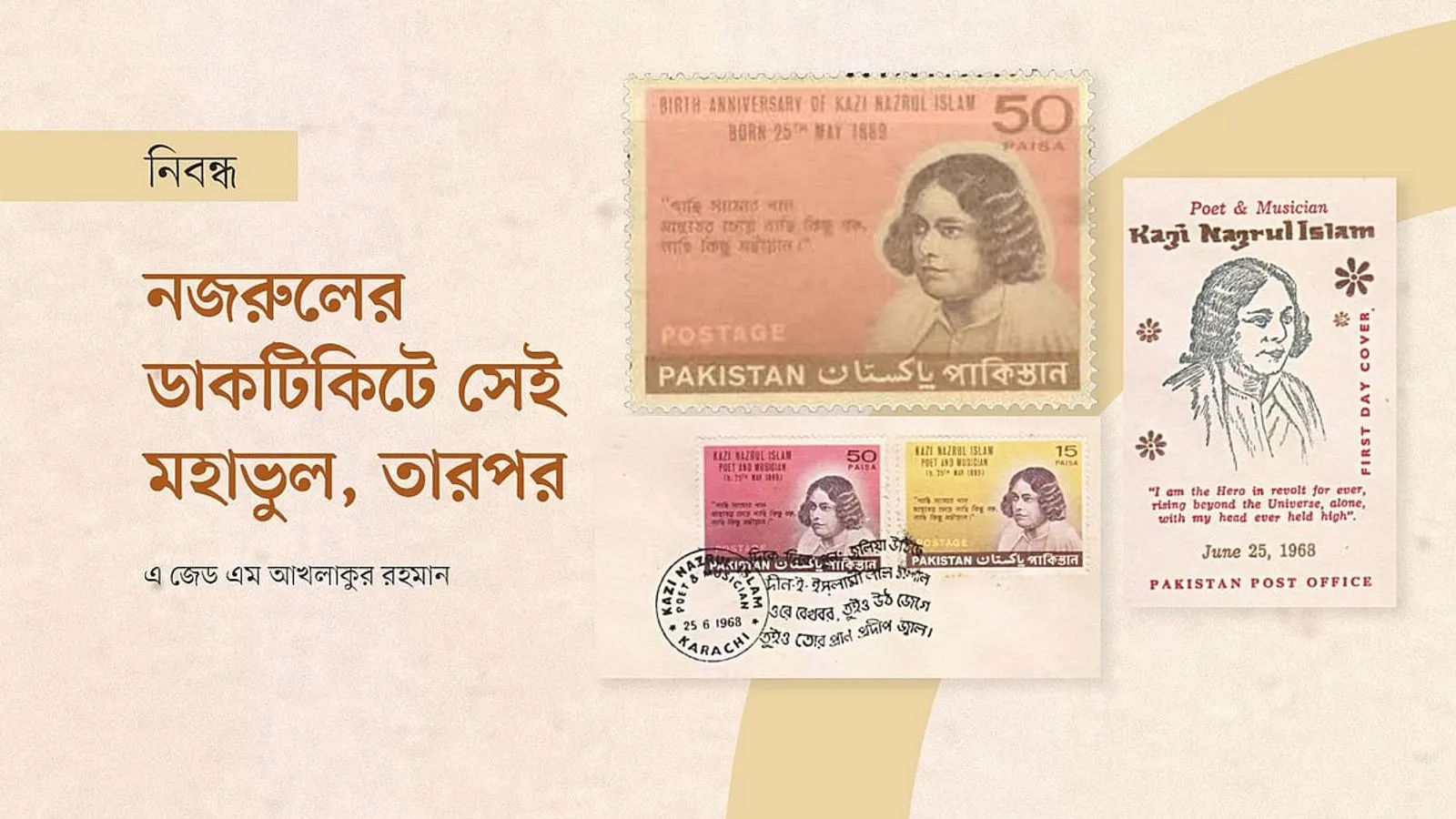
During the year 1968, the government of Pakistan officially published a special postal stamp dedicated to the revered poet Kazi Nazrul Islam. This historic philatelic release occurred against a backdrop where the Pakistan Postal Service had published a total of 296 commemorative and general postage stamps over a span of 24 years. Out of this total output by the central postal authorities, only 51 stamps were connected to the history, heritage, or notable personalities of East Pakistan.
Kazi Nazrul Islam holds a monumental place in literary history. He was born on May 24, 1899, which corresponds to the 11th of Jaishtha in the Bengali calendar year 1306. His birthplace was the village of Churulia, located in the Asansol subdivision of the Burdwan district in the Indian state of West Bengal.
Tragically, the later years of the poet's life were marked by severe physical and mental health struggles. In the year 1942, the poet lost his power of speech and suffered a mental imbalance, which left him bedridden for the remainder of his life. Despite these profound personal hardships, his legacy continued to be recognized decades later, leading to the 1968 stamp release by Pakistan.
The issuance of this stamp remains a notable historical intersection between the poet's life and the administrative actions of the Pakistani government during that era. While the central postal department oversaw hundreds of stamp publications across both wings of the country, regional representation in philately remained strikingly limited, with only a small fraction honoring East Pakistan.
The events surrounding the 1968 stamp publication and the broader statistical context of Pakistan's postal releases have been documented and referenced by historical archives and media outlets such as Prothom Alo. These records provide a detailed accounting of how cultural figures and regional heritage were officially commemorated through state postal services during the period.