
Mustafa Monwar Recalls Television's Role in March 1971
In a memoir published on December 14, 2000, Mustafa Monwar detailed how television staff subverted Pakistan Day observances in Dhaka. He recounted broadcasting patriotic programs and manipulating schedules to alter dates before the Pakistani flag could be hoisted.
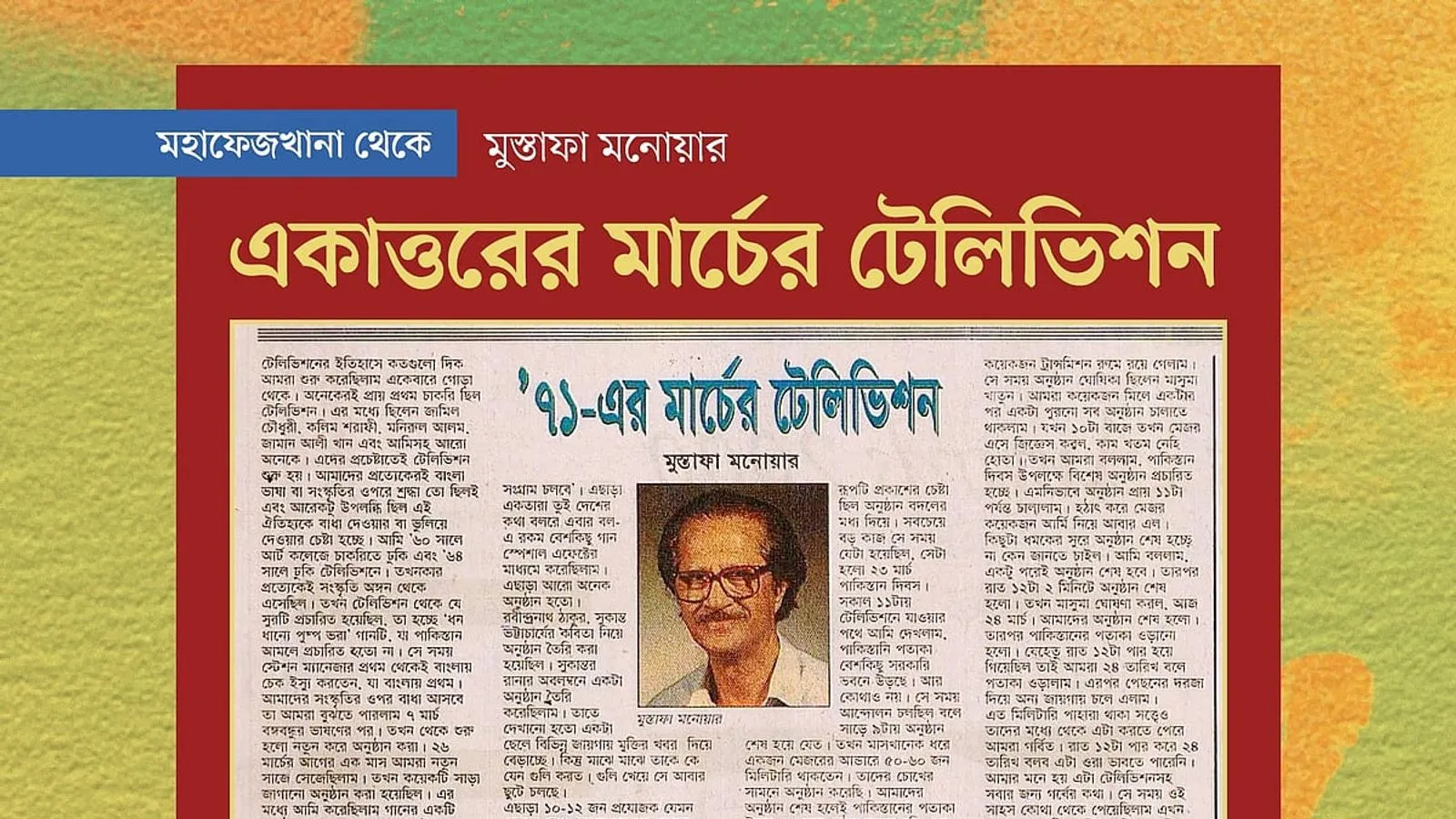
In a detailed memoir published in the Anandapatra supplement of Prothom Alo on December 14, 2000, prominent cultural figure Mustafa Monwar shared his recollections of the critical role played by television and its staff during the turbulent month of March 1971 in Dhaka. Titled '৭১–এর মার্চের টেলিভিশন', the memoir sheds light on the clandestine and patriotic efforts undertaken by media workers during a period of immense political tension.
Mustafa Monwar brings a long institutional history to his recollections, having originally joined the Art College in 1960 before transitioning to television four years later in 1964. By March 1971, he was deeply embedded in the television establishment alongside several notable colleagues, including Jamil Chowdhury, Kalim Sharafi, Monirul আলম, Zaman Ali Khan, Bangabandhu, Masuma Khatun, Belal Beg, Abdullah Al Mamun, and Mominul Haque.
One of the most striking acts of subversion recounted by Mustafa Monwar occurred on March 23, a date officially designated as Pakistan Day by the central government. In a coordinated effort to undermine the state-sanctioned observances, the television station staff deliberately prolonged their broadcasts far past the usual closing time. By continuously replaying old programs until well past midnight, the staff successfully altered the calendar date to March 24 before the official Pakistani flag was scheduled to be hoisted.
Throughout this tumultuous period, the television center operated under extreme scrutiny and pressure from military authorities. Mustafa Monwar recalled encounters with military personnel during these operations, noting a specific instance when a major dismissed ongoing technical or operational hurdles with the Hindi phrase 'কাম খতম নেই হোতা', highlighting the tense and demanding environment under which the staff labored.
The published recollections by Mustafa Monwar remain a vital historical document detailing the internal resistance and quiet defiance within state-run media institutions in Dhaka just prior to the full outbreak of the Liberation War. By utilizing broadcasting schedules and patriotic programming, the personnel demonstrated how cultural workers actively engaged in the broader struggle for national self-determination during March 1971.