

Moulvibazar Hospital Faces Severe Crises Amid Acute Staff Shortages
Moulvibazar 250-bed General Hospital is struggling with severe shortages of manpower, equipment, and beds, leaving patients without critical care services. The facility, which serves a population of 2.1 million, routinely admits up to 500 patients daily against its official capacity.
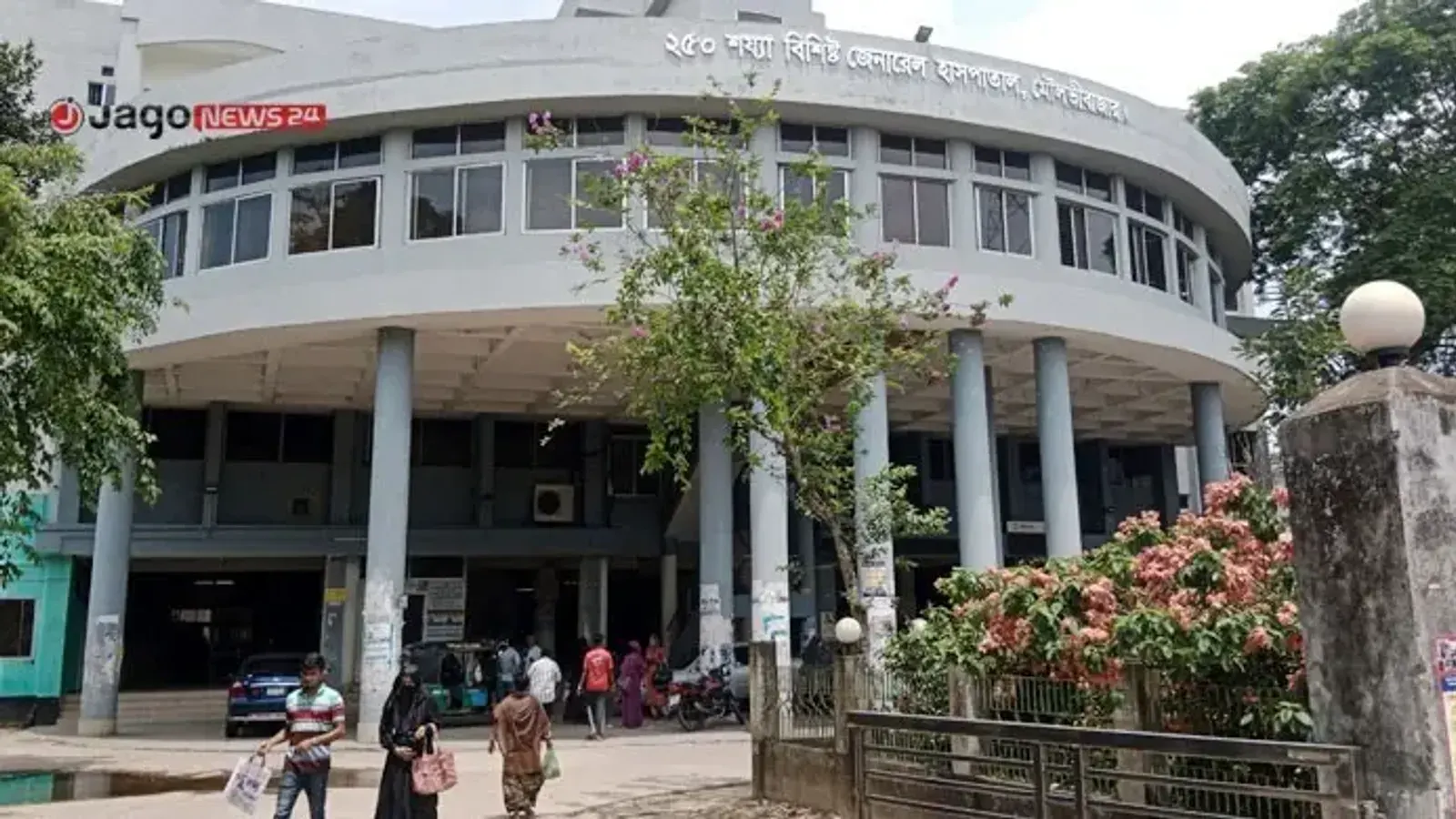
The Moulvibazar 250-bed General Hospital in Bangladesh is currently grappling with a severe healthcare crisis, defined by acute shortages of medical manpower, essential equipment, and available beds. According to reports dated 08 September 2026, the vital medical facility serves a massive regional population of approximately 2.1 million people who rely entirely on this single district healthcare center for their medical needs.
Despite its official 250-bed designation, the institution faces overwhelming daily pressure as patient admissions routinely surge between 450 and 500 individuals. This extreme overcrowding has severely strained the hospital's infrastructure. Compounding the bed shortage is a critical lack of advanced medical facilities, with crucial services such as the Coronary Care Unit (CCU), Intensive Care Unit (ICU), and Magnetic Resonance Imaging (MRI) completely non-functional or entirely unavailable to the public.
The administrative and staffing landscape reflects a similar vulnerability across departments. Out of 84 officially approved doctor positions designated for the hospital, exactly half remain vacant, leaving only 42 employed doctors to manage the massive daily influx of patients. Furthermore, the wider institutional framework suffers from vacancy pressures, recording 103 vacant posts out of a total of 408 approved positions. Technical departments are similarly understaffed, operating with only 9 employed technologists out of the 14 required professionals.
Patients and their relatives have openly voiced their frustrations regarding the deteriorating conditions at the district's primary medical hub. Local resident and patient Alta Mia noted that he attempted to arrange for dialysis treatment but could not secure a schedule, describing the medical center as operating on makeshift arrangements while lacking fundamental MRI, CCU, and ICU services. Another patient, Parul বেগম, along with patient relative Yamin Mia (ইয়ামিন মিয়া), are among those navigating the strained system alongside nearly 200 patients currently waiting for dialysis access.
Hospital Superintendent Dr. Pronoy Kanti Das (ডা. প্রণয় কান্তি দাস) acknowledged the operational pressures, stating that crises are natural given the facility operates as a 250-bed hospital despite the immense demand. He emphasized that authorities are actively working to resolve every issue appropriately while simultaneously notifying higher administration. Meanwhile, District Commissioner Touhiduzzaman Pavel (তৌহিদুজ্জামান পাভেল) remarked that while the hospital possesses numerous problems that have been discussed with relevant stakeholders, direct intervention is limited because the hospital operates under its own management board.