Local Government Ministry and Chinese Envoy Discuss Energy and Housing Projects
The Ministry of Local Government, Rural Development and Cooperatives held a meeting with the Chinese ambassador on August 27 in Dhaka. Discussions centered on Chinese investments in solar power, waste-to-energy generation, and urban slum housing.
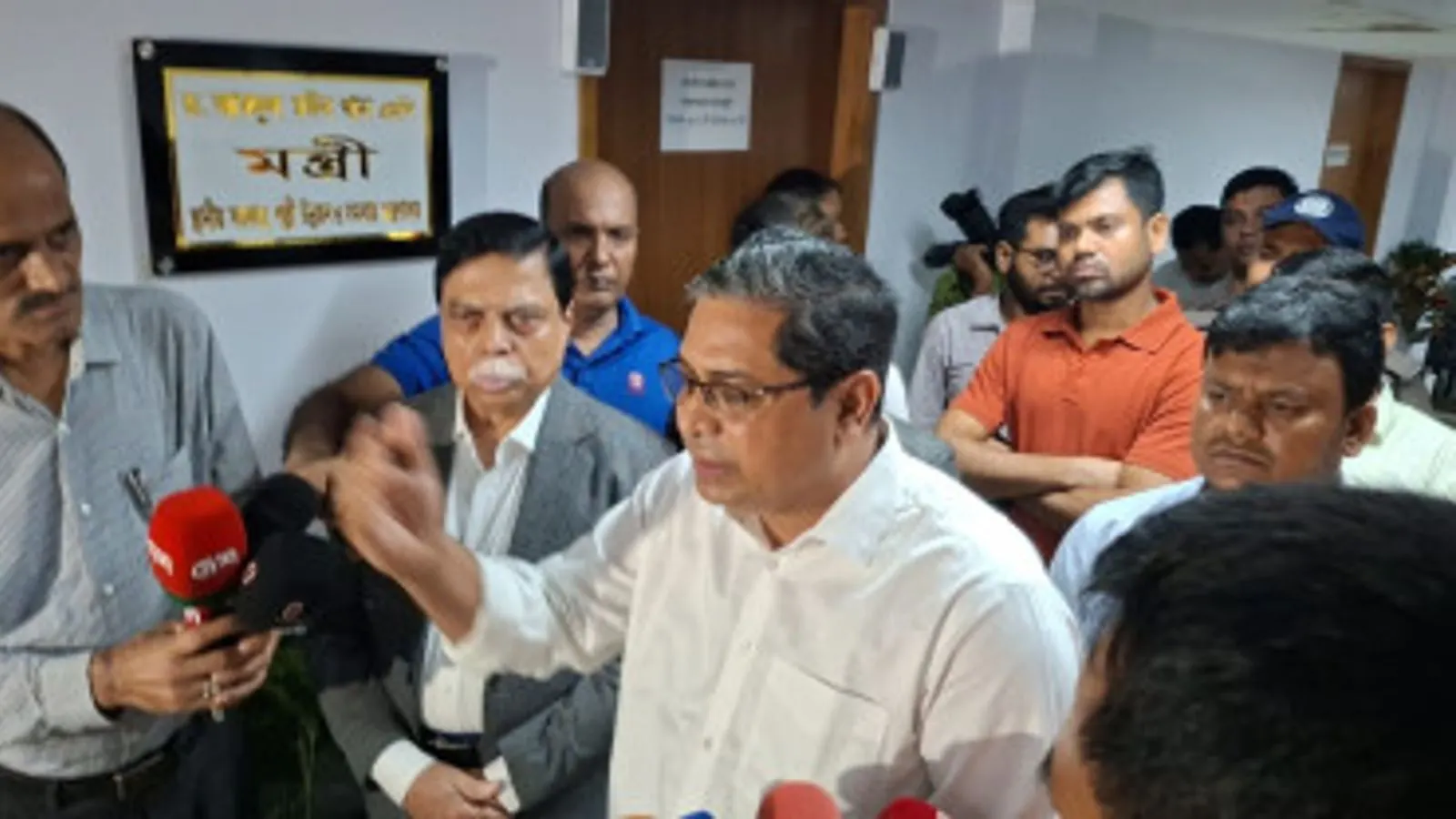
On August 27, a significant meeting took place at the Secretariat in Dhaka between officials of the Local Government, Rural Development and Cooperatives Ministry and the Chinese ambassador to Bangladesh, Yao Wen. The discussions focused heavily on attracting Chinese investments for critical infrastructural developments, including solar power generation, waste-to-energy projects, and modern housing construction for slum areas in the capital. The talks highlighted the ongoing economic and developmental cooperation between the two nations, with participation involving key figures such as Mir Shahe Alam and Dr. Abdul Moyeen Khan, alongside relevant bodies like the Economic Relations Division (ERD), the World Bank, and the Asian Development Bank.
A major focus of the meeting was the expansion of renewable energy and waste management initiatives in urban centers. Chinese institutions and banks have shown a strong willingness to invest in solar power and waste-to-energy production within Bangladesh. Notably, the Chinese company CMEC has already commenced work on a waste-to-energy project under the Dhaka North City Corporation, and a formal agreement has been finalized for another similar project in Aminbazar. Projections indicate that the waste-to-energy initiative has the potential to generate approximately 40 to 50 megawatts of electricity daily. Furthermore, planners have set a target to supply 42 megawatts of electricity to the national grid within the next year and a half, with the electricity produced under the project priced at roughly 21 taka and 70 paisa per unit.
Discussions also addressed existing environmental and sanitation infrastructure, specifically concerning the Dasherkandi Sewage Treatment Plant. Officials noted that the facility currently operates at a mere 30 percent of its total capacity. To address this, Mir Shahe Alam stated that China is considering exploring financing options through loans or grants to complete the remaining 70 percent of the work and bring the plant into full, comprehensive operation.
In addition to energy and sanitation, the meeting addressed urban poverty and housing challenges in Dhaka. Bangladesh has officially sought Chinese investment to construct modern housing facilities in three major slums located within Gulshan and the Dhaka-17 parliamentary constituency—specifically Korail, Sattala, and Bhasantek. To facilitate this ambitious urban renewal initiative, the government has already submitted a project proposal worth approximately 10 billion taka to the Planning Commission, outlining the framework for modern residential construction in these densely populated settlements.