Kailash-Mansarovar Pilgrimage Faces Flash Floods in Nepal
Flash floods hit Nepal's Rasuwa district amid the sacred Kailash-Mansarovar pilgrimage in the Tibet Autonomous Region of China. Pilgrims access the high-altitude site through multiple established routes, including passes in the Himalayas.
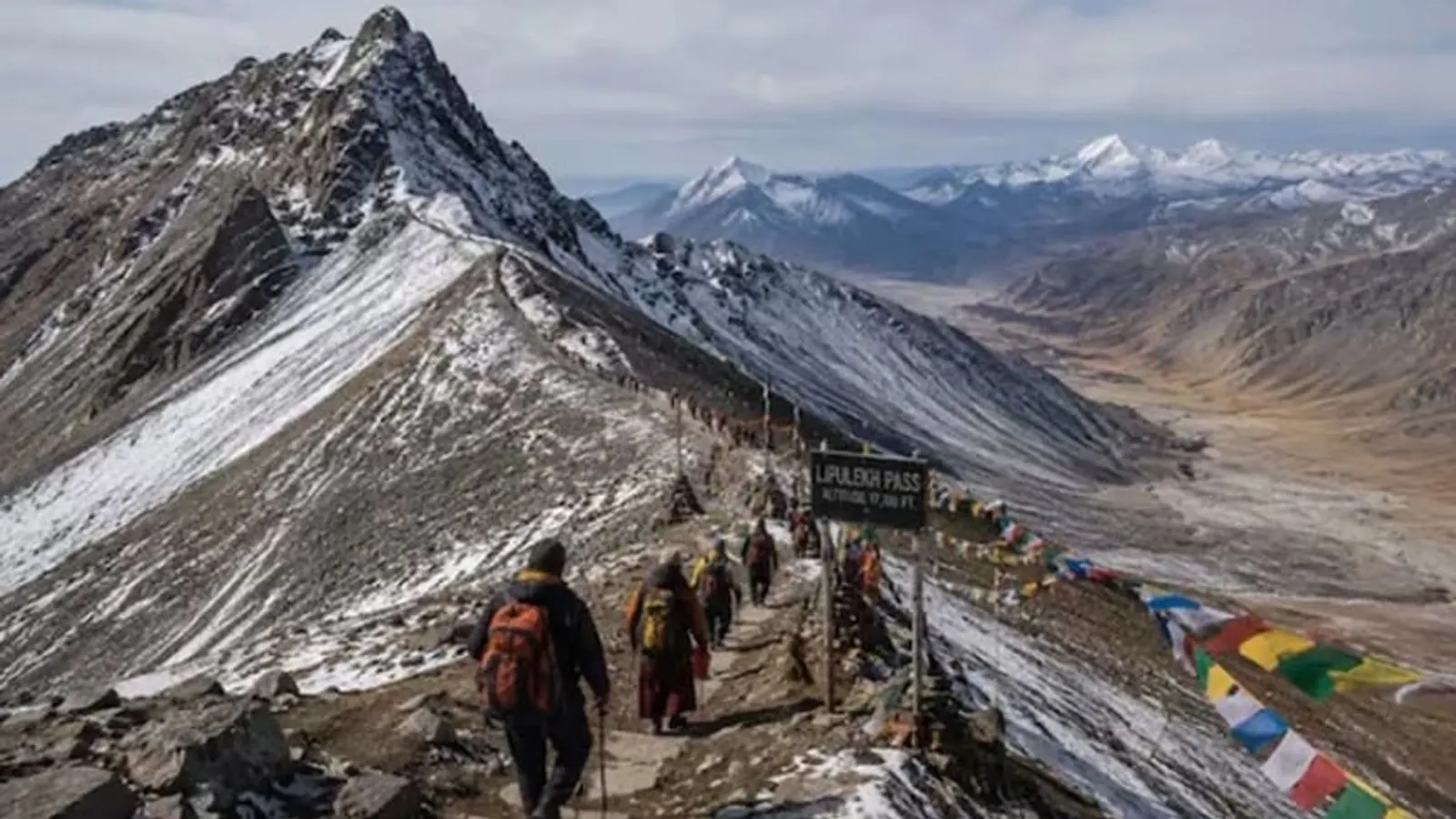
A flash flood has struck the Rasuwa district in Nepal, occurring concurrently with the renowned Kailash-Mansarovar Yatra pilgrimage. The sacred journey leads travelers to Mount Kailash and Lake Mansarovar, which are geographically situated within the Tibet Autonomous Region of China.
The Kailash-Mansarovar pilgrimage holds profound religious significance, revered as a holy site by followers of Hinduism, Buddhism, Jainism, and the Bon religion. Within the Hindu tradition, Mount Kailash is widely believed to be the divine abode of Lord Shiva and Goddess Parvati.
Adherents of other faiths also hold the mountain in deep spiritual reverence. Buddhists traditionally refer to Mount Kailash as 'Kang Rinpoche', while followers of Jainism believe that Rishabhdeva, the first Tirthankara, attained spiritual liberation or moksha at this very location.
Indian pilgrims undertaking this sacred journey utilize several distinct routes to reach the destination, specifically traveling through the Lipulekh Pass, the Nathu La Pass, and via Kathmandu located in Nepal. Kumaon Mandal Vikas Nigam and India's Ministry of External Affairs are connected with the management and coordination of these routes.
The pilgrimage involves navigating extremely challenging geographical terrain and historical milestones. Mount Kailash stands at an elevation of 6,638 meters, while the Lipulekh Pass reaches an altitude of approximately 5,200 meters, with the majority of the travel route situated at elevations exceeding 4,500 meters above sea level.
Historically, the pilgrimage has faced significant geopolitical disruptions, notably being suspended for nearly two decades following the India-China war of 1962. Diplomatic relations eventually allowed the journey to resume in 1981 based on a bilateral agreement between the two countries, and today approximately 200,000 people participate in the Kailash-Mansarovar pilgrimage annually.