
Drinking Water Crisis Grips Hilly Areas of Durgapur and Kalmakanda
Remote hilly communities in Durgapur and Kalmakanda face a severe drinking water crisis. Seasonal changes leave local wells dry and monsoon waters contaminated.
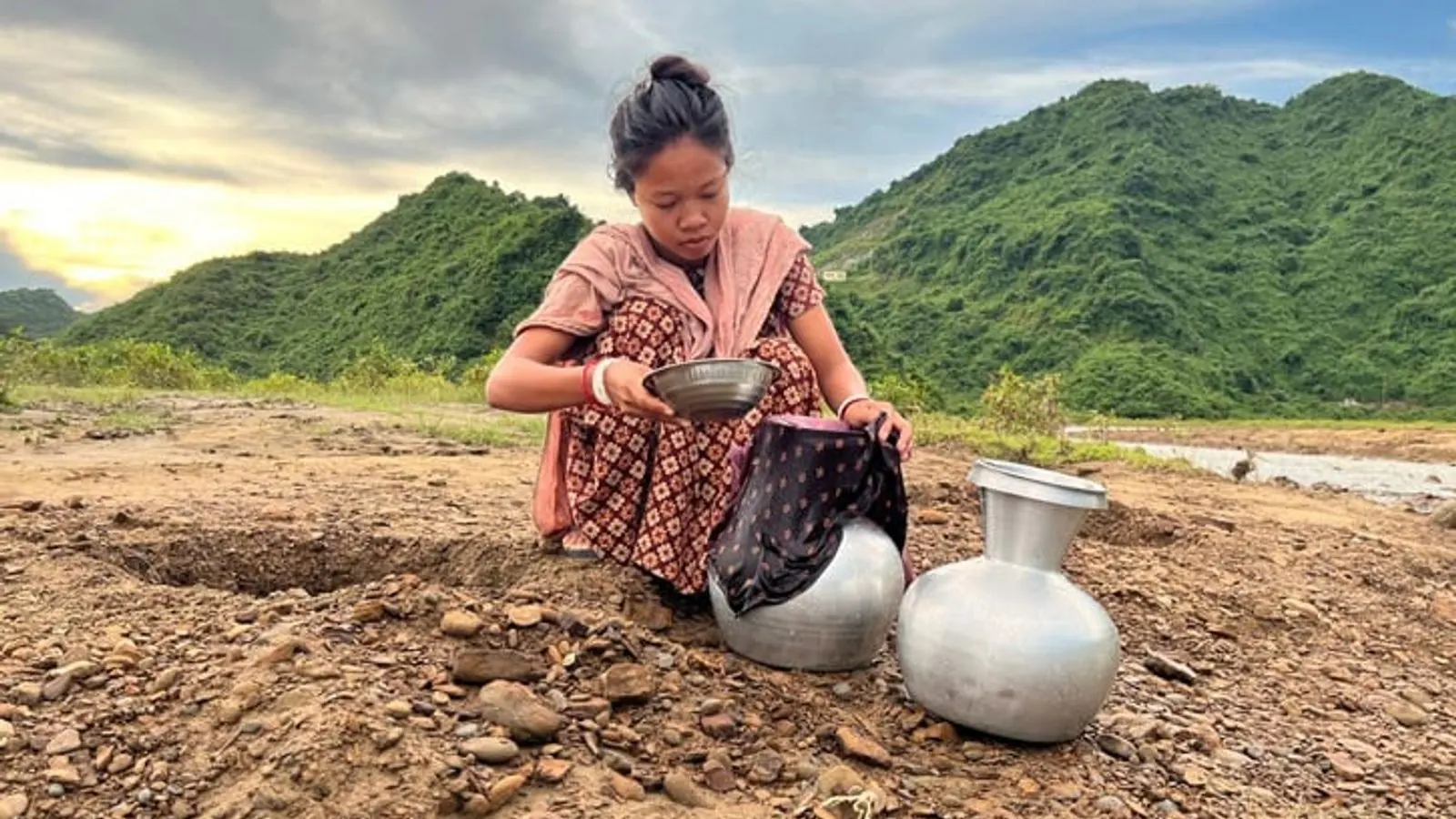
Residents living in the remote hilly areas of Durgapur and Kalmakanda in Netrokona are facing a persistent and severe drinking water crisis. This long-standing hardship is primarily caused by natural water sources drying up during the dry season, while monsoon rains render existing supplies unsafe for consumption. The region is home to approximately 21,605 people, comprising various ethnic minority communities including the Garo and Hajong populations.
The local daily struggle for survival and household management is vividly described by Rina Hajong, a local resident. She explains that the dry season brings the greatest suffering because nearby wells and streams dry up completely, and tube-wells fail to pump water properly. Families are forced to travel long distances to fetch drinking water. Because a single trip yields only a limited amount of water that falls short of household needs, women of the family must make multiple trips throughout the day, disrupting their other domestic responsibilities.
Rina Hajong further points out that even when water is occasionally found in tube-wells, the presence of excessive iron causes severe difficulties in using it. Consequently, collecting safe drinking water has become a major daily chore for numerous families in the region. The seasonal transition offers no relief, as the arrival of the monsoon introduces an entirely different set of severe water safety challenges for the inhabitants.
Describing the monsoon predicament, local resident Durgadevi Hajong notes that despite being surrounded by water during the rainy season, drinking it is impossible. When heavy rains occur, local wells become submerged under floodwaters, mixing with dirt, mud, and silt to make the water extremely murky. Residents attempt to harvest rainwater, but storing adequate amounts is not always feasible. Furthermore, even after floodwaters recede, the well water remains unusable for several days, forcing residents to journey far distances to secure safe water.
To address these mounting infrastructural challenges, the Department of Public Health Engineering has taken steps in the region. Authorities have already installed 40 tube-wells, each reaching a depth of 520 feet, in the hilly areas, with additional tube-wells currently remaining under processing for installation to help mitigate the severe shortages.
Medical professionals warn about the grave public health implications of consuming compromised water sources in the area. Dr. Mazharul Amin advises that when drinking water shortages arise due to floods or other causes, the water must be boiled or purified using water purification tablets before consumption. He emphasizes that maintaining extreme caution is vital, particularly when water sources become contaminated following mountain flash floods, as using polluted water significantly increases the risk of waterborne diseases such as diarrhea, cholera, typhoid, and hepatitis A.