Dhaka Roads Deteriorate Amid Rains, Utility Digging and Delays
Roads across Dhaka have suffered extensive damage due to seasonal rains, waterlogging, unplanned utility digging, and delayed repairs by city authorities. Despite substantial annual expenditures by the Dhaka North and South City Corporations, commuters continue to face severe travel disruptions.
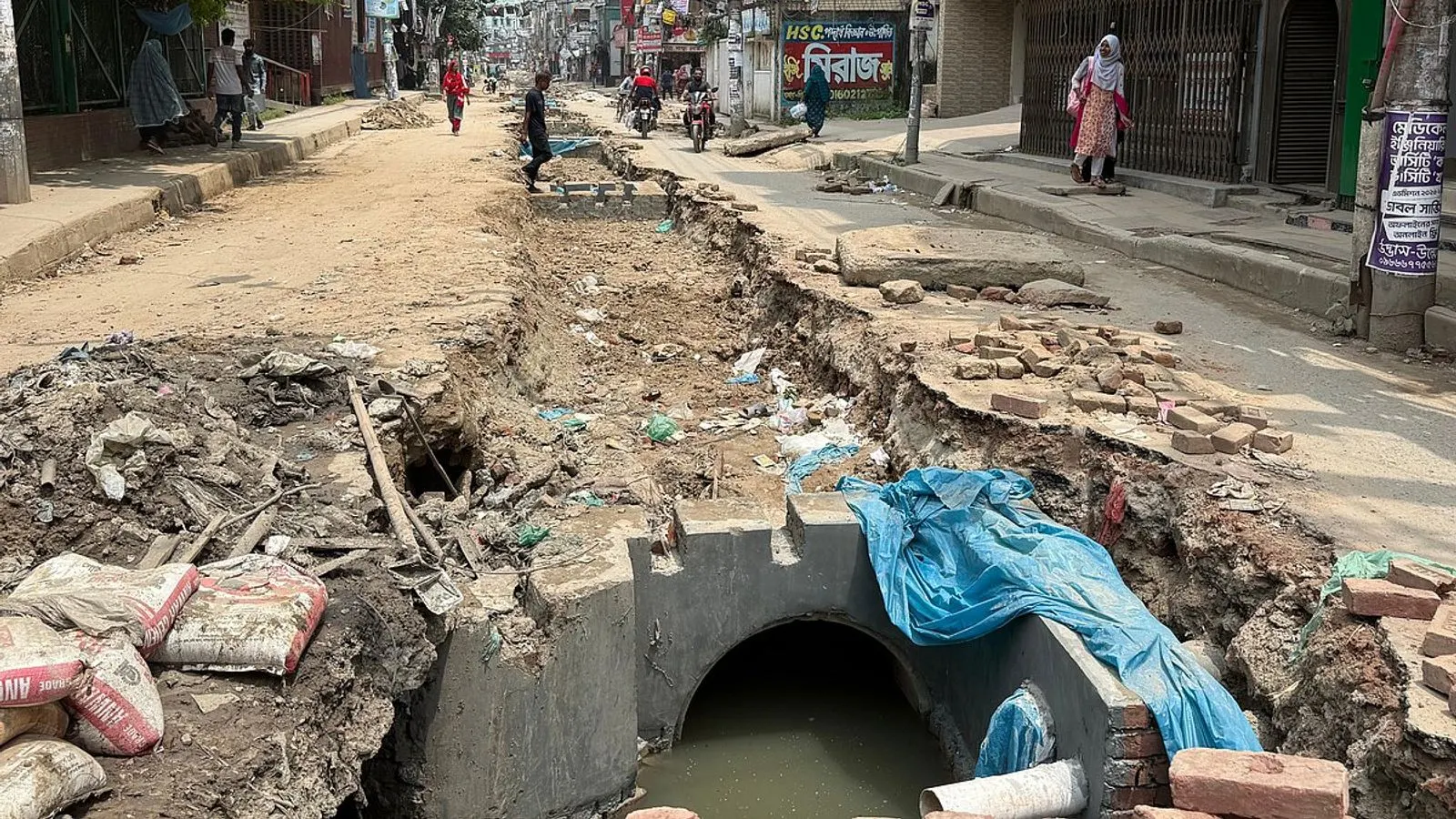
Streets and thoroughfares across various neighborhoods of the Bangladeshi capital have fallen into a state of severe disrepair. The widespread deterioration has been attributed to a combination of persistent seasonal rain, severe waterlogging, unplanned excavation by utility providers, and delayed maintenance work by the responsible municipal authorities. Commuters navigating the urban landscape are currently confronting difficult travel conditions as key transit routes are plagued by surface damage.
The impact of this infrastructure decay is clearly visible across multiple areas of the metropolis. According to confirmed reports, roads located in neighborhoods such as Mirpur, Mohammadpur, Lalmatia, Uttara, Gulshan, Banani, Badda, Motijheel, Jatrabari, Basabo, and Madartek have all suffered significant damage. The compounding effects of water accumulation during rainstorms and continuous excavation work have stripped these thoroughfares of their standard functional condition, creating hazardous obstacles for daily traffic.
This ongoing situation persists despite substantial financial investments by local governance bodies. Records show that both the Dhaka North City Corporation (DNCC) and the Dhaka South City Corporation (DSCC) allocate and spend crores of taka every single year specifically for the purpose of road repair and comprehensive urban development. However, the recurring cycle of utility digging followed by prolonged repair timelines frequently neutralizes the visible benefits of these substantial municipal expenditures.
The physical state of the damaged asphalt directly impacts the daily labor of transport operators working within the city. Yusuf Ali, a local transport operator, described the severe structural state of the local routes by stating that the roads have lost any recognizable standard, noting that vehicle wheels frequently get stuck while hitting potholes that damage exhaust systems, all while worsening the city's severe traffic congestion.
Echoing these operational difficulties, another transport worker, Sultan Ali, explained that when traffic congestion builds up on the streets, it becomes practically impossible for drivers to maneuver around road craters while in motion. Consequently, vehicle wheels drop directly into hidden potholes, causing sharp physical jolts that routinely provoke verbal abuse and complaints from frustrated passengers.
As the municipal corporations continue to manage their annual development budgets, residents and transport workers alike remain affected by the compromised state of the urban transport network. Until coordination between utility providers improves and delayed repair schedules are effectively expedited, the thoroughfares of Dhaka will continue to present daily challenges for everyone moving through the city.