Dhaka Meeting Criticizes Proposed Laws on International Disappearances Day
Human rights activists and victims' families gathered at the National Press Club in Dhaka to observe the International Day of the Victims of Enforced Disappearances. Speakers strongly criticized newly proposed legislation and demanded independent, neutral investigative processes.
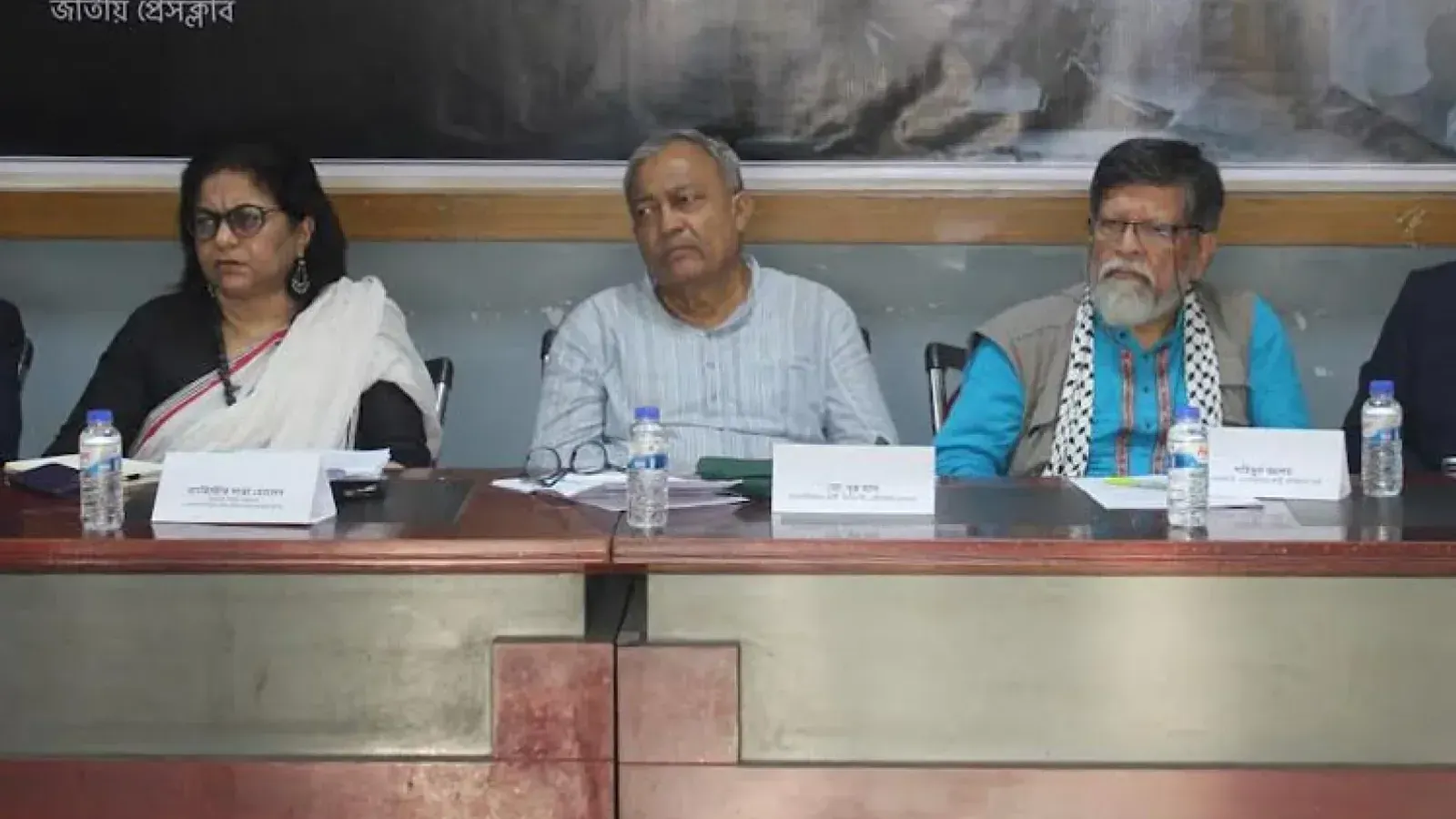
Marking the International Day of the Victims of Enforced Disappearances, a significant discussion meeting was convened at the Tofazzal Hossain Manik Miah Hall of the National Press Club in Dhaka on Saturday, August 29, 2026. The event brought together prominent human rights defenders, legal experts, and family members of victims to address the ongoing crisis of enforced disappearances in the country. Organised collaboratively by the Human Rights Support Society (HRSS), BLAST, and other human rights contexts, the gathering served as a critical platform to evaluate legislative measures and the persistent grievances of those affected by state-sponsored abuses.
During the deliberations, participants focused heavily on legislative developments, specifically the introduction of the 'Enforced Disappearance Prevention and Remedy Bill, 2026' and the 'National Commission for Human Rights Bill, 2026' in the National Parliament. While new legal frameworks are ostensibly designed to address past grievances, experts expressed profound skepticism regarding their efficacy and independence. The discussions underscored a deep-seated apprehension that current administrative and legislative proposals might fall short of delivering genuine justice to the victims and their families if state bodies retain undue control over the investigative mechanisms.
Highlighting the critical need for structural integrity, Barrister Sara Hossain delivered a sharp critique of the proposed oversight framework during the meeting. She asserted that if the investigation process is not made completely independent and neutral, it will amount to 'a kind of major deception.' Her remarks resonated strongly with the audience, reflecting widespread concerns among legal professionals that superficial reforms without independent judicial backing will merely perpetuate impunity rather than dismantle it.
The sentiment that systemic transformation remains elusive was further echoed by prominent photographer and activist Shahidul আলম. Reflecting on the political landscape, he noted that even after the significant political shift on August 5, 2024, listening to the harrowing accounts of the victims makes it feel as though no genuine change has occurred in the country. His observation highlighted the continuous struggle of citizens seeking accountability from state institutions, regardless of changes in government leadership.
The human cost of these systemic failures was brought into sharp focus through personal testimonies shared by family members of the disappeared. Nasima Begum, whose contractor husband Mizan Jamaddar was forcibly taken sixteen years ago from Rajapur Thana, delivered a heart-wrenching account of her ongoing ordeal. Stating that she still has not received justice after nearly two decades, she bitterly remarked that various forms of trickery and commerce are being practiced surrounding the pursuit of justice for the disappeared.
According to domestic and international human rights organizations, at least seven hundred people were allegedly disappeared by the ousted fascist government. The event also noted various references to figures such as Barrister Mir Ahmad Bin Quasem (Arman), Dr. Nabila Idris, Barrister Shaykh Mahdi, Mo. Nur Khan Liton, Ejajul Islam, the Prime Minister, Iliyas Ali, Chowdhury Alam, Abu Sayed, and Mugdha, alongside institutions like the International Crimes Tribunal and the ICC, as the broader discourse on accountability continued to unfold in Dhaka.