

Dhaka Faces Rising Noise Pollution Amid Battery Autorickshaw Boom
Dhaka's streets are facing severe noise pollution driven by unregulated battery-run autorickshaws and excessive vehicle honking. Authorities report that millions of electric three-wheelers operate nationwide as mobile courts work to enforce regulations.
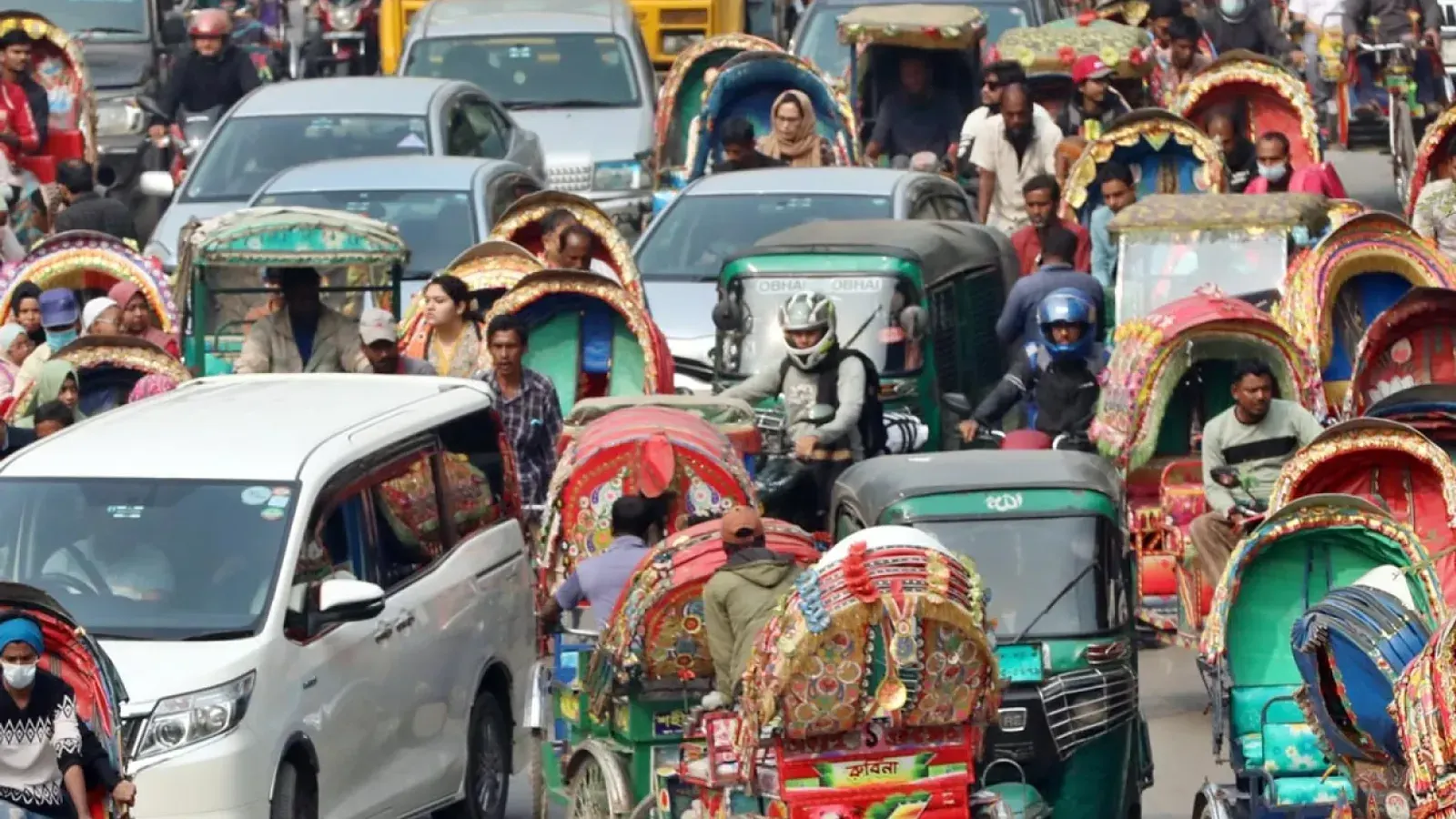
Dhaka is experiencing a sharp rise in noise pollution, primarily driven by the unregulated movement of battery-run autorickshaws and excessive vehicle honking across the capital. This growing urban crisis continues to place immense pressure on the daily lives of residents, transforming city streets into persistent zones of acoustic distress.
Addressing the national legislature during the third session of the thirteenth parliament on September 7, Home Minister Salahuddin Ahmed provided alarming figures regarding the scale of the issue. He stated that an estimated 50 to 80 million electric three-wheelers are currently operating across the country, with approximately 300 new autorickshaws being added to the capital's streets every single day. Commenting on the logistical burden of this rapid expansion, Salahuddin Ahmed noted that the unregulated proliferation of these vehicles is creating additional pressure on traffic congestion and overall road management systems.
To combat the escalating acoustic crisis, the government enacted new noise pollution control rules in 2025. These regulations establish strict maximum acceptable sound limits categorized by specific urban zones. According to the framework, silent zones are restricted to 45 to 50 decibels during the day and 40 decibels at night. Residential areas are permitted 55 decibels during daytime hours and 45 decibels at night, while mixed areas face limits of 60 and 50 decibels respectively. Furthermore, commercial zones are assigned higher thresholds of 70 decibels during the day and 60 decibels at night.
Alongside these legislative measures, active enforcement operations have been deployed to curb violations on the ground. The Department of Environment conducted a series of enforcement drives across the country between February 17 and August 30. During this period, authorities operated 564 mobile courts, filed cases against 1,810 individuals, and collected a total of 3,142,350 taka in financial penalties. Additionally, enforcement teams successfully seized 2,627 illegal horns in their ongoing efforts to restore acoustic discipline to urban roadways.