
CII Delegation Meets Bangladesh Commerce Ministry on Trade and Investment
A high-level delegation from the Confederation of Indian Industry met with the Bangladesh Commerce Ministry on 18 August. Discussions focused on bilateral trade, logistics costs, and the establishment of two joint business task forces.

On 18 August, a delegation from the Confederation of Indian Industry held a formal meeting at the Commerce Ministry in Bangladesh to discuss ways to strengthen bilateral trade, investment, and commercial relations between the two neighbouring nations. The high-level discussions brought together government officials and Indian business leaders to address key economic bottlenecks and explore new avenues for bilateral cooperation.
During the deliberations, the visiting CII delegation put forward a concrete proposal to establish two joint business task forces. These proposed task forces would specifically focus on digital transformation as well as infrastructure investment and financing, aiming to streamline joint economic initiatives and foster closer commercial ties.
A major focus of the meeting at the Commerce Ministry was the heavy financial burden imposed by supply chain inefficiencies in Bangladesh. Discussions highlighted that logistics costs in Bangladesh currently account for approximately 16 percent of the total gross domestic product, a figure significantly higher than the global average. By comparison, international logistics costs stand at an average of roughly 10 percent.
To address these elevated expenses and improve cross-border commerce, Indian business leaders emphasized the urgent need for much faster and more efficient cargo handling. Specifically, they called for enhanced transport management systems at various land ports, explicitly highlighting the critical operational gateway at Benapole.
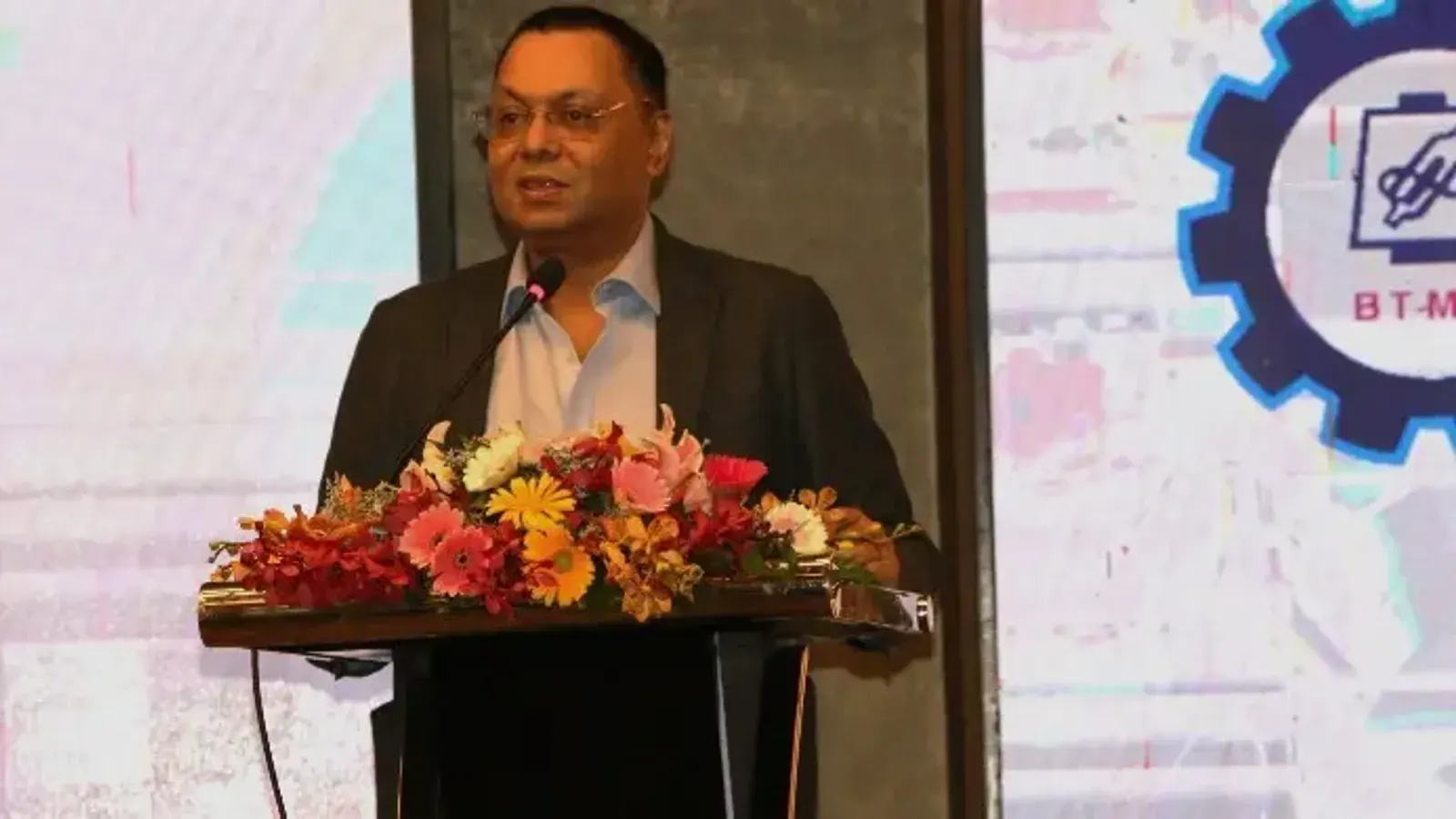
Addressing the broader geopolitical and economic framework of the relationship, Khandaker Abdul Muktadir remarked that it is simply not possible to completely separate political ties from commercial relations. However, he stressed that for the mutual development and benefit of both countries, it is imperative to expand trade, investment, and everyday business communication as much as possible.
In addition to broader macroeconomic concerns and trade logistics, Khandaker Abdul Muktadir also addressed domestic economic pressures during the meeting. He explicitly noted that he is not satisfied with the current cost of living and the prevailing prices of essential commodities.