
Bangladesh RMG exports to US drop 6.5pc in first seven months
Bangladesh's ready-made garment exports to the United States fell to $4.66 billion during the first seven months of the current calendar year. Meanwhile, key competitors like Vietnam saw much smaller declines while nations like Indonesia and Cambodia recorded growth.
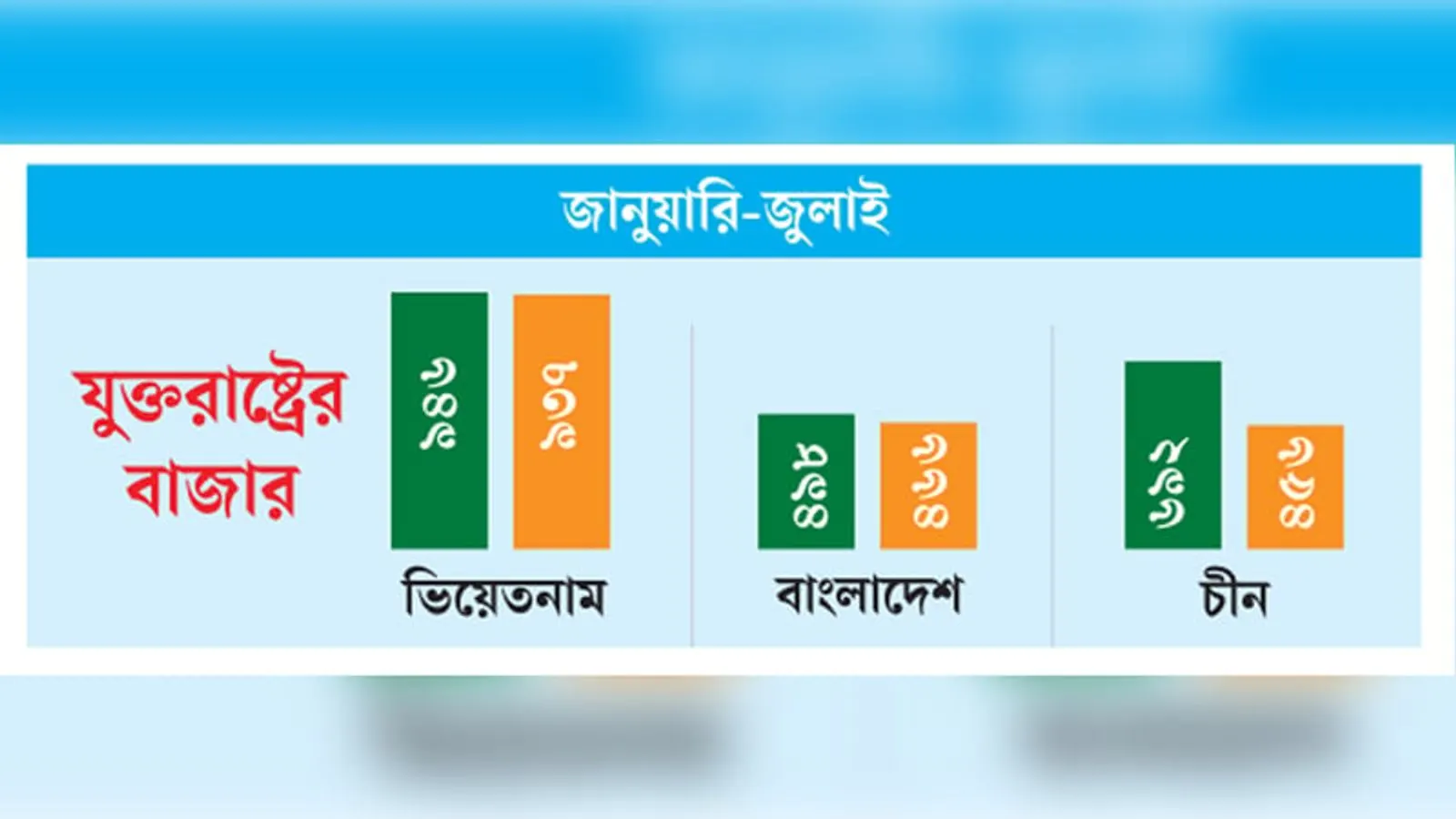
Bangladesh has experienced a notable decline in its ready-made garment (RMG) exports to the United States during the first seven months of the current calendar year, spanning from January to July. According to data from Otexa, Bangladesh's RMG export earnings from the US market dropped by 6.5 percent during this seven-month timeframe. With total export earnings from the main market falling by $320 million, the absolute figure decreased to $4.66 billion compared to $4.98 billion recorded during the same period of the previous fiscal year. In Bangladesh, total export earnings heavily rely on the RMG sector, which accounts for 85 percent of the country's total export income.
As Bangladesh faces this downturn in the US market, key regional competitors are experiencing varied trajectories. Vietnam, which stands as a primary competitor for Bangladesh in the export of manufactured garments to the United States, has managed to stay ahead while registering a minor decline of just 1 percent in its export volume. Meanwhile, China holds the third position in US apparel exports, though its shipments faced a sharp decrease of 34.21 percent. Chinese garment exports to the US fell to approximately $4.56 billion during the seven-month period, down significantly from $6.92 billion in the corresponding period of the previous year.
Other competitor nations in the global apparel supply chain demonstrated positive growth in the US market during the January-to-July timeframe. Indonesia recorded an increase of roughly 3 percent in its apparel shipments, pushing its export total to $2.74 billion compared to $2.67 billion in the previous year. Similarly, Cambodia experienced a substantial growth of 10.5 percent, bringing its garment exports to $2.62 billion up from $2.37 billion in the same timeframe last year. On the other hand, India, which currently occupies the sixth position for apparel exports to the United States, witnessed a major contraction of roughly 26 percent, with its shipments dropping to $2.45 billion from $3.30 billion in the previous year.
Broader market dynamics across the United States reveal that total apparel imports from around the world dropped by roughly 9 percent during the first seven months of the calendar year. Overall, the United States imported a total of $41.83 billion worth of clothing items, which is a decrease from $45.80 billion imported during the exact same period last year. Amidst these shifting trade volumes, unit prices for apparel in the US market displayed mixed trends, rising by an average of 0.84 percent overall during the seven-month period. Specifically, unit prices for Mexican and Honduran garments increased by 14 percent and 6 percent respectively.
Conversely, unit prices for apparel from several major Asian suppliers experienced downward adjustments in the United States market. Bangladesh suffered a 2.26 percent drop in the unit price of its garment products, while Vietnam experienced a 1.44 percent reduction. China faced the steepest unit price decline among major competitors, with Chinese apparel prices dropping by 13.24 percent. These pricing shifts and import contractions outline a highly competitive and fluctuating landscape for the ready-made garment sector across the United States market throughout the January-to-July reporting period.