
Bangladesh Foreign Sector Grows Amid Domestic Economic Pressures
Bangladesh's foreign economic sector demonstrates growth in remittances, exports, and reserves during August 2026. However, the domestic economy continues to face significant challenges including high inflation, an energy crisis, and increased business costs.
Bangladesh's foreign economic sector has shown notable growth across key financial indicators, including remittance inflows, product exports, and foreign exchange reserves. According to data released regarding the 2026-27 fiscal year, the financial inflows from expatriate workers have seen substantial month-on-month increases. Specifically, remittance earnings reached 2.86 billion US dollars in July, registering a 15 percent growth compared to the previous period. This upward trajectory continued into the following month, with remittance inflows climbing further to 2.97 billion US dollars in August, which marked a 22 percent growth rate.
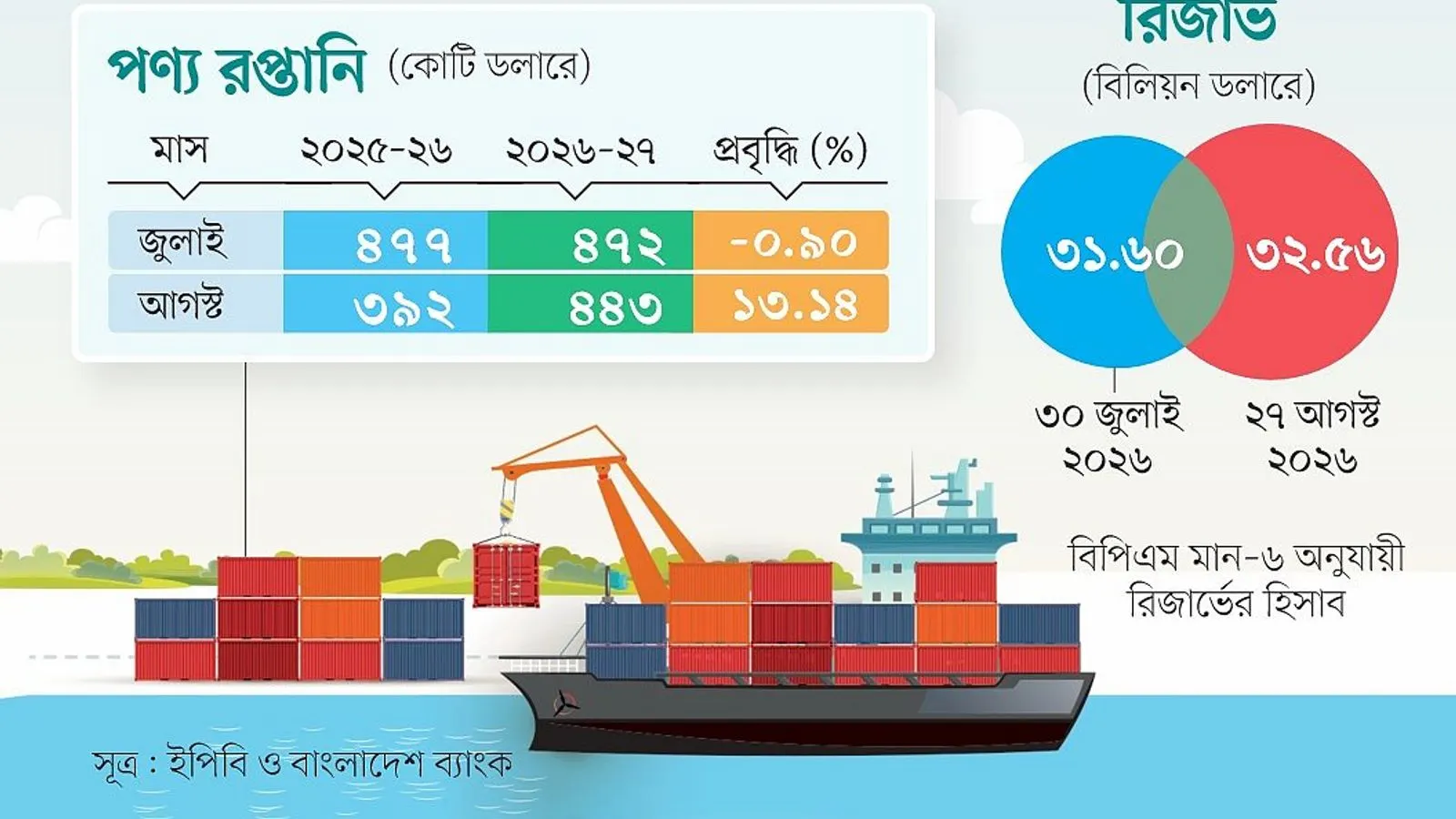
Alongside the robust performance in remittances, the country's product export sector has also rebounded after a previous contraction. Following a modest decline of 0.90 percent in merchandise exports recorded last July, the sector experienced a strong recovery. Last month, product exports totaled 4.43 billion US dollars, representing a significant 13 percent increase when compared against the figures from the same period of the previous year.
This positive momentum in external trade has contributed directly to the strengthening of the nation's foreign currency reserves. Data confirmed that the country's foreign exchange reserves stood at 31.60 billion US dollars last July. By the end of August, specifically on August 27, the reserves expanded further to reach 32.56 billion US dollars. This reflects a substantial improvement over the 26 billion US dollars recorded on the exact same date a year earlier, representing a total increase of 6.56 billion US dollars over the course of a single year.
Despite the encouraging indicators in the foreign economic sector, the domestic economy of Bangladesh is grappling with severe structural and operational challenges. Businesses and industries are currently contending with high inflation, an intensifying energy crisis, and markedly increased business costs. Industrial production has faced widespread disruptions due to a severe gas and electricity crisis that has persisted for over a month, impacting overall manufacturing capabilities.
Furthermore, domestic fiscal challenges are compounded by shortfalls in public finances and large-scale expenditure pressures. During the 2025-26 fiscal year, the government imported 10.63 billion dollars worth of fuel. Concurrently, government revenue collection fell significantly short of its established target, registering a deficit of 87.5 billion taka for the 2025-26 fiscal year. Amid these competing domestic cost pressures, plans are also moving forward to increase the salaries of government officials and employees by 100 to 142 percent.