

Bangladesh Enters Era of Robotic Surgery at United Healthcare
United Healthcare in Dhaka has performed Bangladesh's first-ever robotic surgeries, marking a major milestone in the country's medical sector. Two patients successfully underwent procedures following government approval.
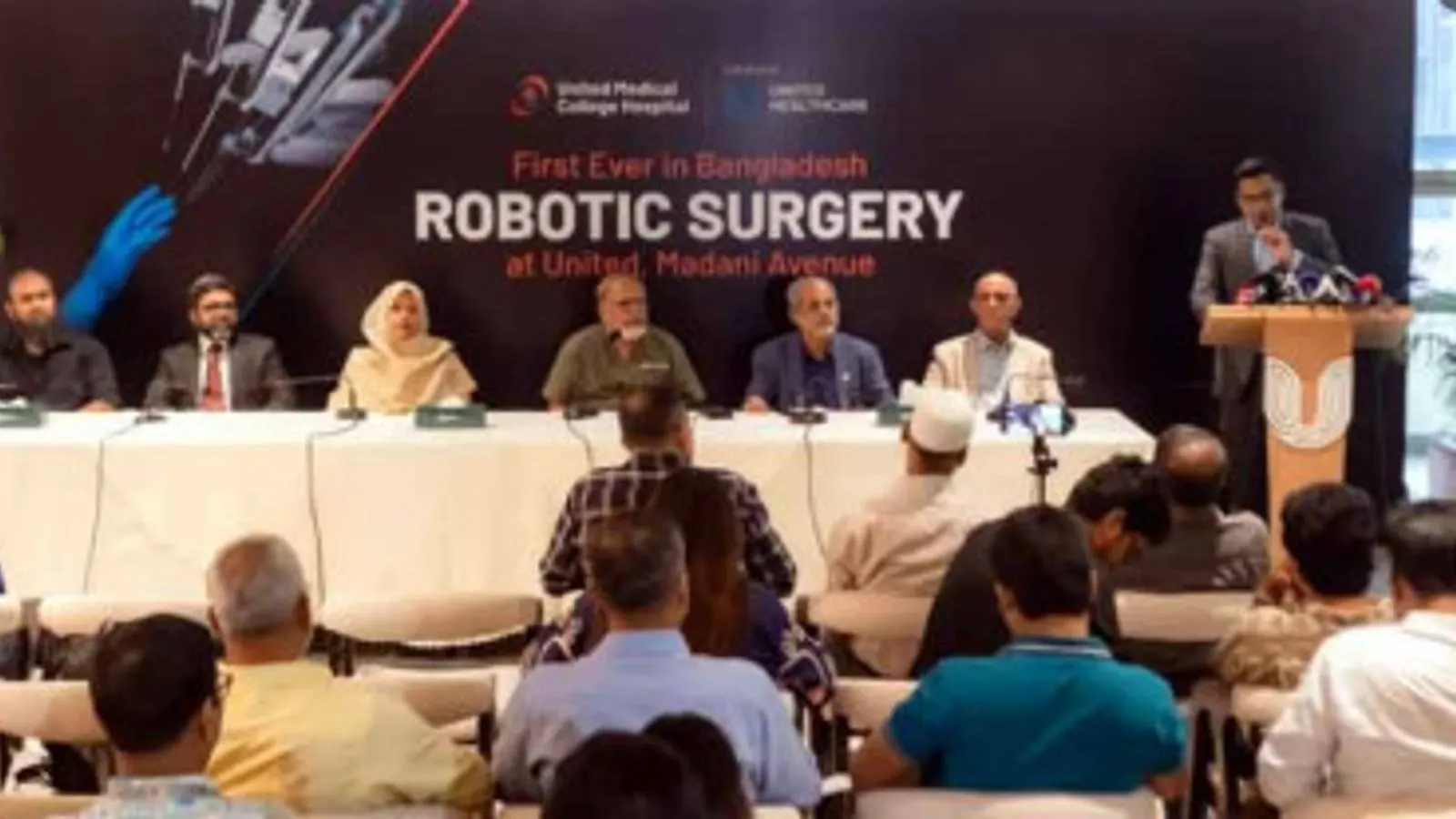
In a landmark development for the medical sector in Bangladesh, the very first robotic-assisted surgeries in the country have been successfully performed at United Healthcare, located on Madani Avenue in Dhaka. The groundbreaking medical procedures took place after the government granted formal approval for robotic surgeries to the healthcare facility last Monday, allowing the institution to pioneer this advanced technology nationally.
The historic milestone involved two patients: a 57-year-old male patient and a 45-year-old female patient, both of whom are reportedly doing well following their operations. Specifically, Professor Rafiqus Saleheen performed a gallbladder removal surgery using the robotic technology, while Professor Samsad Jahan successfully carried out a uterus removal surgery.
During the momentous medical procedures, expert physicians from both China and India were present inside the operating theatre to oversee and support the operations. Preparation for this technological leap involved comprehensive international training, with four doctors and several nurses having traveled to China to receive specialized instruction prior to the launch of the program.
Speaking on the technological advancement, Professor Rafiqus Saleheen noted that while robotic surgery is no longer a novelty globally, the true significance lies in Bangladesh now being able to join this advanced medical service in parallel with the rest of the world. Highlighting the speed of the rollout, procedures began just an hour and a half after official authorization was secured by the hospital.
Weighing in on the clinical impact, Professor Samsad Jahan explained that many complex procedures previously impossible to perform domestically can now be accomplished through robotic assistance, bringing a welcome end to long waits for local physicians. Meanwhile, IEDCR's Mushtaq Hossain hailed the initiative as positive news that keeps Bangladesh aligned with global standards, though he cautioned that strict monitoring and supervision remain vital since robots can still make errors.
Despite the optimism surrounding the technological leap, financial and logistical challenges remain part of the conversation. Azharul Islam Khan pointed out that while the initial patients are recovering well, the maintenance costs for the robots are exceptionally high, which directly impacts patients; robotic surgeries cost between two to three-and-a-half times more than traditional procedures, turning a standard 120,000 taka surgery into an expense ranging from 350,000 to 400,000 taka.