Study Links Early Supermassive Black Holes to Gravitational Waves
Researchers from Colgate University have published a new study exploring how early Universe supermassive black holes might produce gravitational wave backgrounds measured by Pulsar Timing Arrays. The findings suggest that gravitational waves observed today could provide a novel window onto the birth of the universe's first supermassive black holes.
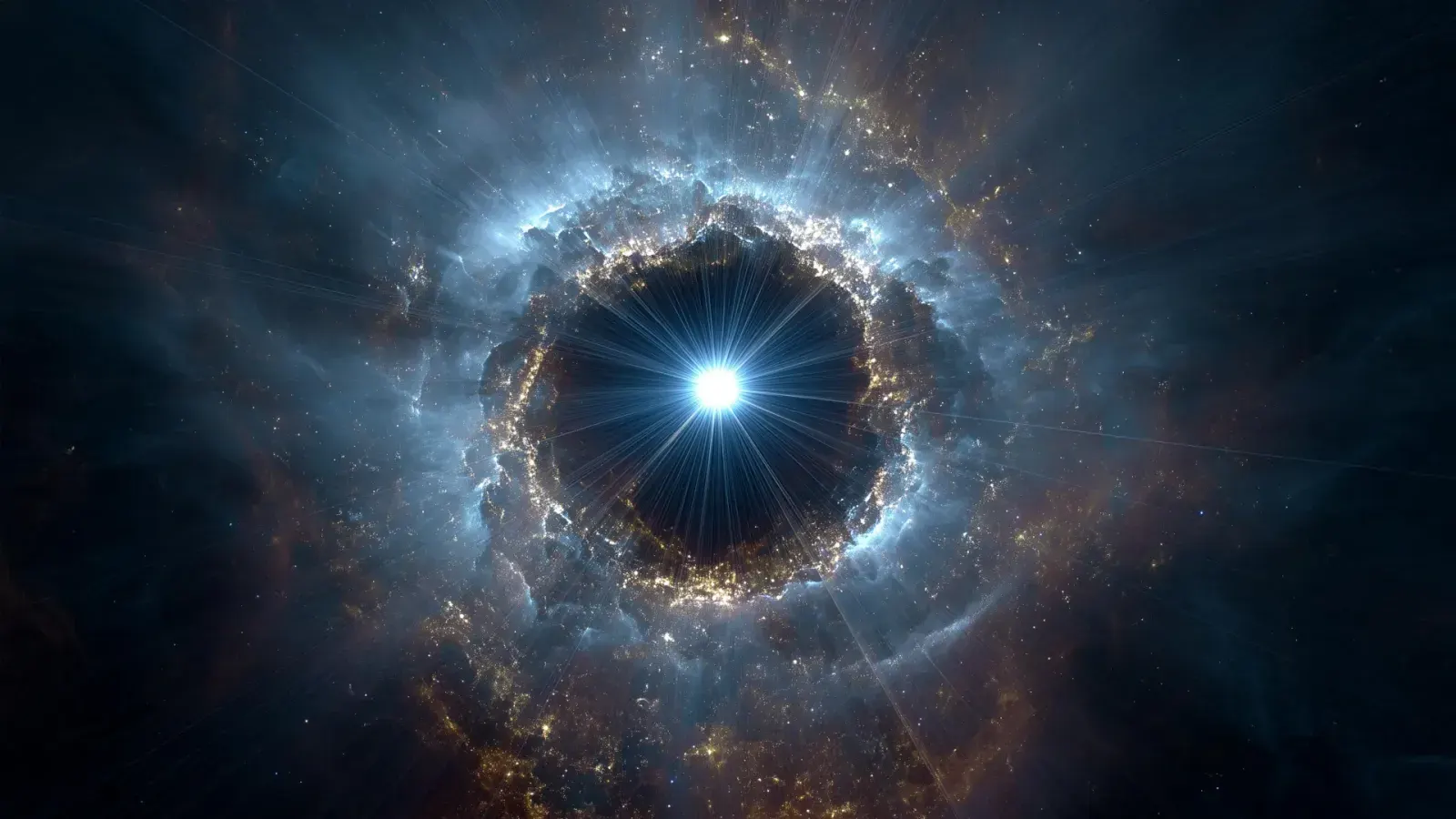
A recent study published in Physical Review D by researchers Sohan Ghodla and Cosmin Ilie from Colgate University has examined whether supermassive black holes from the early Universe produce gravitational wave backgrounds that are currently measured by Pulsar Timing Arrays. Pulsar timing arrays are traditionally thought of as probes of supermassive black-hole binaries in the relatively recent Universe, but this new research broadens that scientific perspective significantly.
Cosmin Ilie explained the broader implications of the findings, noting that the signal may also contain vital information about how the ancestors of those black holes formed at cosmic dawn. According to Ilie, gravitational waves observed today could ultimately provide an entirely new window onto the birth of the first supermassive black holes.
The study specifically explores the remnants of supermassive Dark Stars and direct collapse black holes as potential sources of black hole seeds. These theoretical investigations delve into conditions from 13 billion years ago, analyzing environments characterized by redshifts greater than 10 and densities varying across figures such as 10 -3 Mpc -3, 10 -6 Mpc -3, and 10 -2 to 10 -1 Mpc -3, alongside massive formations reaching 10 9 solar masses.
Elaborating on the delicate balance required by these cosmic models, Sohan Ghodla pointed out the specific constraints governing the observed data. Ghodla stated that producing too many of these massive seeds results in the over-production of the PTA-detected signal, whereas producing too few means researchers would require other sources to efficiently assemble these supermassive black holes later in the life of the universe to match PTA observations.
Furthermore, the research connects back to theoretical astrophysics regarding the earliest luminous objects in the cosmos. Cosmin Ilie noted that Dark Stars were originally proposed as objects that might be seen directly at cosmic dawn, linking those foundational theories directly to the current gravitational wave investigations.