
Scientists Reconstruct Short Videos Using Mice Brain Activity Data
Researchers at University College London have successfully reconstructed short video clips using brain activity recorded from mice. The scientific study provides new insights into how the visual processing pipeline warps and interprets sensory information.
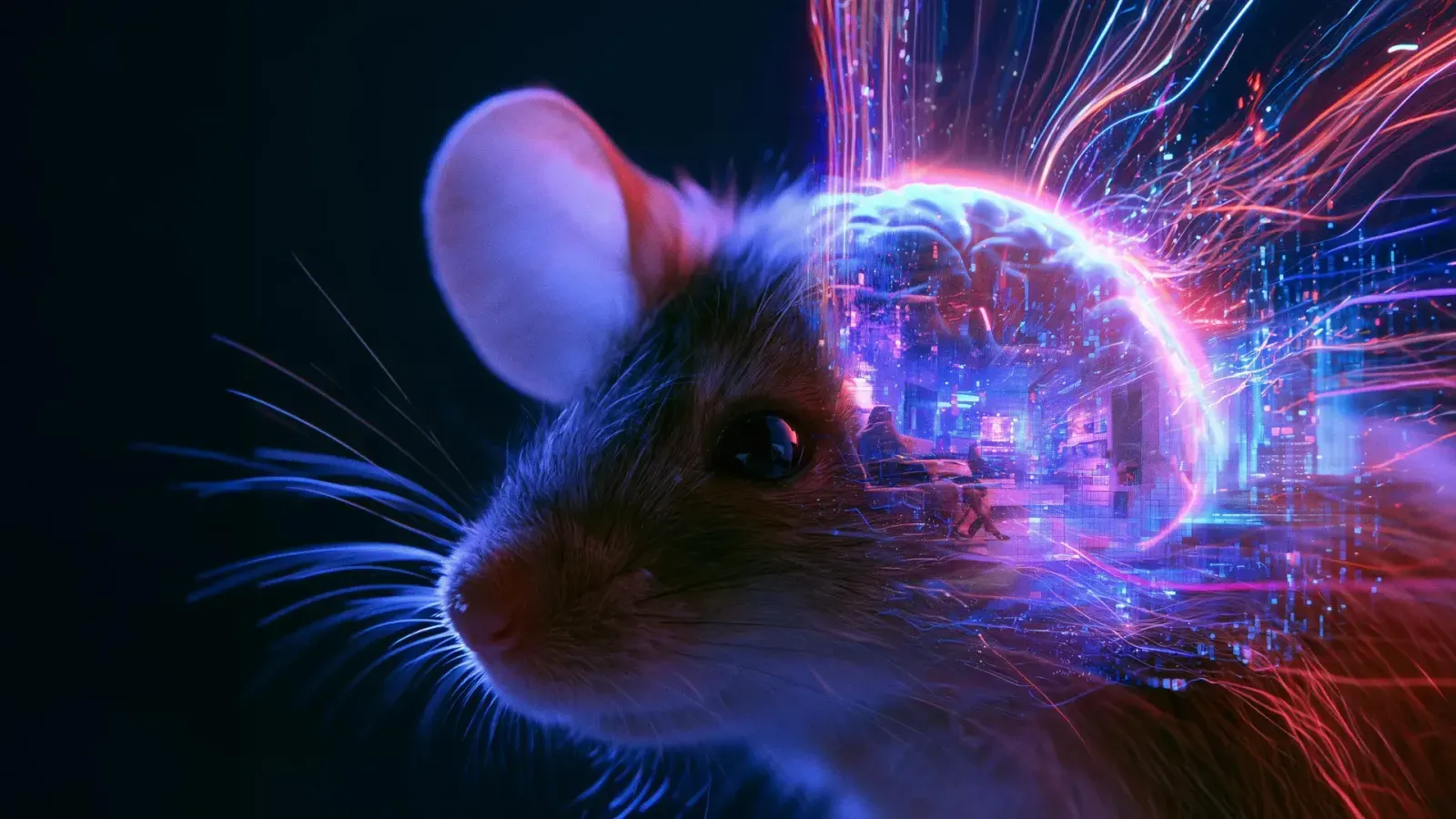
Researchers at University College London have successfully reconstructed short video clips using brain activity recorded from mice, according to a study published in the academic journal eLife. The innovative research project was conducted with the involvement of Dr. Joel Bauer from the prestigious Sainsbury Wellcome Centre at UCL. To achieve these findings, the scientific team utilized recordings gathered from individual brain cells located within the visual cortex of the mice.
Explaining the motivation behind the research, Dr. Joel Bauer stated that the team wanted to establish a better way of investigating how the brain interprets what we see. According to Dr. Bauer, current methods of understanding what specific groups of neurons are representing are not very generalizable to situations that have not been specifically tested for. Consequently, the researchers wanted to develop a method that can capture what is being represented in the brain and compare that directly to reality.
To accomplish this goal, the methodology employed a dynamic neural encoding model that originated from the 2023 Sensorium Competition. By applying this approach, the research team was able to achieve high-quality reconstructions of 10-second video clips based on the neural recordings. Dr. Bauer noted that the overall accuracy of these video reconstructions improved progressively with the inclusion of data from more individual neurons, thereby demonstrating the critical importance of comprehensive neural data collection in such studies.
The findings also shed light on the nature of internal perception and neural processing. Dr. Bauer explained that human beings and animals do not possess a mathematically perfect representation of the external world inside their heads. Instead, the biological visual processing pipeline actively skews and warps our internal representation in a manner that modifies incoming information before it is fully perceived.
According to the researchers, this distinct deviation between objective reality and internal neural representations is not necessarily an error within the system. Rather, it functions as an intentional feature of the brain, reflecting the specific ways our minds naturally interpret and augment sensory information. With these successful video reconstructions completed, the team aims to further explore the underlying mechanics of how this fascinating perceptual process happens inside the brain.