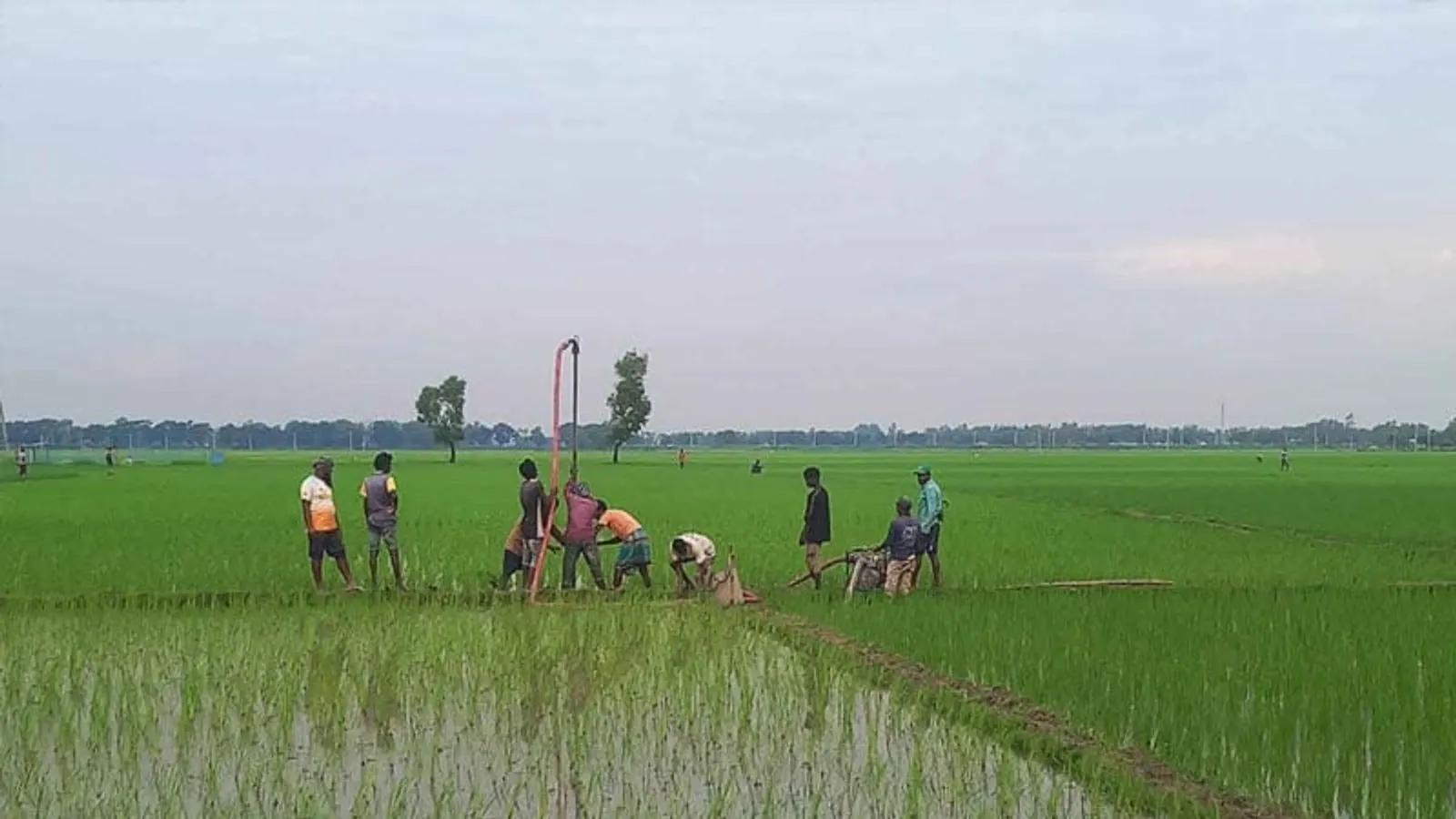

Satkhira Fish Farmers Turn Excess Pond Moss Into New Economic Livelihood
Farmers in Satkhira's Debhata and Ashasuni upazilas are harvesting excess moss from shrimp enclosures to sell as fish feed. This innovative practice creates seasonal employment and supplementary income for local workers.
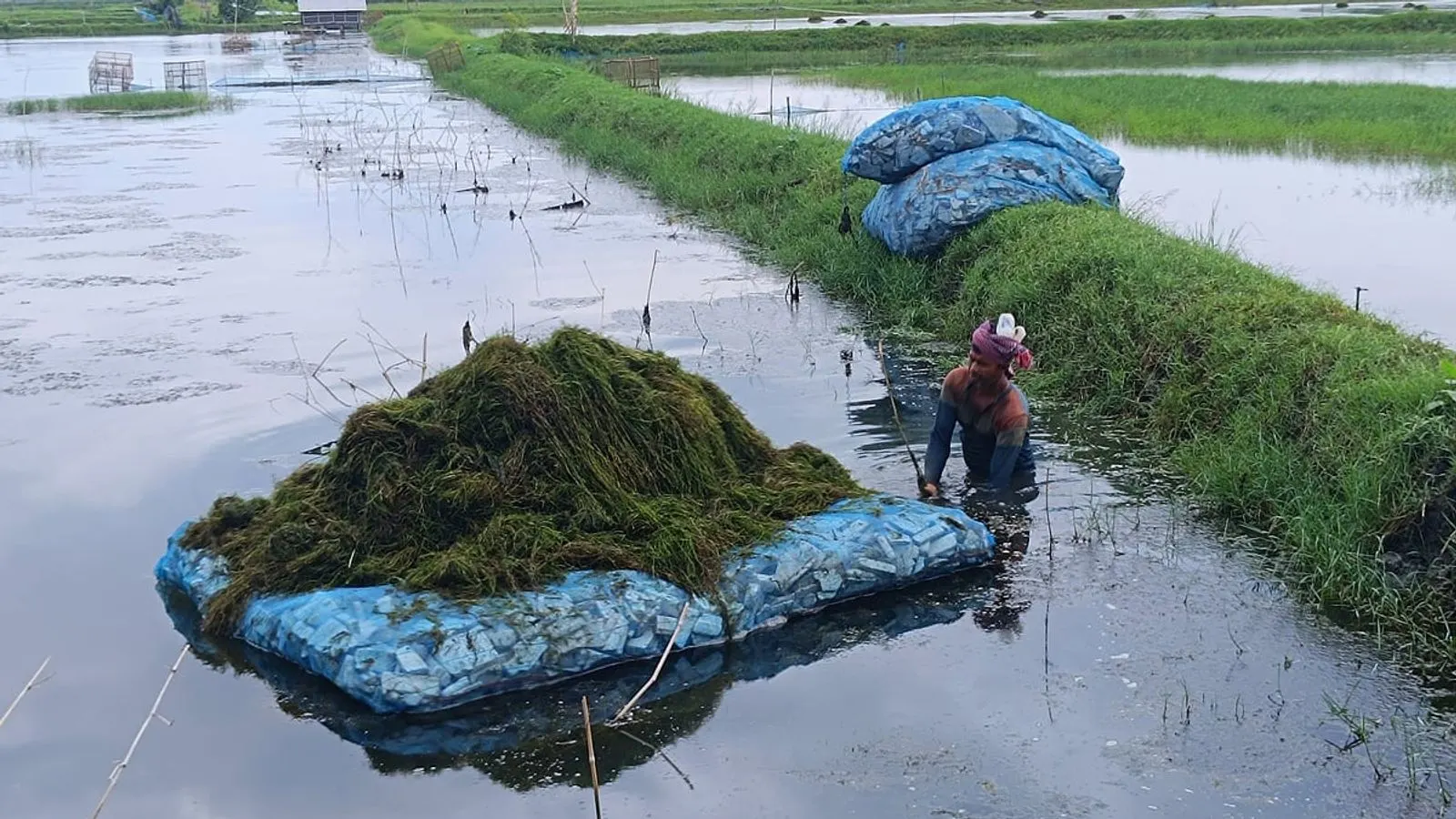
An innovative economic activity has emerged in the Satkhira district, where local residents are collecting and selling excess moss from fish enclosures to create a new source of livelihood. According to reports from Prothom Alo and the Satkhira District Fisheries Office, this practice was documented last Friday across the Debhata and Ashasuni upazilas. Locally referred to as 'kata shela', this excessive moss—which naturally proliferates in brackish water enclosures—is being gathered by local workers and repurposed as valuable food for white fish.
The accumulation of excess moss in saltwater shrimp enclosures often creates significant management challenges for farm owners. Aziyar Rahman, who owns a 15-bigha land enclosure, explained that when moss grows excessively, it obstructs the movement of shrimp fry and ultimately hinders their proper growth. Consequently, clearing the unwanted vegetation is a necessary task for maintaining healthy shrimp production, leading owners to allow workers to harvest the problematic material.
Rather than letting the gathered vegetation go to waste, workers and enclosure owners have established a profitable local market by selling it to white fish farmers. Aminur Rahman, who manages a 12-bigha enclosure, noted that white fish consume this moss avidly, prompting him to purchase the harvested material specifically to feed the fish in his ponds. Other local participants in this trade, including Lutfor Rahman, confirmed that excess moss occurs in nearly all such areas and must be cleared regularly before being sold to white fish enclosure owners.
For local collectors such as Abu Sayed, this seasonal trade provides crucial financial support in an area where alternative employment opportunities are scarce. Abu Sayed explained that he collects moss from saltwater enclosures and sells it to freshwater white fish farmers, continuing this work for five to six months of the year. During the peak season, workers like him earn between 400 and 500 Taka daily. However, as winter approaches and the moss naturally diminishes, these workers transition to standard day-labor jobs to sustain their incomes.
The financial returns from this harvested aquatic vegetation are notably lucrative for the collectors involved in the trade. A single van load of moss typically commands a market price ranging from 700 to 800 Taka. Khalilur Rahman, a local enclosure owner, shared his direct experience with the trade, stating that his own pond had become completely overwhelmed with spontaneously grown moss. After selling a single van load for 700 Taka, he highlighted the dual benefit of the process. Rajkumar Gain echoed this sentiment, emphasizing that clearing the enclosures simultaneously keeps the ponds clean and generates a personal income stream.