

Researchers Capture Detailed Views of DNA Molecules Aligning and Recognizing Sequences
A team of researchers has captured detailed views of DNA molecules aligning and recognizing matching sequences using atomic force microscopy and computer simulations. The findings, published in the journal Nucleic Acids Research, provide a direct visualization of long-hypothesized cellular mechanisms.
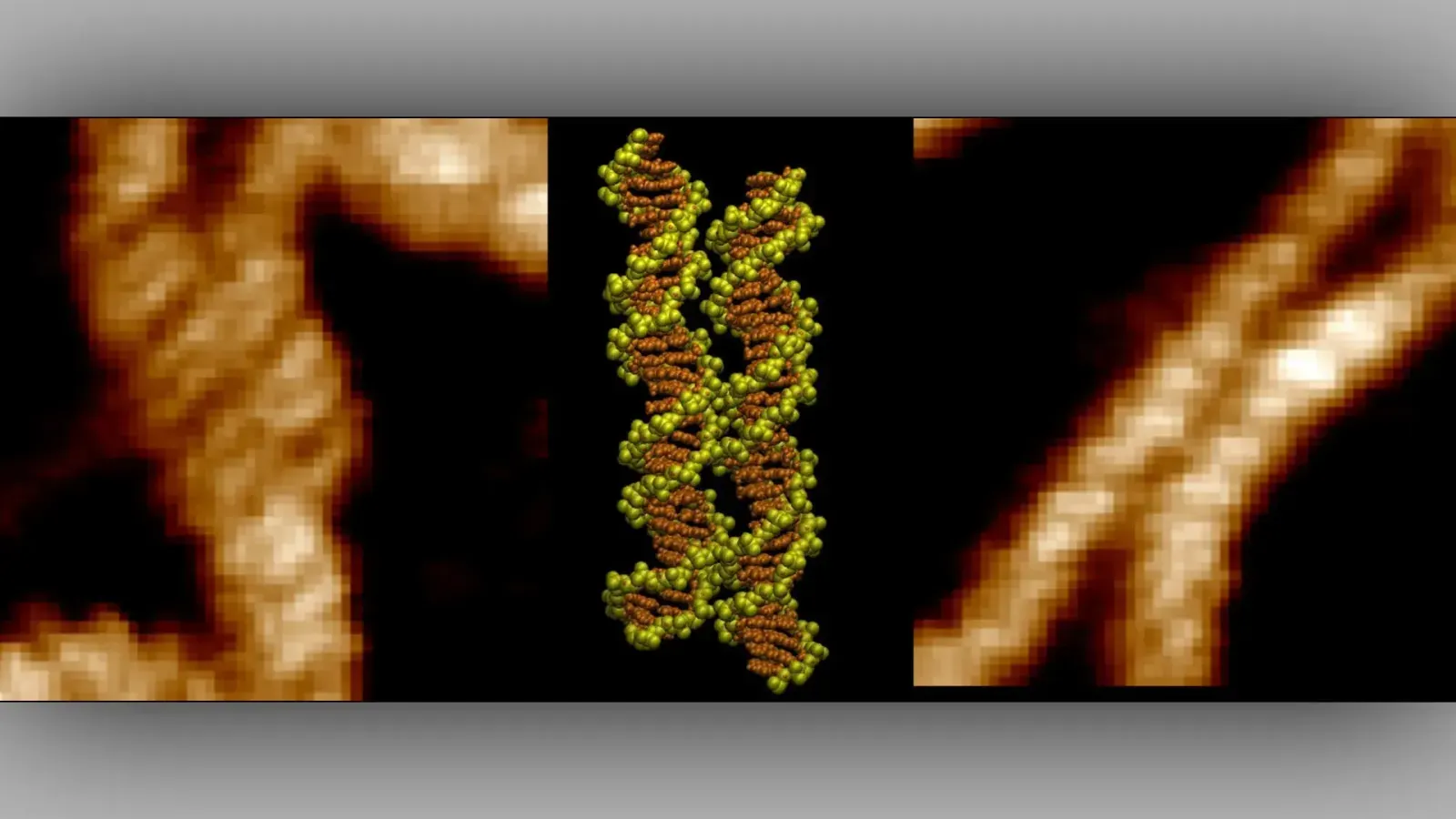
Researchers have successfully captured detailed views of DNA molecules aligning and recognizing matching sequences, utilizing a combination of advanced atomic force microscopy and computer simulations. The findings from this collaborative research effort were published in the scientific journal Nucleic Acids Research, marking a significant milestone in understanding fundamental molecular interactions within cellular biology. Twenty years ago, scientists first began theorizing about these specific mechanisms, and the new study finally offers a direct visualization of processes that have long remained hypothetical.
The study highlights the role of electrical charges and ions in facilitating the alignment of genetic material. Because DNA naturally carries a negative electrical charge, molecules would typically repel one another rather than naturally join together. However, the research reveals that positively charged metal ions can settle into the grooves of the DNA structure. Once positioned there, these ions serve as crucial molecular bridges that help overcome the electrostatic repulsion, allowing the genetic strands to come into close proximity and recognize matching sequences.
Thomas Catley, one of the researchers involved in the project from Imperial College London alongside colleagues including Agnes Noy from the University of York, Alexey Kornyshev, and Victor Velasco-Berrelleza from the University of Sheffield, expressed excitement regarding the breakthrough imaging results. "It was incredible to be able to directly visualize the long-hypothesized mechanism for the first time," Thomas Catley stated, emphasizing that the advanced imaging techniques at their disposal are currently allowing scientists to uncover key DNA interactions which have implications in many crucial cellular processes.
To fully understand the physical forces at play during these events, the research team relied on an integrated approach combining physical observation with theoretical modeling. While the experimental microscopy captured the physical positioning and movement of the genetic material, computational tools provided the necessary depth to interpret the data. Victor Velasco-Berrelleza noted this synergy by explaining that "Microscopy shows us what happens, but the simulations allow us to uncover the molecular mechanism behind it." Together, these methods bridged the gap between seeing the physical alignment and understanding the atomic-level forces driving it.
Looking ahead, the implications of this discovery extend deeply into genetics, genomics, and the study of human disease pathology. Agnes Noy elaborated on the potential clinical relevance of the findings, explaining that "This discovery could help researchers identify regions of the genome specially involved in DNA pairing." Furthermore, Noy pointed out that these specific genomic regions may become particularly important when mutations disrupt normal cellular processes and ultimately contribute to cancer, opening new avenues for future targeted investigation.