

New Study Reveals How Queen Honeybees Accumulate and Offload Pesticides
Recent research shows that queen honeybees accumulate pesticides over time and transfer them into their eggs. The findings shed new light on the hidden chemical burdens facing honeybee colonies.
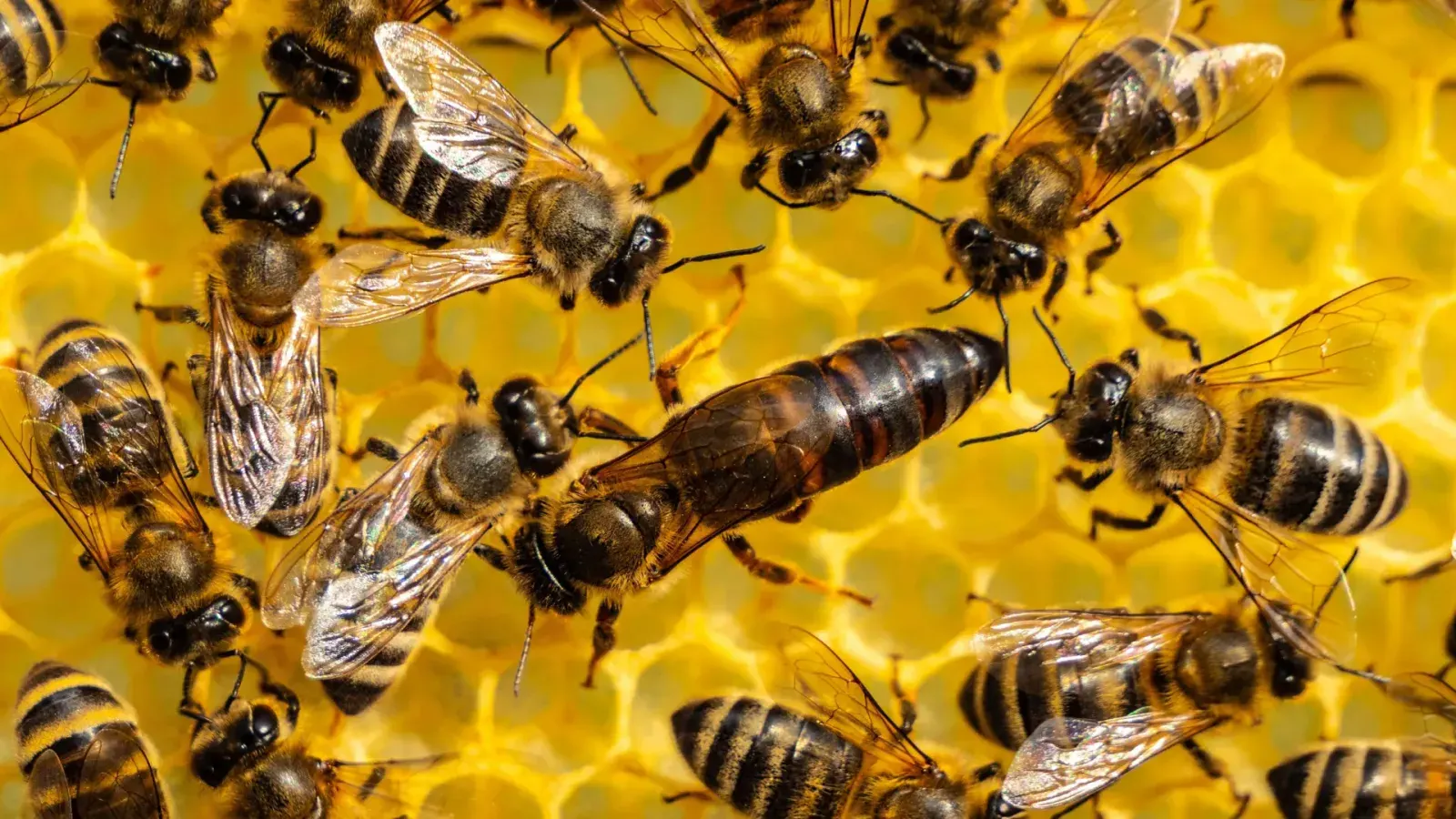
New scientific research has revealed that queen honeybees exposed to pesticides over time can accumulate these harmful chemicals directly in their bodies and subsequently transfer them into their eggs through a process known as maternal offloading. The important study was led by the University of California, Davis, working in close collaboration with the Lawrence Livermore National Laboratory and the U.S. Department of Agriculture's Agricultural Research Service, known as the USDA-ARS. The detailed findings from this collaborative scientific effort were officially published in the academic journal Current Biology.
Honeybees play an absolutely vital role in global agriculture, as approximately one-third of the world's food crops are pollinated by honeybees. Within a typical hive, the queen bee occupies a uniquely critical position as the only member of the hive who can lay eggs that ultimately become the next generation of workers. Because she keeps the entire colony alive, understanding how pesticides can affect queen bees and also her offspring is critically important to researchers and conservationists alike. To track the movement of chemicals, researchers utilized experimental nanocolonies and methyl parathion tagged with a low-level radioactive marker.
Worker bees in the colony act as an initial defense barrier, filtering out a high percentage of pesticides to protect the hive. Specifically, worker bees successfully filter out 95 percent of the pesticide on the first day of exposure, and this high rate continues with 86 percent of the pesticide filtered out by day 10. However, researchers observed that this vital worker filtration capacity can be overwhelmed over time. Bruce Buchholz noted that using BioAMS allows scientists to trace very low levels of a pesticide, and added that the pesticide concentrations used in the study were not lethal and were environmentally relevant to those seen in nature.
As pesticides begin to accumulate in the bodies of the queens over time, the royal insects turn to their own internal biological defenses. Angela Encerrado-Manriquez explained that when worker filtration capacity is overwhelmed, queens utilize maternal offloading, which allows them to shunt the toxic burden directly to their eggs. Lead researcher Sascha Nicklisch emphasized the fundamental nature of this survival mechanism, stating that in order to protect herself, the queen bee offloads these chemicals into her eggs to get rid of them, and highlighted that no one has shown this in honeybees before.
Given that honeybee queens typically produce between 1,500 and 2,000 eggs every single day, this chemical transfer carries severe potential consequences for the future of the colony. Sascha Nicklisch warned that when pesticides accumulate to the extent that the queen bee has eggs that are so loaded they may no longer develop properly, there could be a tipping point. Furthermore, researchers cautioned that there may be a slow creeping effect of chemical accumulation that will ultimately contribute to delayed colony collapse, posing a continuous threat to agricultural ecosystems worldwide.