New Guinea Snake Species Named After Guns N' Roses Guitarist Slash
Researchers have identified a new New Guinea snake species and named it Lielaphis slashi in honor of musician Slash. The reddish-brown reptile, measuring 28 inches long, was described in the scientific journal Zootaxa using genetic and physical analyses.
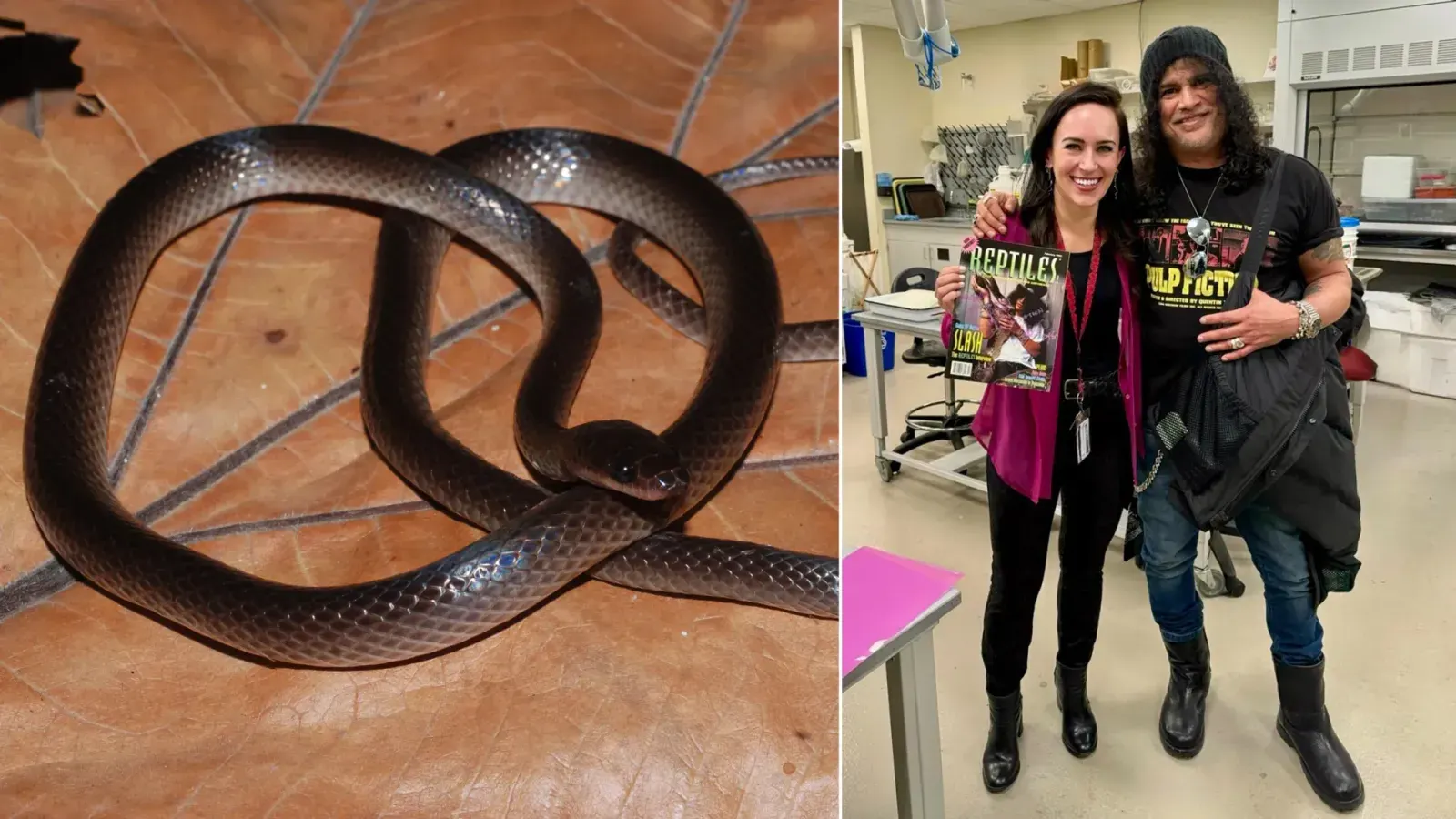
A newly identified snake species discovered on the island of New Guinea has been officially named *Lielaphis slashi*, commonly referred to as Slash's groundsnake. The scientific description of the reddish-brown reptile, which measures 28 inches long, was published in the academic journal *Zootaxa*. The discovery took place on New Guinea, which is recognized as the world's second-largest island, trailing only Greenland. The massive landmass is located north of Australia and is politically divided between Indonesia and Papua New Guinea.
The naming of the reptile after the musician—whose birth name is Saul Hudson, widely known as the lead guitarist of Guns N' Roses—drew an enthusiastic response from the artist himself. As a long-time herpephile, Slash stated that he is extremely honored and humbled to have the creature named after him. He noted that it is really exciting and that he never would have imagined this moment would arrive. Sara Ruane, a researcher involved in the study, shared that Guns N' Roses has been one of her favorite bands since she was in first grade. Ruane recalled that by fifth grade, she had already told her teacher that she wanted to be a herpetologist—a scientist who studies reptiles—when she grew up, adding enthusiastically that "This guy is so cool."
The collaborative research effort behind the discovery involved scientists from several institutions, including the Field Museum, Louisiana State University Museum of Natural Science, Rutgers University, Slippery Rock University, the American Museum of Natural History, and the Papua New Guinea National Museum and Art. Ruane explained the inspiration behind choosing the musician's name, noting that she reread an interview in which he talked about how much he loves museums, zoos, and natural history. He also discussed how when he was a kid, he would go outside and look for snakes. Ruane stated that it was all stuff that she really related to, and it made her think that he would be a great person to name a new species after.
Field research on the island presented specific challenges and required careful methods. Chris Austin, another researcher on the project, explained that these New Guinea groundsnakes are nocturnal, meaning the best way to find them is at night. They are typically found just after sunset at the base of large trees where they are looking for something to eat. Austin cautioned that when working at night in New Guinea, individuals need to be very careful as there are several highly venomous species that look very similar to the non-venomous groundsnakes.
To confirm the discovery, the team employed rigorous scientific techniques. Tianqi Huang stated that using multiple cutting-edge genetic analyses, the team found that *L. slashi* is genetically distinct from other similar snakes in the same genus. Huang further explained that the combination of physical characteristics, such as differences in numbers of scales when compared with other species, and the genetic evidence is what led researchers to realize that it is an entirely new species. Additionally, the team used ecological modeling to show that *L. slashi*'s preferred habitat is different from similar snakes.
Despite these findings, observing the creatures remains difficult in their natural environment. Ruane noted that it is incredibly hard to observe snakes in the wild before they slither away, meaning our knowledge about *L. slashi* is limited. Discussing their behavior and diet, Ruane explained that snakes in this genus often have large teeth in the back of their mouths, which New Guinea groundsnakes may use to grab on to and eat small, slippery-scaled lizards and the eggs of other reptiles. She emphasized that this snake is not grasping and squeezing its prey like a boa constrictor.
The newly described species also faces immediate environmental pressures in its native region. Ruane pointed out that the habitats where Slash's groundsnake is from are under threat from industries like coffee farming and mining. Concluding on the broader significance of the work, Ruane stated that is part of why describing the species that live there is important, adding that every species should be recognized in order for people to better understand how ecosystems work and how everything fits into the environment, because animals and other living things cannot be conserved if researchers do not know about them.