
Islamic Development Bank Chief Meets Prof Yunus in Dhaka
Islamic Development Bank Group Chairman Muhammad Al Jasser has met with Professor Muhammad Yunus in Dhaka. The discussions highlighted ongoing financing partnerships and youth entrepreneurship initiatives.
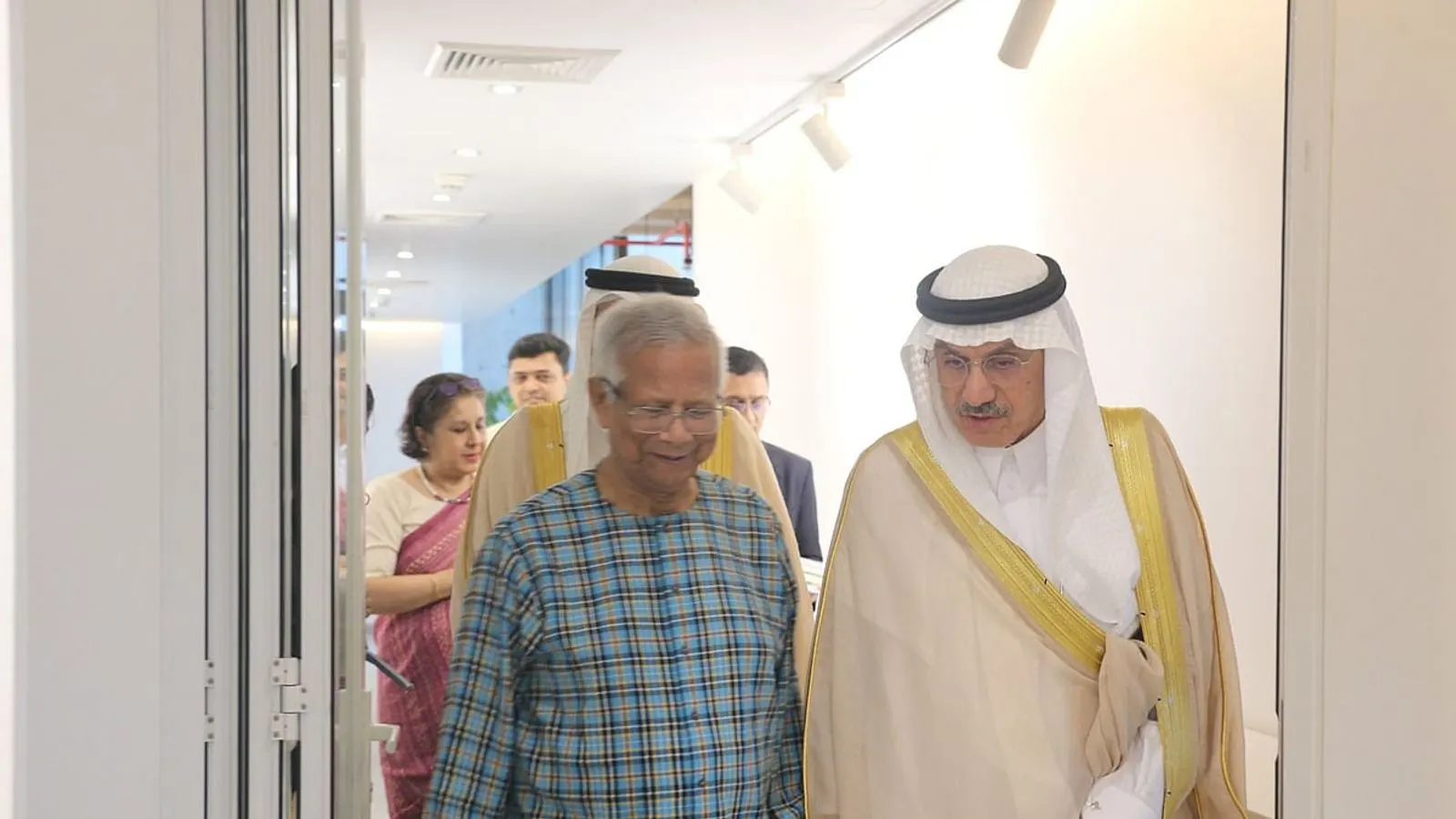
On September 3, 2026, in Dhaka, Bangladesh, a high-level diplomatic and financial engagement took place between Professor Muhammad Yunus and Islamic Development Bank Group Chairman Muhammad Al Jasser. The meeting brought together prominent figures from both delegations, including Adib Yusuf Al Amah, Anas Asiyami, Abdihamid Abu, Mohammad Jafar Almashharawei, Ahmad Shawesh, Abdikadir Abdi, Ali Khan, Naser Yakubu, Mahbub Rabbani, Abdul Alim H Mohammed, Iftekhar Alam, Md Ashraful Hasan, Lamiya Morshed, and Tasmina Rahman, representing various institutional frameworks such as the Islamic Development Bank, the International Islamic Trade Finance Corporation (ITFC), Grameen Bank, Yunus Centre, Eastern Refinery, Grameen Group, and Grameen Trust.
A central focus of the discussions between Professor Yunus and Chairman Al Jasser was the robust financial cooperation currently existing between Bangladesh and the multilateral institution. The Islamic Development Bank has demonstrated its strong commitment as a trusted development partner by providing a significant financing package amounting to one billion US dollars specifically designated for the modernization and expansion project of the Eastern Refinery.
Reflecting on the milestone agreements underpinning this partnership, Professor Yunus stated that this agreement mirrors the profound depth of the relationship between Bangladesh and the Islamic Development Bank, while also reaffirming the bank's pivotal role as one of the nation's most steadfast development partners.
The dialogue also delved into broader socio-economic philosophies, particularly regarding modern employment trends and youth development. Dr. Al Jasser observed that a vast majority of contemporary youth display a distinct tendency to distance themselves from conventional employment systems, showing a declining interest in preparing themselves merely to become traditional job holders.
Expanding on this perspective, Dr. Al Jasser emphasized that it is essential to harness the creativity of young people toward problem-solving and to cultivate them as entrepreneurs—a foundational concept that has been at the very core of microcredit since its inception.
Furthermore, building upon these developmental philosophies, the Islamic Development Bank is actively exploring avenues to learn directly from the extensive practical experience of Bangladesh in order to consider implementing microcredit frameworks across its own diverse member countries.