Interstellar Comet 3I/ATLAS Reveals Unusually High Methanol Levels
Observations conducted in late 2025 using the Atacama Large Millimeter/submillimeter Array in Chile have revealed that interstellar comet 3I/ATLAS contains an unusually large amount of methanol. Researchers noted that the object is only the third confirmed interstellar visitor ever observed entering our solar system.
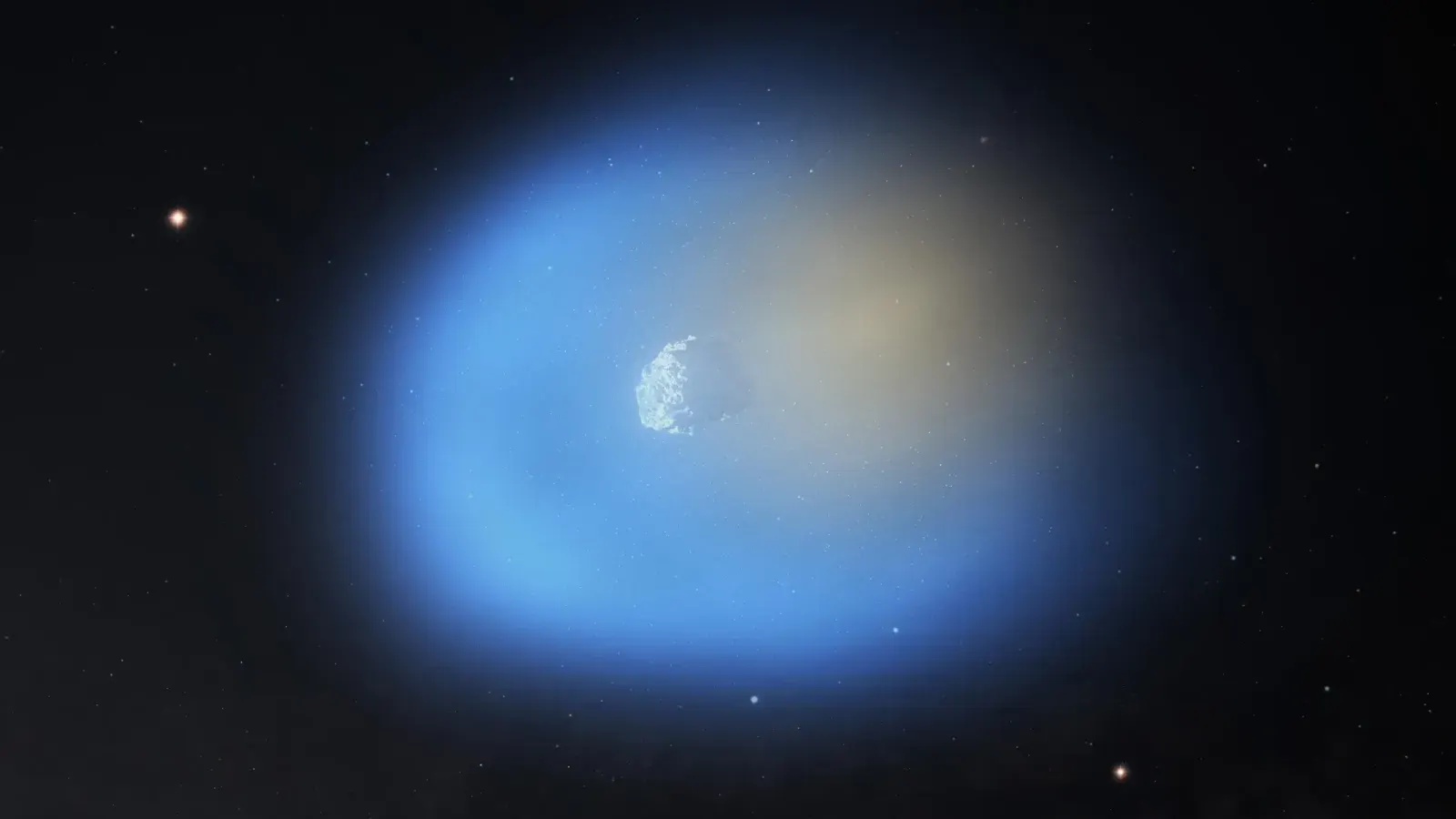
Astronomers studying interstellar objects have gathered striking new data concerning comet 3I/ATLAS, which represents the third confirmed object ever observed entering our solar system from interstellar space. This rare visitor follows in the path of previous interstellar objects known as 1I/'Oumuamua and 2I/Borisov, capturing the intense interest of the global scientific community as researchers work to understand its unique chemical composition.
To investigate the distant comet, a dedicated research team utilized the Atacama Large Millimeter/submillimeter Array, specifically employing its Atacama Compact Array located in Chile. These targeted observations were successfully carried out on several distinct dates throughout late 2025, allowing scientists to gather precise measurements regarding the volatile compounds present within the incoming celestial body.
The resulting data provided by the telescope array revealed that interstellar comet 3I/ATLAS contains an unusually large amount of methanol, highlighted by recorded methanol-to-HCN ratios of roughly 70 and 120. This chemical abundance sets the interstellar traveler apart from typical comets that originate within our own neighborhood of space.
Nathan Roth, who serves as the lead author and a professor at American University, emphasized the profound significance of the finding during discussions about the research. According to Roth, observing 3I/ATLAS is like taking a fingerprint from another solar system, offering unprecedented insights into conditions far beyond our cosmic boundaries.
Elaborating further on the composition of the object, Roth noted that the gathered details reveal precisely what the interstellar comet is made of. The professor pointed out that the visitor is bursting with methanol in a way that researchers just do not usually see in comets native to our own solar system.