India's Booming Avocado Industry Modernizes Amid Rising Demand
India's avocado industry is undergoing significant modernization to meet surging demand as domestic production scales up. Farmers and researchers are adopting advanced techniques and uniform planting materials to bridge a notable supply gap.
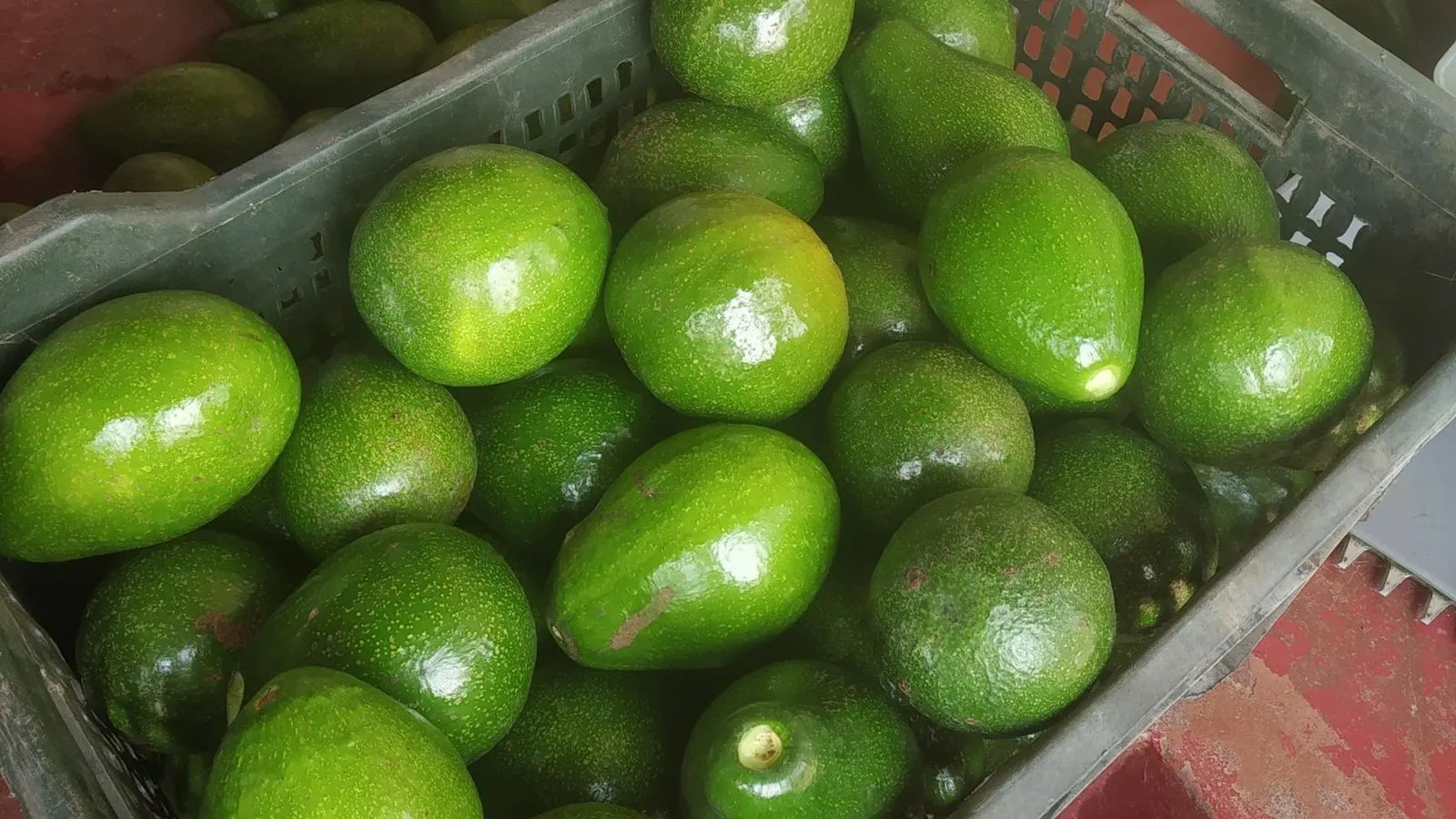
The demand for avocados has been increasing significantly across India, driving a major modernization wave within the nation's agricultural sector. Historically, farmers such as Madhu Bopaiah of Cottanad Plantations never planted avocado as a primary crop, instead introducing the fruit trees merely as shade providers for coffee plantations before realizing their potential as a profitable business. Reflecting on this evolution, Madhu Bopaiah noted, 'We never planted avocado as our main crop. We introduced it as a shade tree for coffee plantations, and only later realised it could become a profitable business.' Demonstrating this commercial shift, Cottanad Plantations successfully harvested between 10 and 15 tonnes of fruit last year across 40 acres of avocado trees.
Agricultural practices are also undergoing a dramatic transformation as growers refine their cultivation methods. Madhu Bopaiah explained the shift by stating, 'We completely changed the way we grow avocados after learning from South African experts. Today we use raised beds, wider spacing and different planting methods because avocado roots are highly vulnerable to diseases.' This modernization is further supported by industry experts like Manilal Palliyath, who highlighted the severe market imbalances facing the country. According to Manilal Palliyath, 'When we studied the market, we found a huge gap between demand and supply. India imports around 15,000 tonnes of avocados every year, while domestic production is only about 8,000–9,000 tonnes.'
Compounding these supply and demand challenges, changing environmental patterns have begun to threaten traditional farming models. Manilal Palliyath emphasized the necessity for agricultural shifts, pointing out that 'Coffee and pepper have suffered because of changing climatic conditions, making diversification essential for farmers.' Meanwhile, culinary professionals are closely watching the domestic produce market. Hussain Shahzad of Hunger Inc. Hospitality observed that 'Indian-grown avocados are improving and there are some great farmers working with local varieties, but the quality and availability can vary significantly depending on the season and region.' Hussain Shahzad added, 'We have explored different varieties of avocados available in India, but the imported ones currently offer the consistency we need in terms of flavour, texture, size, and ripening,' while also emphasizing that 'We are always interested in exploring better local produce as it evolves. Supporting Indian agriculture and working with indigenous ingredients is central to how we approach food.'
To overcome consistency hurdles, industry stakeholders are looking to international expertise and advanced orchard management. Harshit Godha of the Indo-Israel Avocado Nursery detailed why foreign methodologies are influential, stating, 'Israel grows avocados on approximately 13,000 hectares - a small country with almost no rainfall for eight months of the year. This is precisely why Israeli avocado technology is the most advanced in the world.' Addressing the technical complexities of orchard management, Harshit Godha further explained, 'When you put in a professional orchard, you have to know the techniques of pruning. A tree can grow up to 25 feet within six to seven years, and harvesting at 25 feet is next to impossible.' Furthermore, Harshit Godha warned that 'If a farmer gets this planting ratio wrong, the trees will fail to produce fruit, no matter how advanced the irrigation tech is. This single botanical detail is what separates a highly profitable, high-yielding orchard from one that looks great on paper but fails in reality.'
Research institutions are similarly focused on addressing foundational genetic and structural challenges within Indian orchards. Dr Ganeshan Karunakaran from the ICAR-Indian Institute of Horticultural Research (IIHR) pinpointed a major hurdle by stating, 'The biggest issue with the avocado trees in India are that every backyard tree is genetically different.' Explaining the commercial implications, Dr Ganeshan Karunakaran noted, 'That is why Indian markets are flooded with mixed fruit of varying quality. Standard varieties are essential if we want a reliable commercial market.' Outlining the institution's core mission for the future of the sector, Dr Ganeshan Karunakaran concluded, 'Our objective is to provide farmers with uniform, high-yielding, good-quality planting material rather than thousands of different unnamed trees.'