
GunaiKurnai Ancestors Practised Ritual Grass Burning for 25,000 Years
New archaeological research reveals 25,000 years of continuous ritual grass burning by the GunaiKurnai nation at Cloggs Cave in Australia. Experts examined layers of ash and phytoliths to uncover ancient cultural practices.
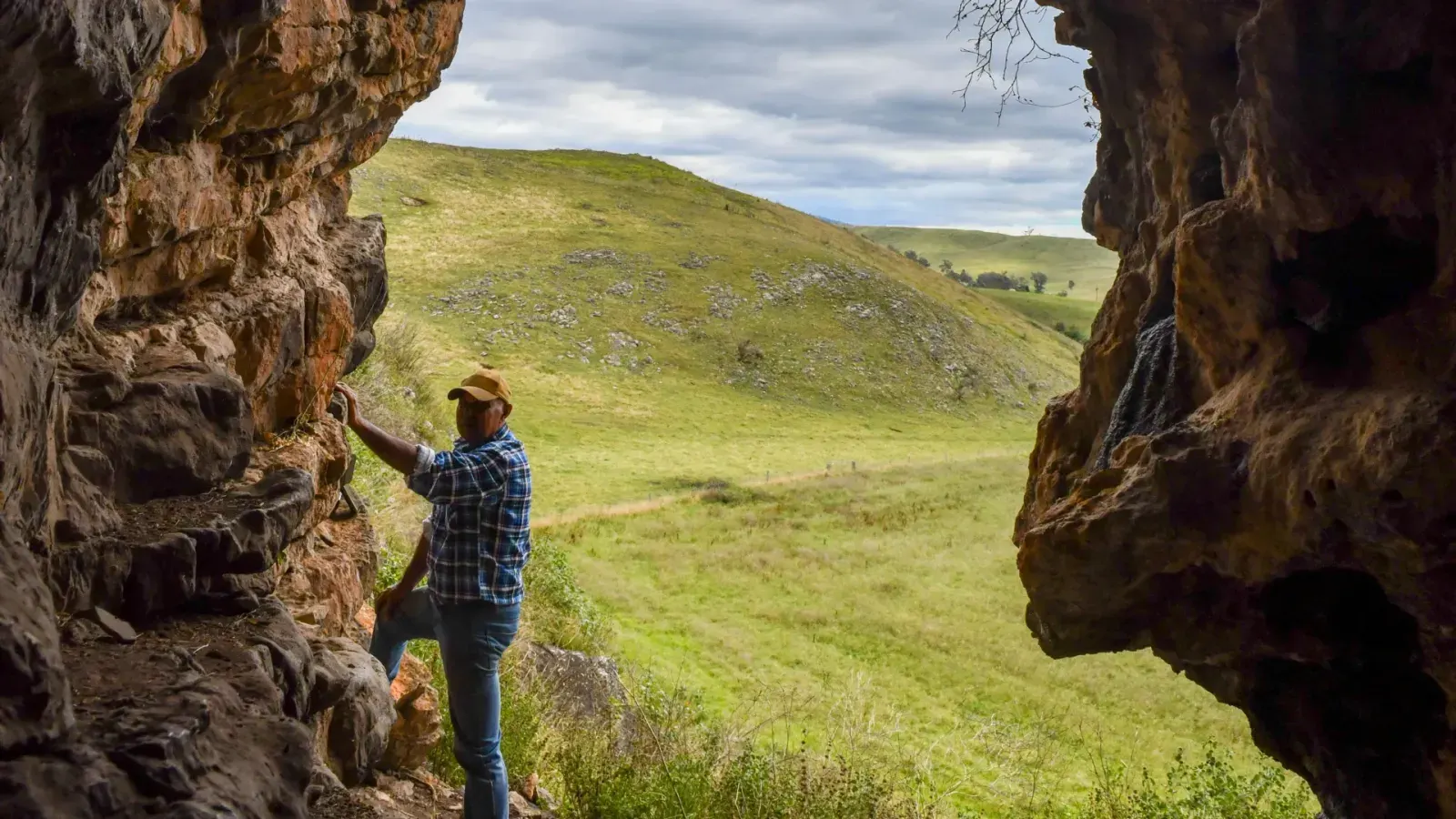
A remarkable archaeological discovery has revealed a span of roughly 25,000 years of continuous ritual grass burning at Cloggs Cave, located in Gippsland and the southern Victorian Alps in Australia. The GunaiKurnai people are recognized as the traditional custodians of this region, and their ancient activities within the cave have been meticulously documented through scientific excavation and analysis by researchers from institutions including the Australian National University, Monash University, and the GunaiKurnai Land and Waters Corporation. The findings were published in Frontiers in Environmental Archaeology, highlighting a profound and enduring connection to the landscape.
During archaeological excavations conducted between 2019 and 2020 at depths measuring between 1.5 meters and 2.3 meters deep, researchers identified 73 thin layers of ash. Dr Elle Grono explained the significance of these stratigraphical layers, stating, "Here we show that the Old Ancestors selected whole grasses from the wider landscape and carried them into Cloggs Cave to spread out in thin layers and burn. Over time, sediments covered these burnt layers, preserving each layer on top of another over thousands of years." Radiocarbon dating of these preserved layers placed specific activities at approximately 4,400 and 1,600 years ago.
To understand how the materials arrived inside the subterranean environment, researchers studied microscopic plant remains. Dr Elle Grono noted, "Unlike pollen, which is dispersed by wind or insects, phytoliths mostly accumulate at the spot where a plant decays. No plants grow inside the cave due to a lack of light, so the phytoliths must have been carried in by people or by animals such as possums on their fur or through their scats." To differentiate human activity from natural deposits, the team focused on specific evidence, with Dr Grono adding, "We focused on half-burnt phytoliths from ashy layers, which can only have been brought in by people, as unburnt ones might have arrived through either means."
Further detailed botanical analysis of the site revealed specific harvesting patterns utilized by the traditional custodians. Dr Elle Grono explained that "the phytoliths found at Cloggs Cave were from different parts of grass plants such as stems, leaves, flowers and roots, indicating that whole grasses were brought in, including the inedible parts." The scientific team identified 29 different kinds of phytoliths within the samples. Among the broader chemical and microscopic findings, individual components showed concentrations reaching 97%, while others registered as much as 18%.
In addition to the extensive layers of ash, archaeological evidence shows Cloggs Cave was used for ritual activities over a span of roughly 25,000 years through various distinct artifacts. A standing stone measuring 28 cm high was found inside the cave, placed for ritual purposes around 2,000 years ago. Professor Bruno David elaborated on the cultural context of these discoveries, noting that "their burning is consistent with GunaiKurnai traditional practices of using ash to perform magic and rituals, and also to track the footsteps of anyone coming in, including spirit-Beings. Other macro-botanical evidence, such as fat-smeared, trimmed wooden sticks from Casuarina trees, was also found in deeper and older deposits, indicating that other kinds of rituals using woody plants were also performed."