
Dhaka Rain Meets Nepal Disaster Reflections
Sudden rainfall in Dhaka offers a moment of reflection on the weather, contrasting with recent devastating natural disasters in Nepal. Reports and photographs highlight severe mud and debris in the Nuwakot district.
The weather in Dhaka took a familiar yet striking turn on August 27 when sudden rainfall descended upon the bustling city streets. Amidst the relentless heat that typically grips the urban area, the unexpected downpour caused a noticeable pause in the daily rush. Commuters navigating their way to the office found themselves briefly halting their routines to acknowledge the atmospheric shift. Some individuals looked directly up toward the shifting skies, others quickly pulled out their mobile devices to capture the moment, and many frantically searched their bags for umbrellas to shield themselves from the sudden precipitation.
This fleeting meteorological event transformed the high-paced capital city for just a few moments, offering a distinct contrast to its usual chaotic atmosphere. The sensory experience of the sudden shower was captured in reflective observations, noting how the urban landscape momentarily slows down. As people reacted to the downpour on the streets of Dhaka, the atmosphere provided a rare instance of collective pause amid the daily grind of city life, illustrating the immediate and visible impact of changing weather patterns on human behavior.
However, this local reflection on climate and weather patterns occurs against a backdrop of much more severe natural events taking place in the wider region. Recent reports have confirmed the occurrence of sudden flash floods and devastating mudslides in neighboring Nepal, highlighting the destructive potential of extreme weather phenomena. Specifically, these natural disasters have severely affected the area of Trishuli, located within the Nuwakot district of Nepal.
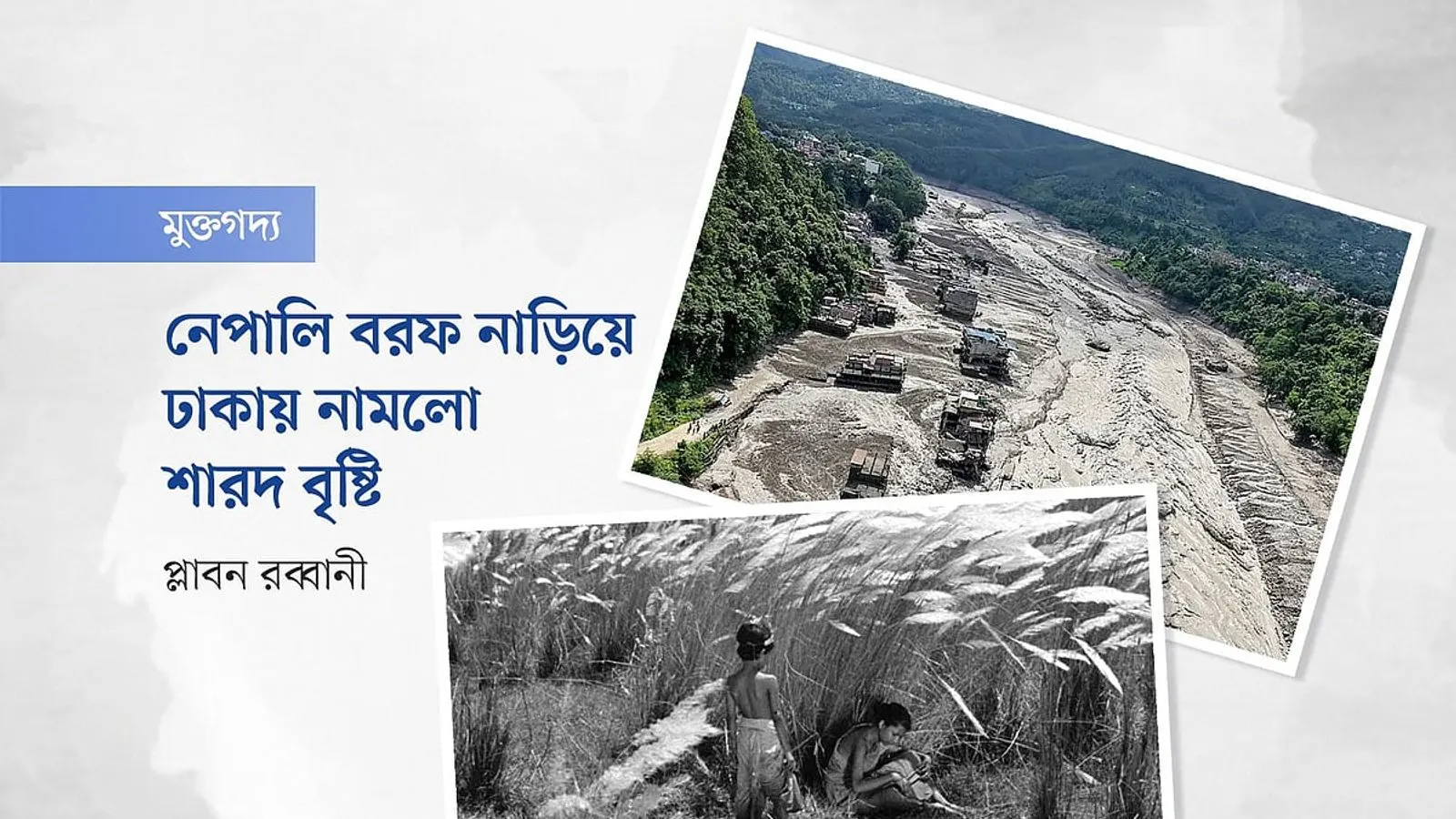
Visual documentation has underscored the severity of the situation in the Himalayan nation. Reuters provided a striking photograph, also dated August 27, which clearly depicts the aftermath of the catastrophe in Trishuli, Nuwakot. The image vividly shows massive accumulations of mud and heavy debris left behind by the sudden flash floods and mudslides, serving as a stark reminder of the destructive power of nature.
When viewed together, the sudden rainfall experienced by commuters in Dhaka and the catastrophic mudslides in the Nuwakot district of Nepal underscore the diverse and unpredictable manifestations of changing environmental conditions across South Asia. While city dwellers in Dhaka merely sought shelter from an unexpected shower, communities in Nepal faced the devastating realities of extreme natural disasters, linking these geographical points through the broader narrative of climate change and environmental volatility.