
Dhaka Markets See Vegetable Price Dips While Meat and Fish Remain Steady
A September 4, 2024 survey of Dhaka kitchen markets reveals that increased vegetable supply has reduced prices for items like papaya and pointed gourd. Meanwhile, staples such as beef, chicken, eggs, and fish continue to hold steady at high rates.
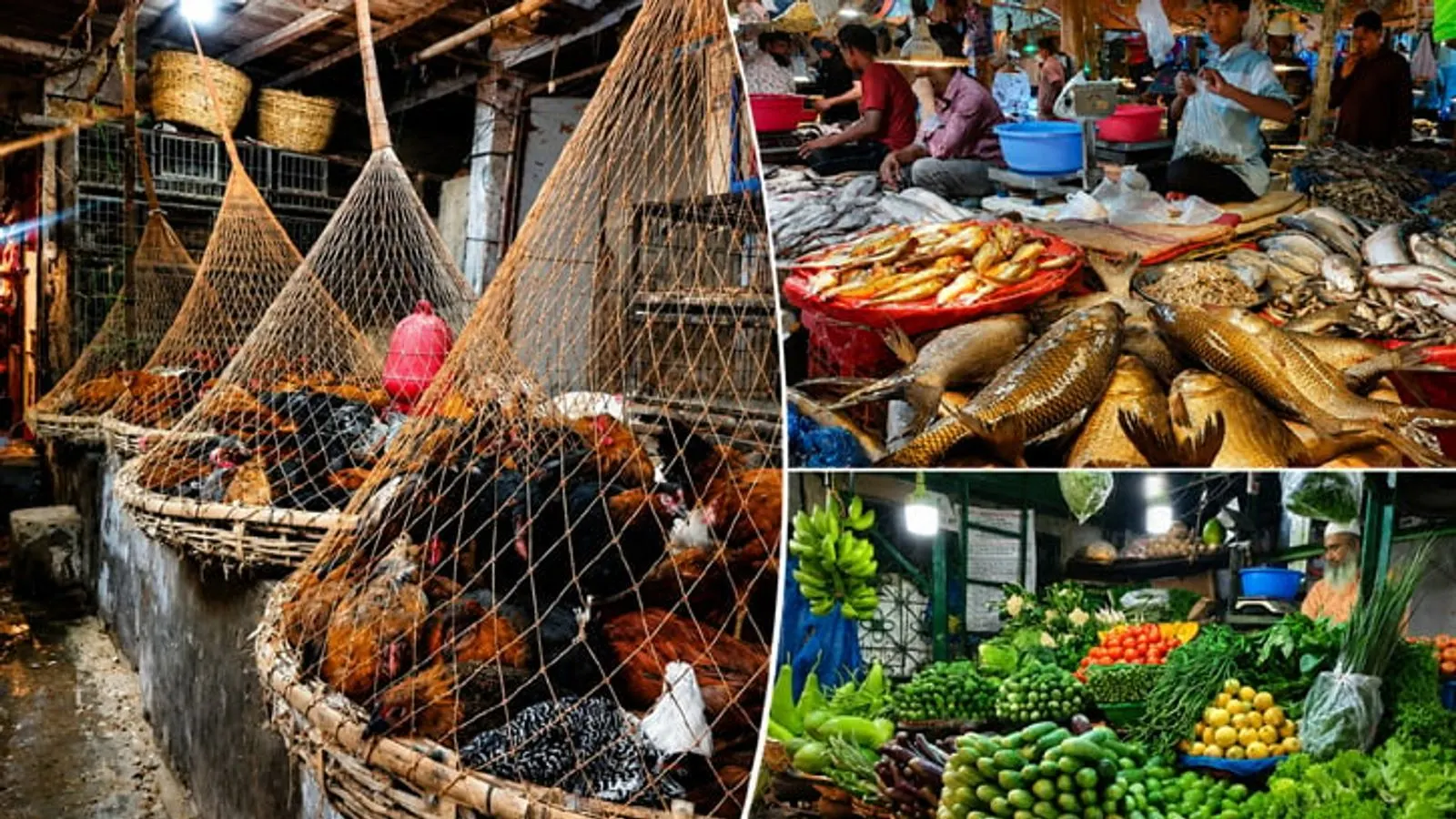
A comprehensive market assessment conducted across several prominent kitchen markets in the capital, including Kaptan Bazar, Roy Saheb Bazar, Babu Bazar, and Kawran Bazar, highlights a mixed picture for consumers on September 4, 2024. While an improved supply chain has successfully brought down the costs of several green vegetables, key cooking essentials like meat, fish, and eggs maintain their previous high price levels, according to reports published by RisingBD.
Focusing on the vegetable sector, the increased availability of produce in the capital's wholesale and retail hubs has provided some relief to shoppers buying specific items. Vendors are currently selling raw papaya at 30 taka per kilogram, while popular vegetables such as pointed gourd (potol), lady's finger (dheras), teasle gourd (kakrol), ridge gourd (jhinge), and ash gourd (jali) are retailing at 60 taka per kilogram. Additionally, bottle gourds and smooth loofah (dhundal) are priced at 60 taka per kilogram, bitter gourd at 70 taka per kilogram, and standard cucumbers range between 50 to 60 taka per kilogram. Premium local cucumbers, however, command a much higher rate of 80 to 100 taka per kilogram.
Despite these declines in select categories, several vital salad ingredients and vegetables remain stubbornly expensive for everyday buyers visiting the Dhaka markets. Long eggplants are priced at 100 taka per kilogram, round eggplants jump to 120 taka per kilogram, and tomatoes are trading between 140 and 150 taka per kilogram. Furthermore, beans (shim) are fetching an expensive 180 to 200 taka per kilogram, and green chilies are selling for 120 to 140 taka per kilogram. Vegetable vendor Nasir Hossain explained the discrepancy, noting that while good supply has decreased the cost of numerous vegetables, eggplants and tomatoes must be purchased at higher rates directly from the wholesale markets, keeping their retail prices elevated.
Shoppers navigating the kitchen markets have expressed mixed reactions regarding their overall daily expenses despite the vegetable price drops. Buyer Jewel Ahmed pointed out that while certain vegetables have indeed become cheaper, the total expenditure required to manage household grocery shopping has not decreased significantly. This sentiment is reinforced by the stability observed in the protein markets, where weekly price fluctuations for meat, fish, and eggs remain virtually non-existent.
In the poultry and meat sections, broiler chicken is currently selling between 190 and 200 taka per kilogram, while Sonali chicken commands a much steeper price of 320 to 340 taka per kilogram. Red meat prices remain far out of reach for many families, with beef retailing at 750 to 800 taka per kilogram and mutton soaring between 1,150 and 1,300 taka per kilogram. Egg prices are similarly fixed, with farm chicken eggs selling at 150 taka per dozen, which breaks down to 50 taka per hali (four pieces). Egg retailer Masud Rahman noted that they are currently selling eggs at 150 taka per dozen and that retail prices will only drop if wholesale market rates decline.
Finally, the fish markets across Dhaka continue to burden household budgets, with prices heavily dictated by the distribution hubs. Tilapia is selling at 250 to 260 taka per kilogram, Pangas is priced between 230 and 250 taka per kilogram, and popular varieties like Rui and Catla range from 380 to 420 taka per kilogram, while shrimp commands anywhere from 1,000 to 1,300 taka per kilogram. Fish vendor Ujjal Hossain explained that market prices heavily depend on the commission houses, stating that high wholesale costs force retailers to buy dearer, making prices feel high even with limited profit margins. Echoing this consumer frustration, buyer Aminulislam stated that fish prices remain unchanged, meaning that purchasing quality fish forces families to stretch their budgets past their limits just to meet basic household needs.