
Crocodylians Ruled Miocene South America As Apex Predators
New research reveals that enormous crocodylians, such as the 1,800-kilogram Purussaurus neivensis, dominated Miocene South America. Scientists studying fossilized remains found they were the region's most significant predators.
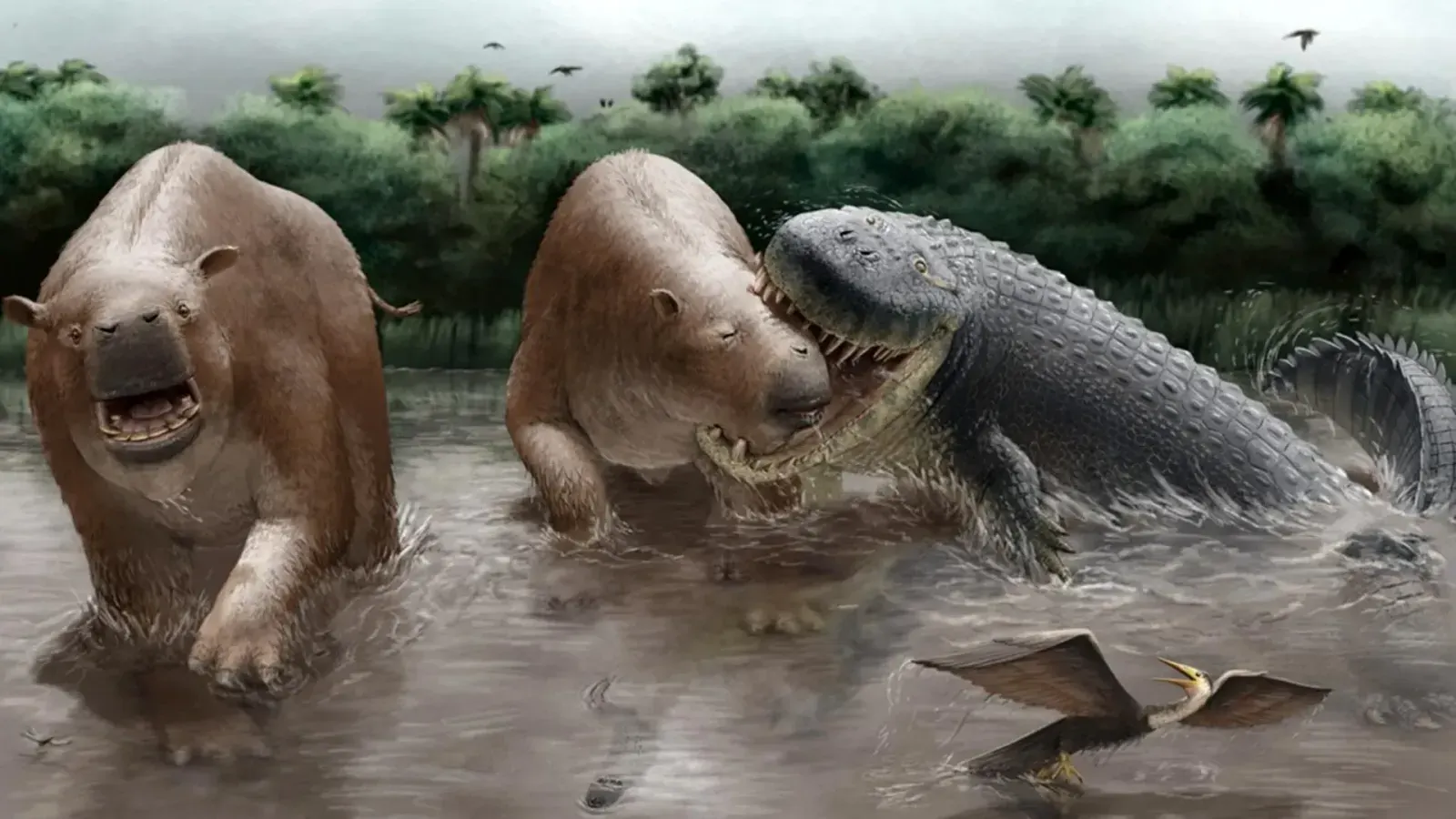
New research has revealed that crocodylians, and particularly the colossal species known as Purussaurus neivensis, stood out as the most significant predators in Miocene South America. The findings shed new light on a prehistoric ecosystem that existed approximately 10 million years ago, a time period when South America was home to enormous animals and formidable predators that roamed the continent.
During this ancient epoch, a vast lake covered a large portion of South America, creating a unique tropical environment. The region supported a diverse array of competing carnivores and predators. Alongside the dominant crocodylians, the local fauna included anacondas, saber-toothed mammals, formidable flightless birds commonly referred to as 'terror birds', and predatory crocodylomorphs known as sebecids.
Despite the presence of various other carnivores, Oscar Wilson, a postdoctoral researcher at the University of Helsinki in Helsinki, explained the sheer scale of the available food web. There was so much prey available that mammalian predators simply could not have eaten it all. According to Wilson, our new study shows that crocodylians in particular were the region's most important predators, especially when it came to hunting large prey.
To arrive at these conclusions, researchers examined fossils preserved in museum collections, carefully analyzing bite and tooth marks on the fossilized remains of ancient herbivores. The specific age range of the fossils analyzed in the study spans from 10.5 million to 16 million years old. The frequency of marks likely made by Purussaurus suggests that it was an exceptionally important predator in these tropical ecosystems.
Among these ancient reptiles, Purussaurus neivensis was a true giant of the era. According to the scientific data, Purussaurus neivensis grew to about seven meters in length and weighed roughly 1,800 kilograms. The detailed findings regarding these prehistoric predators and their feeding habits have now been formally published in the Journal of Vertebrate Paleontology.