
Chinese Youth Flock to Ancient Shanghai Temples Amid Economic Pressure
Facing severe economic pressures, growing unemployment, and fierce job market competition, young Chinese adults are increasingly turning to ancient temples in Shanghai for employment prospects and spiritual solace. Amid stagnant wages and bleak career outlooks, this demographic shift highlights a modern coping mechanism for a generation navigating a difficult economic landscape.
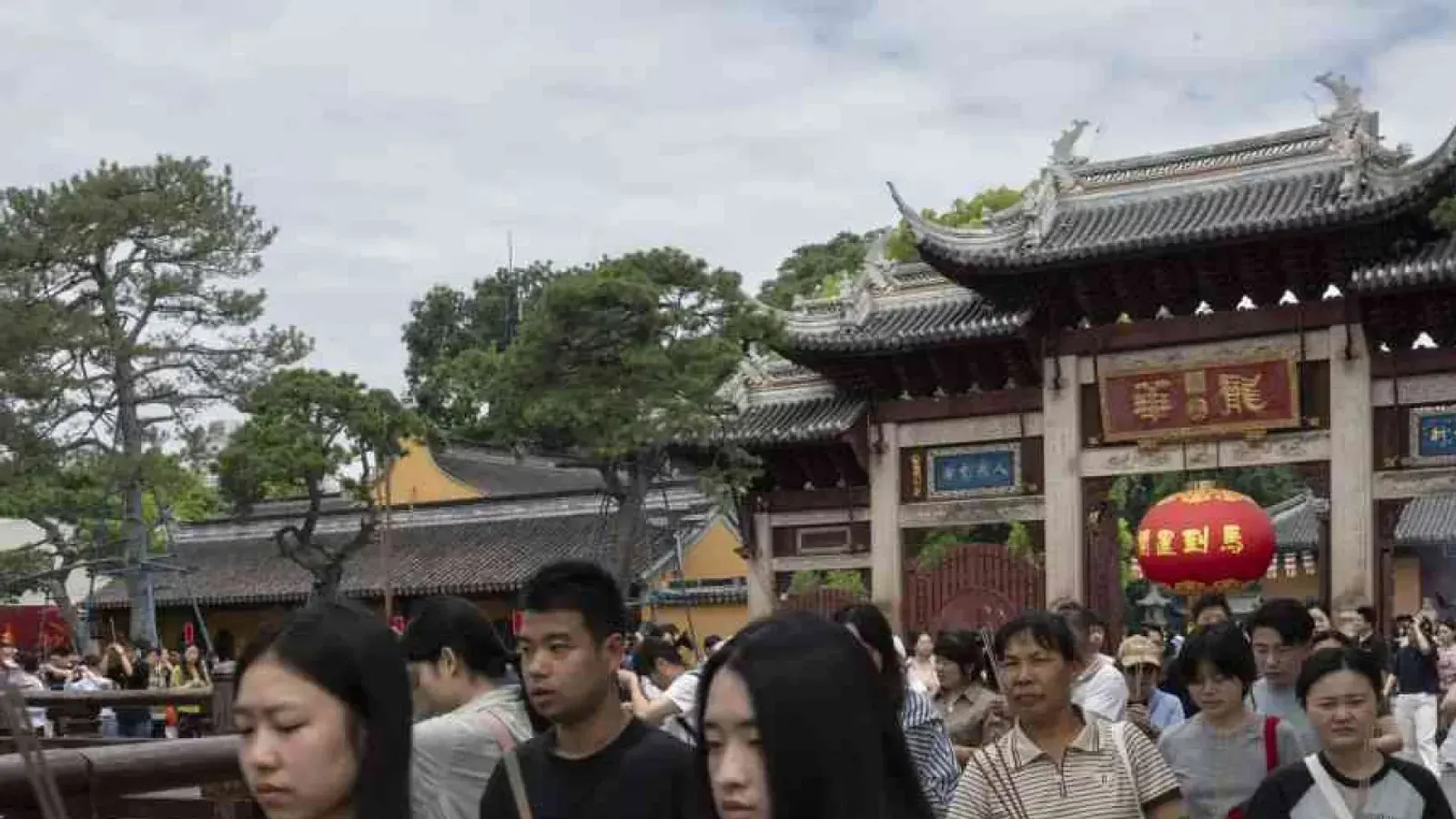
Amid mounting economic pressure, growing unemployment, stagnant wages, and fierce competition in the job market, a noticeable shift is taking place among the younger generation in China. Young adults in the bustling metropolis of Shanghai are increasingly turning away from traditional career pathways and seeking alternative avenues for hope, flocking in large numbers to ancient spiritual sites.
A primary destination for these youths is the historic Dragon Flower Temple, a remarkable 1,700-year-old landmark situated in Shanghai, China. Instead of traditional secular locations, young job seekers and professionals are visiting this ancient temple to pray for better employment prospects, improved life paths, and general success in an increasingly unforgiving economic environment.
This reliance on spiritual institutions is not entirely unprecedented, as highlighted by academic insights. According to a comprehensive survey conducted in 2018, approximately one-third of all adults under the age of 35 routinely visit religious sites specifically to pray for success in their personal and professional endeavors.
The motivation behind these temple visits stems from profound disillusionment with the current labor market. Ke Xi Kang, a young individual navigating these harsh realities, described the grim situation starkly: job opportunities are dwindling day by day, and nobody's income is increasing. In Ke Xi Kang's own words, current job hunting feels akin to choosing the least bad option from a pile of garbage.
Beyond offering solemn prayers for career breakthroughs, the young visitors also engage in various lighthearted and comforting activities within the temple grounds. They find solace in enjoying affordable vegetarian noodles priced at a mere two dollars, and they partake in the simple joy of tossing coins into collection pots in hopes of shifting their fortunes.
Academics and observers are actively studying this cultural phenomenon to understand its broader societal implications. Experts such as Fenggang Yang, Li Yongqing, Dai Yuanyuan, and Dong Yutong, affiliated with institutions including Purdue University, provide context on how contemporary Chinese youth integrate ancient traditions into their modern economic struggles.