
Bangladesh Sees Slowdown in Private Sector Credit Growth and Short-Term Debt
Bangladesh has recorded a significant slowdown in domestic and short-term foreign credit growth within the private sector as of June 30, 2024. Prominent banker Mohammad Nurul Amin attributes this downward trend to a current lack of momentum in broader economic activities.
Bangladesh has witnessed a notable deceleration in domestic and short-term foreign credit growth within its private sector, according to official figures released on June 30, 2024. Data shows that the annual credit growth in the private sector dropped to its lowest level, plunging to 4.47 percent in June. This slowdown reflects broader economic shifts occurring across the country, impacting how businesses acquire financing for their operational and developmental needs.
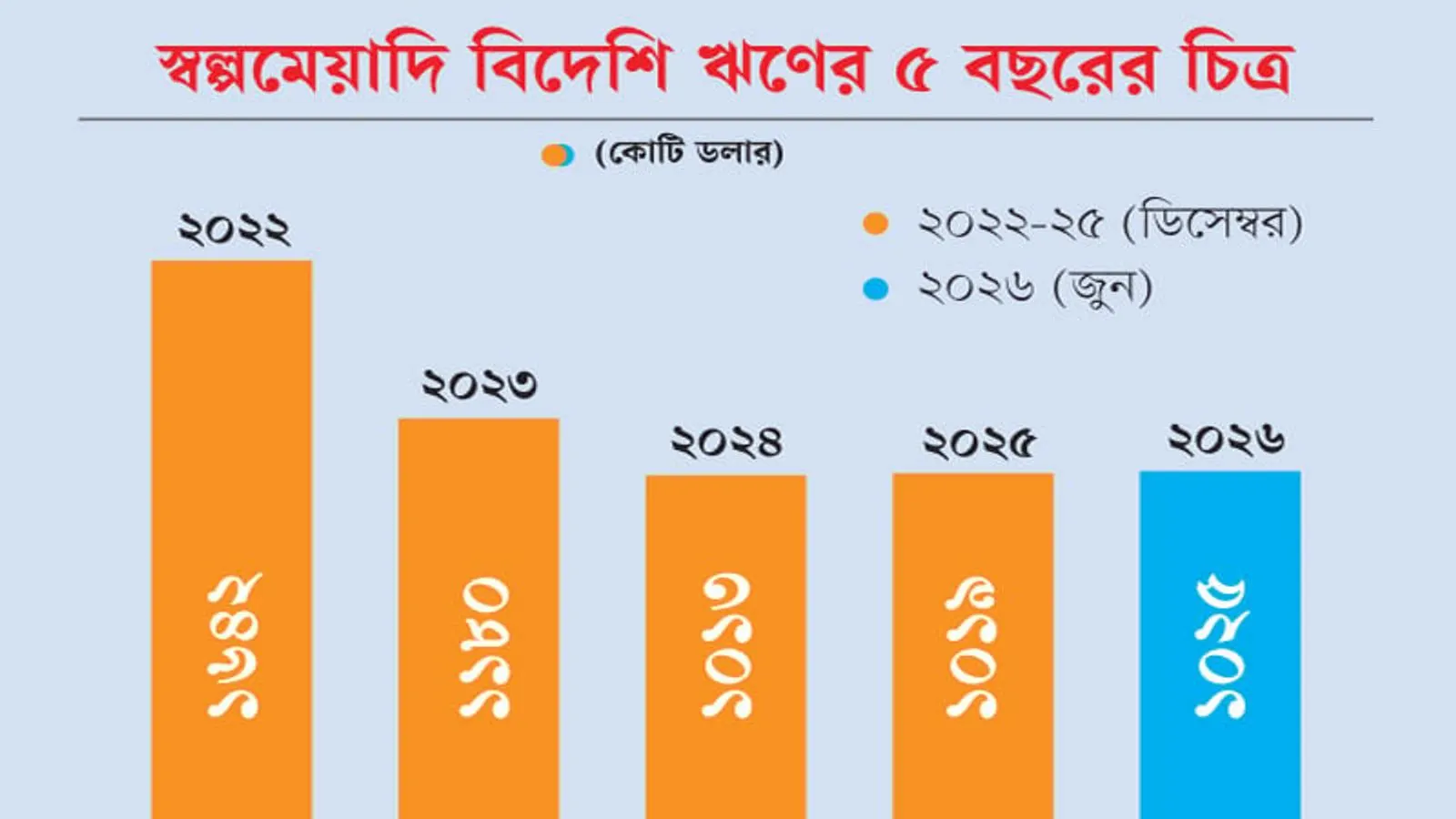
Alongside domestic credit trends, short-term foreign debt balances also experienced a downward trajectory. At the end of June, the balance of short-term foreign loans slightly decreased to $10.25 billion. This follows a gradual decline from earlier in the year, when the balance stood at $1.047 billion in January and $1.033 billion in April. Historical data indicates that short-term loans had surged by nearly 65 percent to $15.46 billion in 2021 compared to 2020, before falling to $11.79 billion by the end of 2023, and further declining to $10.13 billion by the end of 2024.
Broader foreign debt statistics further illustrate the changing financial landscape in Bangladesh. By March, the total foreign debt balance had decreased to $110.93 billion, down from the $110.35 billion recorded three months prior at the end of December. Out of this total foreign debt up to March, the public sector accounted for $90.91 billion, which is a decrease from $93.40 billion in December. Meanwhile, private sector foreign debt also saw a reduction, falling from $20.06 billion in December to $20.02 billion.
Addressing the context behind these figures, Mohammad Nurul Amin, a distinguished banker and chairman of Bangladesh Krishi Bank, explained the mechanics of these financial instruments. "Businesses take such suppliers' and buyers' credit against import-export for the import of raw materials and capital machinery," he stated. He added, "However, as there is not much momentum in overall economic activities in recent times, perhaps such loans are decreasing. If domestic and foreign investment increases, it will be seen again that the import of capital machinery and raw materials will increase, and the need for credit will increase overall."
Despite the current slowdown in credit growth and foreign debt balances, the regulatory and governmental environment has introduced specific policy adjustments. Notably, in May, the maximum interest rate cap on short-term loans was reduced. Furthermore, Mohammad Nurul Amin noted that the government has taken several initiatives to establish an investment environment, including declaring a stimulus package worth 60 billion taka at lower interest rates to revitalize the economy and reactivate closed factories, with separate allocations designated specifically for small and medium enterprises.