Bangladesh Plans 100% Eco-Friendly Blocks in State Construction
Bangladesh's environment ministry has held a meeting to formulate an action plan ensuring the complete adoption of eco-friendly blocks in government construction projects. Officials are working to replace traditional bricks despite current financial and tax hurdles.
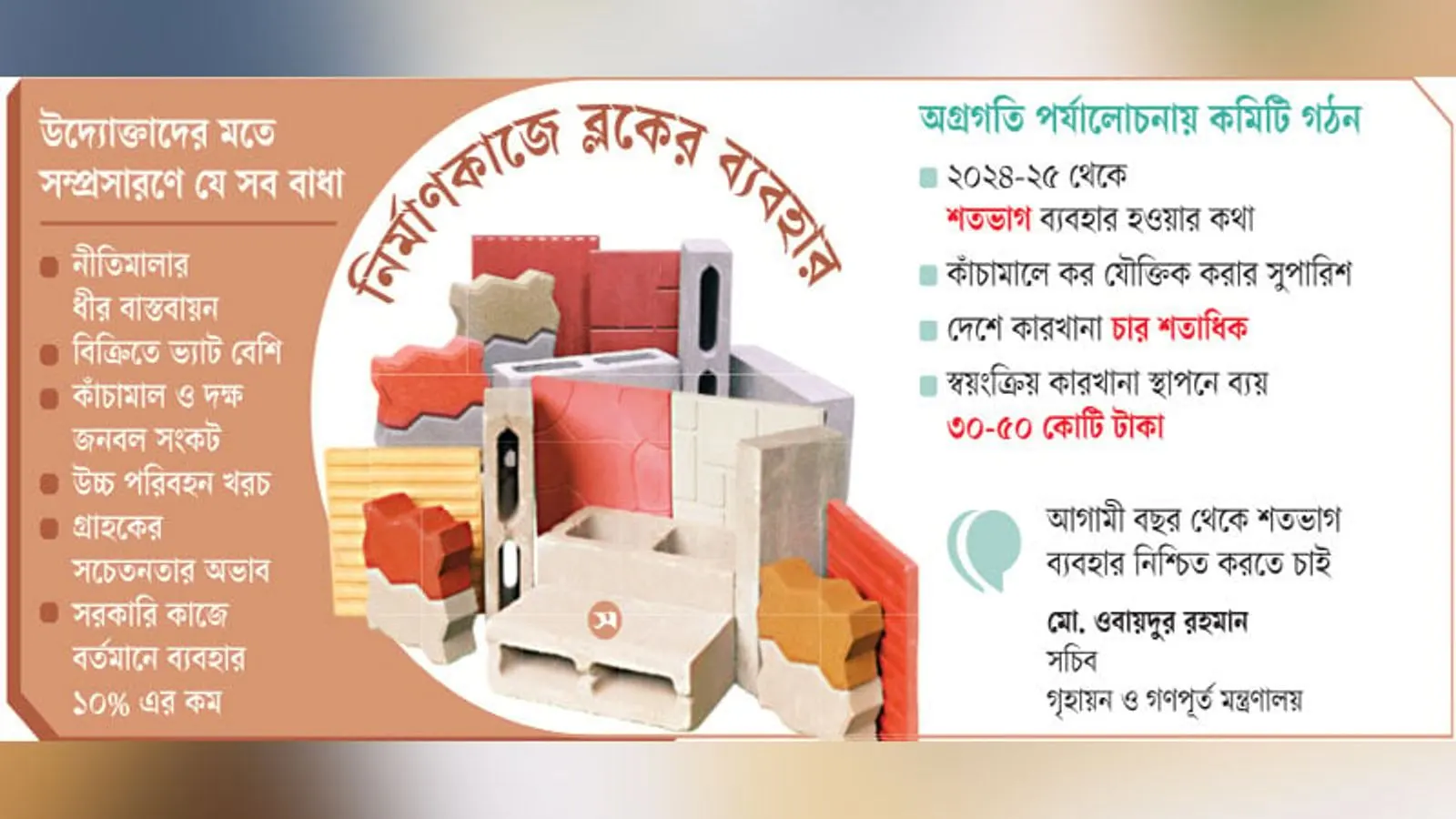
Bangladesh is moving forward with a decisive plan to ensure the one hundred percent utilization of eco-friendly blocks in all government construction projects across the country. This significant environmental initiative was discussed during a high-level meeting convened by the Ministry of Environment, Forest and Climate Change on 19 September 2026 to review and formulate a comprehensive action plan for sustainable building practices.
The push to replace traditional clay bricks stems from longstanding environmental concerns, prompting the government to amend relevant legislation as early as 2019 to curtail the widespread use of conventional bricks. Despite these legislative measures, official data indicates that the actual adoption of eco-friendly blocks in government construction works currently remains at less than ten percent.
To support this green transition, the country now features at least four hundred large and small factories producing eco-friendly concrete blocks. However, industry stakeholders note that establishing these facilities requires substantial capital investment, with a standard automated block factory demanding an initial outlay of thirty to fifty crore taka, while a medium-sized plant requires an investment ranging from five to six crore taka.
Economic comparisons between the two building materials reveal distinct cost structures and regulatory challenges that authorities must address. While an individual conventional brick is priced between twelve and thirteen taka, a single eco-friendly block costs between forty and fifty taka; conversely, because one block is equivalent in volume to five traditional bricks, the comparative cost of five conventional bricks actually totals sixty to sixty-five taka.
Further complicating the market dynamics for manufacturers and consumers are existing tax disparities implemented by the National Board of Revenue. Specifically, the sale of ordinary-quality bricks is subjected to a value-added tax of just five percent, whereas the sale of modern eco-friendly blocks currently carries a significantly higher value-added tax rate of fifteen percent.