
Bangladesh Industry Faces Hurdles as Concrete Blocks Push Ahead
Government construction projects have mandated the use of concrete blocks instead of traditional clay bricks starting from the 2024-25 fiscal year. However, industry leaders report that current usage remains low and numerous operational challenges persist.

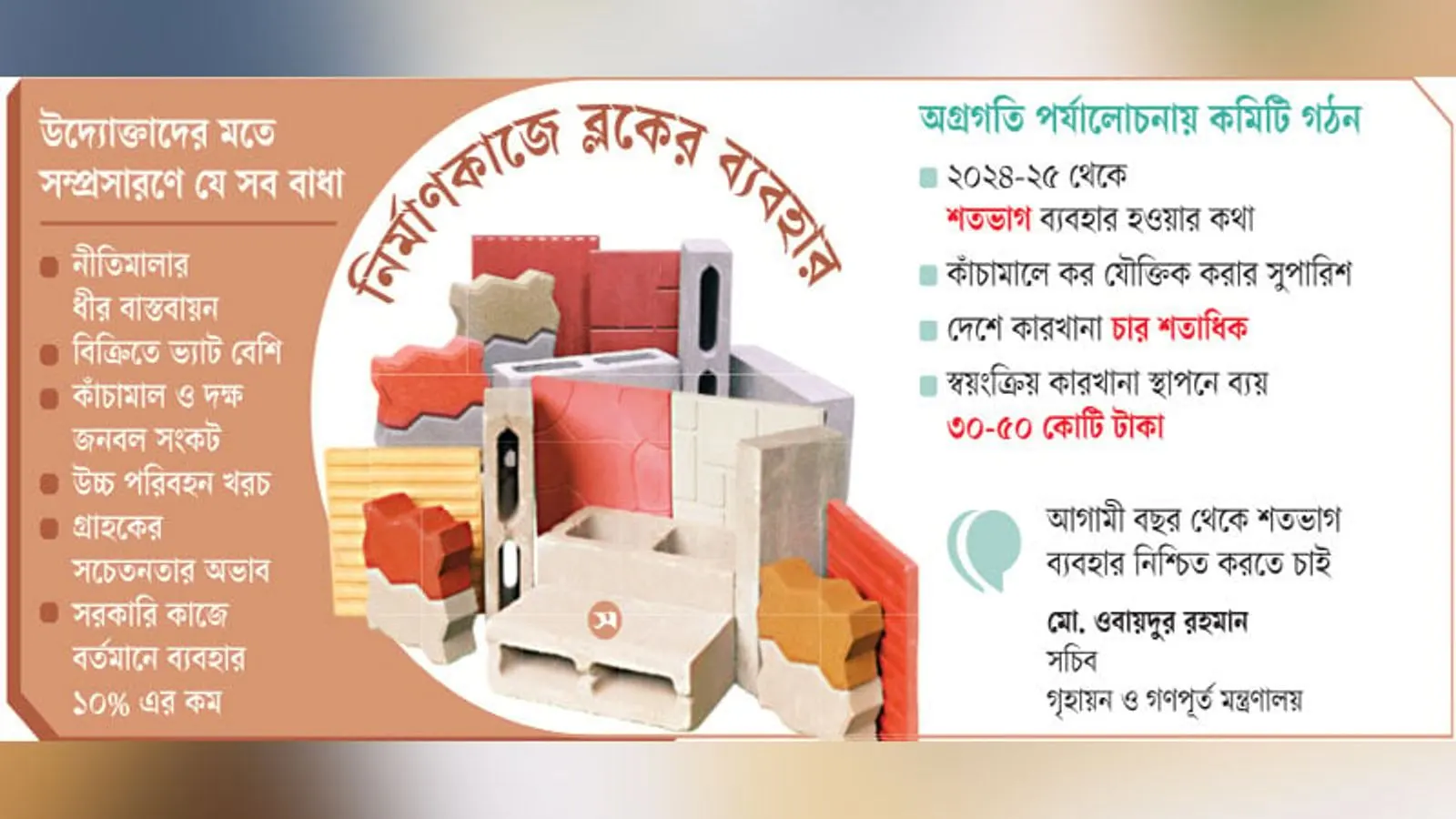
A critical transition is underway within the construction sector regarding the implementation of concrete blocks as a replacement for traditional clay bricks. The Ministry of Environment, Forest and Climate Change has officially mandated that all government construction projects must utilize one hundred percent concrete blocks starting from the 2024-25 fiscal year. Despite this decisive policy directive from the ministry, the practical adoption across the country has faced significant hurdles on the ground during implementation.
According to data provided by Zulkar Shaheen, a representative of the Bangladesh Concrete Product and Block Manufacturers Association, the current utilization of concrete blocks in government construction works stands at a mere six to eight percent. Zulkar Shaheen pointed out a stark disconnect during a recent interview discussing the sector, stating that while the Ministry of Environment, Forest and Climate Change is sincere about the transition, the agencies working at the field level unfortunately lack that same sincerity.
The financial and structural demands of producing alternative blocks present another major barrier for manufacturers entering the market. Zulkar Shaheen explained that establishing a standard, automated block factory requires an investment ranging between thirty crore and fifty crore taka. However, entrepreneurs face considerable complexities and difficulties when attempting to secure the necessary loans from financial institutions to fund these large-scale operations.
Taxation structures further complicate the business environment for brick and block producers across the country. Presently, traditional burnt clay bricks are subjected to a specific value-added tax of five hundred taka per thousand bricks. Meanwhile, the production of blocks other than hollow blocks faces a standard value-added tax rate of fifteen percent, creating distinct financial pressures within the building materials sector.
To put the scale of traditional production into perspective, a medium-quality traditional brick kiln typically produces between five million and six million bricks annually. In light of the existing operational and financial barriers, industry stakeholders are calling for immediate administrative interventions. Zulkar Shaheen concluded with a direct appeal, demanding that the authorities swiftly resolve the ongoing value-added tax complexities and facilitate the progress of this emerging industry by providing low-interest capital for the establishment of new, high-quality block manufacturing factories.